The Poplar Report alerted me to textured vegetable protein in canned tuna, so I decided to look at the current tuna stocks – are we that close to (commercial) extinction? Or is it just the current trend of substituting food ingredients to cheaper or maybe adding weird chemicals for profit?
If I correctly remember, I had considered tuna overexploited since 1980s and had avoided eating it maybe since junior high school. Moreover, this century has had lurid food fakery scandals including the percentages of mislabeled fish sold in USA, often cheaper fish species being passed for more expensive ones.
Tunas, both the canned variety and the sushi can contain mislabeled fish, with especially sushi being notorious for fakery (escolar, also sold as ‘white tuna’, can cause severe gastrointestinal distress), the more expensive varieties were more likely to be faked, risk of fakery presumed to grow with demand exceeding the supply, but sometimes also the cheaper species were mislabeled. (in Spain the likelihood the bluefin tuna you ordered in restaurant is something else is on average 73% with seasonal variation based on bluefin fishing season.)
Now, checking at the state of the tuna stocks, I was surprised to read that conservation methods to protect commercial tuna stock had apparently worked and that depending on report15 out of 23 stocks or 11 out of 23 stocks monitored were estimated to be fished at sustainable levels in 2024 reports (assuming I correctly understood their summary tables) with 88% of tuna coming from sustainably fished stocks (according to one of the reports). The contrast to 2007 doomsday news is promising, but when looking at the FAO report from 2007, I noticed that even then 13 – 14 out of 23 stocks were fully or moderately harvested, the status of the rest being unknown (3 stocks), overexploited (4 – 5 stocks) or depleted (2 stocks). Maybe the difference between today and then is in the levels of overexploitation reducing?
Nevertheless, it is nice to read some good news, assuming the tuna statistics are real. However, considering the unreliable climate reporting, I cannot avoid creeping suspicion that the earlier tuna depletion may have been overrated or the current improvements overstated. And maybe I should go to supermarket myself to check if I can find TVP in tuna can, possibly to buy a can of Albacore labeled as sustainably caught.
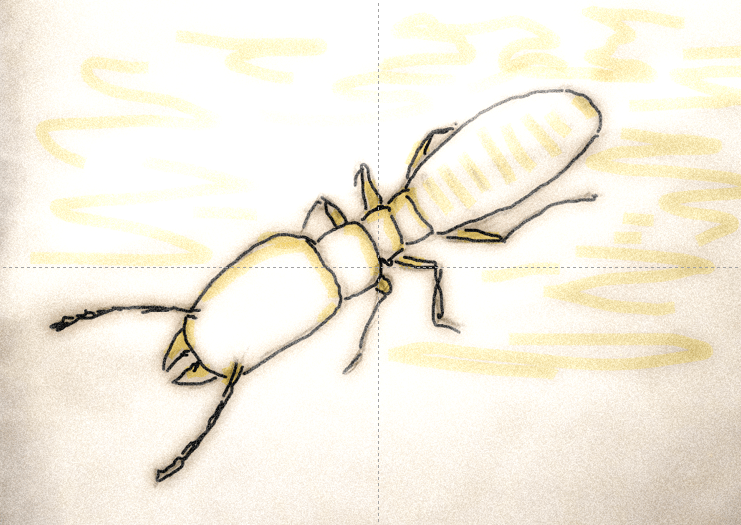
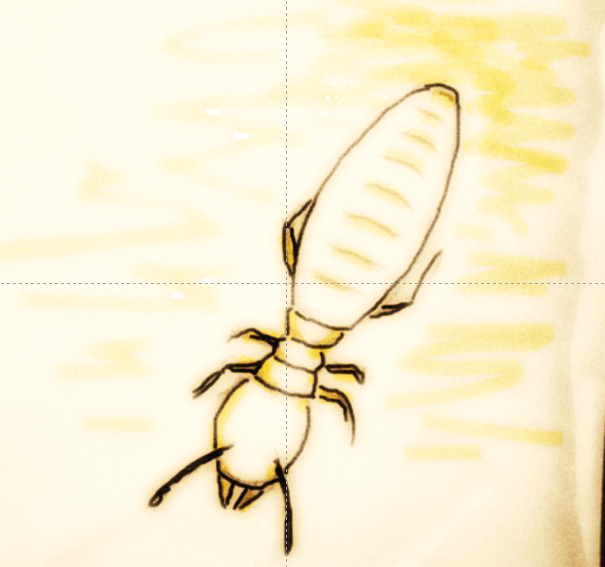
A Nature paper by Ito (2023) estimates the global termite methane production 2020 as 14.8 +- 6.7 Tg per year from estimated 122.3 Tg termites (dry weight). Termite biomass estimates range from 40 – 200 Tg (dry weight), and their methane emission estimates vary even more, but by Ito’s estimate, termites produce about 2% of global methane.
The global annual methane production is estimated by IEA to be about 580 metric tons, and Ito’s maybe ~15 metric tons would be on the ballpark of 2.6% of that.
These farts are actually produced by termites’ gut symbionts, complex communities of microbes that help termites to digest lignocellulose and contribute to nitrogen metabolism.
Termites evolved some time during Mesozoic from gregarious cockroaches that ate rotting wood with changes in gut symbiont microbiota, diets and eusociality. Today, termites are important in carbon cycle (and other nutrient cycles).
I was trying to find some papers on their role in Phanerozoic carbon cycles but with poor success, though it could be said that termites (plus their gut symbionts) are currently quite significant decomposers of plant cellulose, and there apparently has been enough of them already 150 million years ago that a mammal species had evolved to eat them.
In other words, there is still a niche for people researching the effect of termite farts on global climate – past, present and future. Assuming the atmospheric carbon question remains politically and culturally relevant (for dissenting voices, see, e.g., these articles in Science of Climate Change and The Daily Sceptic).
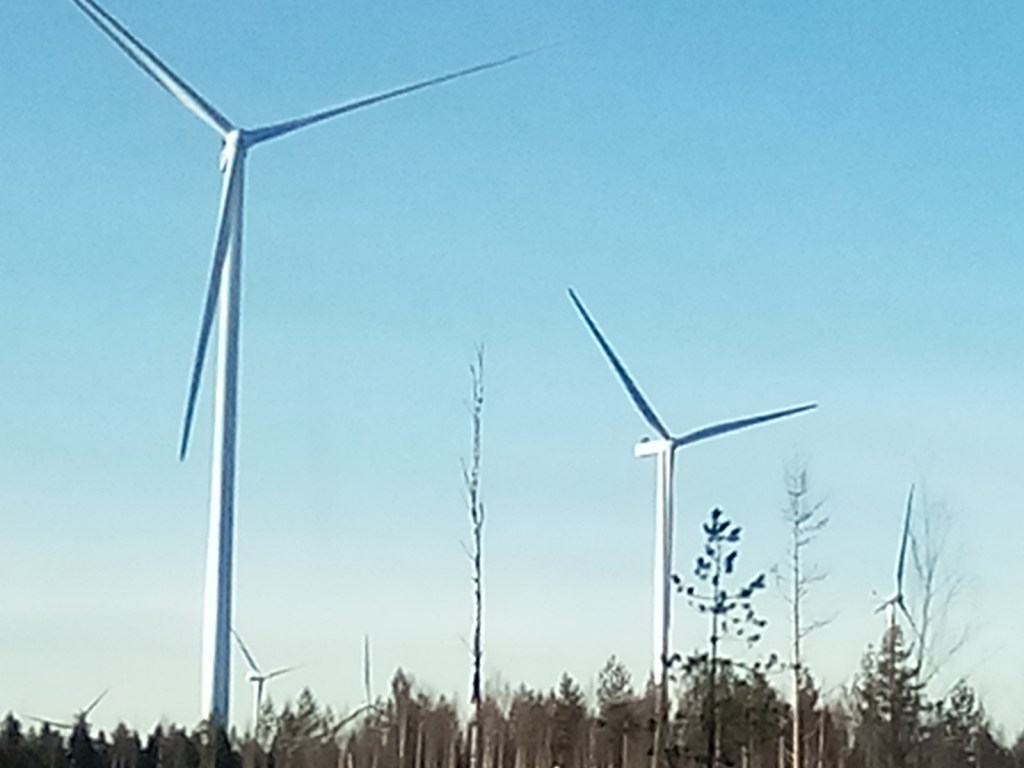
How much of this was hype and how much was counterhype, I don’t know (though I suspect my search engines show me very biased results.) On my recent trip to Finland I saw the changes in the countryside, big wind turbines can cause. It takes lots of land and removal of trees or elimination of agricultural fields to build a wind park.
All these projects, while openly posted on-line, are presented so that opposing voices are portrayed as conspiracy theorists and antienvironmentalists. But is it a conspiracy theory if they themselves tell everyone their plans, or worse, their actions?
At least the most fanatical theses from the now destroyed Georgia Guidestones are not openly touted. There are people, other than just me, who would consider the reduction of world human population to 500 million from (official) 8 billion or by over 93% rather genocidal.
But the Green New Leap is not just for UK, Germany, Netherlands or Ireland. Finland, too, is planning ambitious net zero targets, and I mean really ambitious, as in lauded by WEF.
Most of Finland is above 60° latitude, about the same level as Alaska or south end of Greenland, mostly more north than Yakutsk in Siberia. Energy is of utmost importance there. Roughly speaking, a person can survive a few minutes without air, a few hours without heating, a few days without water and a few weeks without food.
Meanwhile in China, 2024 began to build 94.5 GW worth of coal power plants and resumed 3.3 GW of suspended projects according to two think tanks. Only 2.5 GW of old capacity was closed 2024. (Side note: with China’s economy tanking and exports faltering, what do they need this new energy capacity for?)
But what about the reindeer burps?
Indeed, according to our reliable news media, a study was published that Lapland will not be able to meet its greenhouse targets by 2035 because of the large emissions from its agriculture, namely the reindeer. Which as ruminants are burping too much methane, which is a greenhouse gas. Unfortunately, I could not find a link to the original study to check the claims, and to see if the researchers were in earnest or if this was some sort of reductio ad absurdum-document to demonstrate the futility of the Net Zero targets.
However, assuming the reporting is true, reindeer are part of the Arctic ecosystem, and even if the semidomesticated populations in Lapland were counted as human livestock, those globalist net zero plans that would involve reducing the number of large ruminants, such as grazing cows and sheep, come dangerously close to messing the ecosystems by removing large herbivore guild from the food network. While I can see the point in reducing the use of feedlots and grain / soybean based fodder in ranching, eliminating free-range foraging herbivores is IMHO insane.
Ironically, the climate war against cattle (products) is not fully compatible with the idea of rewilding the land, which presumably involves switching domesticated large herbivores with wild large herbivores to the net zero effect on burps per acre in case of free grazing animals. Large scale rewilding is currently hypothetical rather than practical, as the numbers of large wild herbivores are insufficient for the switch. Humans and their cattle, pets and pests account for about 96% of terrestrial mammal biomass. The remaining about 4% is everything else from Etruscan shrew to elephant. Cows alone are ~40% of Earth’s land mammal biomass, meaning there are no replacement herbivores. And without ungulates, the grassland ecosystems will collapse.
When we consider this and other volcanoes, and the coal plants of China and the rest of the world (not to mention everything else that produces greenhouse gases, such as termites), how much effect would it have on the atmospheric chemistry and global climate change if all the reindeer in Lapland stopped burping?


 PlanktonPunkt