The Poplar Report alerted me to textured vegetable protein in canned tuna, so I decided to look at the current tuna stocks – are we that close to (commercial) extinction? Or is it just the current trend of substituting food ingredients to cheaper or maybe adding weird chemicals for profit?
If I correctly remember, I had considered tuna overexploited since 1980s and had avoided eating it maybe since junior high school. Moreover, this century has had lurid food fakery scandals including the percentages of mislabeled fish sold in USA, often cheaper fish species being passed for more expensive ones.
Tunas, both the canned variety and the sushi can contain mislabeled fish, with especially sushi being notorious for fakery (escolar, also sold as ‘white tuna’, can cause severe gastrointestinal distress), the more expensive varieties were more likely to be faked, risk of fakery presumed to grow with demand exceeding the supply, but sometimes also the cheaper species were mislabeled. (in Spain the likelihood the bluefin tuna you ordered in restaurant is something else is on average 73% with seasonal variation based on bluefin fishing season.)
Now, checking at the state of the tuna stocks, I was surprised to read that conservation methods to protect commercial tuna stock had apparently worked and that depending on report15 out of 23 stocks or 11 out of 23 stocks monitored were estimated to be fished at sustainable levels in 2024 reports (assuming I correctly understood their summary tables) with 88% of tuna coming from sustainably fished stocks (according to one of the reports). The contrast to 2007 doomsday news is promising, but when looking at the FAO report from 2007, I noticed that even then 13 – 14 out of 23 stocks were fully or moderately harvested, the status of the rest being unknown (3 stocks), overexploited (4 – 5 stocks) or depleted (2 stocks). Maybe the difference between today and then is in the levels of overexploitation reducing?
Nevertheless, it is nice to read some good news, assuming the tuna statistics are real. However, considering the unreliable climate reporting, I cannot avoid creeping suspicion that the earlier tuna depletion may have been overrated or the current improvements overstated. And maybe I should go to supermarket myself to check if I can find TVP in tuna can, possibly to buy a can of Albacore labeled as sustainably caught.
A local ABC7 news report from last year informed that the published 2023 Oakland PD clearance rates for violent crime (from assaults to murders) was 3% whereas for property crime the clearance rate (that is, police made an arrest) was 0.1%. For nearby big cities San Francisco and San Jose the respective numbers were 28% and 35% for violent crime and 5% and 7% for property crime. When the ABC7 reporter asked the Oakland PD about the numbers, they were blamed on human error, but they did not have correct numbers available at that time.
While the statistics of San Jose and San Francisco seem pathetic to anyone living in these cities, the Oakland numbers are so close to zero, that if true, instead of a reporting error, the people there would live essentially without law enforcement, if not for the parking enforcement and municipal code inspectors.
According to statistics, Oakland issued close to 269000 parking tickets in 2023. Moreover, a 102 year old man was ordered to clean graffiti from his fence or pay fines. He complained that he could have done it when he was younger but now that he is in wheelchair, the task falls to his 70 year old son. The utility box nearby, also covered with graffiti, I suppose, is apparently OK. However, from the original news: “The city inspector contacted KTVU and said that he would do an immediate inspection and, presumably, cancel the citation.”
Sometimes, the conspiracies of the West like chemtrails or other forms of weather modification and QAnon become boring and it is fun to look at the conspiracies in the East.
One of the more intriguing conspiracy theories (to me) is the claim that China has way fewer people than the official 1.4 billion.
I first encountered this claim some years ago, but did not pay much attention to it. The message sounded too crazy and was promoted by Falun Gong, which has a real reason for a grudge against the CCP government. I am also pretty convinced that part of the anti-China messaging is or was funded by US government as a psy-op against a competing power.
However, while the figures as low as 300 to 400 million Chinese left (in the Peoples Republic of) seem extreme, I can believe fewer than 1.4 billion, probably no more than 1.2 billion, possibly below 1 billion.
3) Mass immigration has generated a global population of hundreds of millions.Many of these individuals are undocumented, which I presume are still in citizenship lists of their home countries while being part of the head count in their current locations. I remember an apocryphal story in Europe about people getting paid social security by two countries, presumably being counted as part of the population in both. I do not know if this inaccuracy includes dual citizens or just undocumented migrants. In case of China, I think their hukou system is pretty water tight within China’s borders, but I also think that millions, maybe tens of millions of Chinese have slipped over the borders, all over the world. These Chinese exist, but reduce the population at home.
4) Chinese population policies have been a demographic disaster. One Child Policy meant that many of the Gen-X were not allowed to be born, reducing the population growth rate. Now there are too few Millenials and even fewer Gen Z and the young people are too stressed to reproduce. Yet, China’s population was supposed to have grown during the 1970s – 2010s, though at least the recent year’s have officially had negative population growth.
Therefore, even if we don’t go with the active depopulation hypotheses,
I don’t think the current global population exceeds 7.5 billion, and would not be hugely surprised if it were as low as 7 billion people.
So many people complain about the homeless problem (which is very visible in many California cities), but these people and their plight are a symptom of a deeper malaise.
It is claimed that people are homeless because they cannot afford an apartment. Actually, many of the homeless are homeless, because they get kicked out of any normal apartment due to mental illness, drug habit or just for being nasty neighbors and tenants. Poverty is a common companion of mental illnesses, drug habit and antisocial behavior. Supportive housing rarely works, the restrictions to their lifestyle are considered intolerable and most of the hardcore homeless prefer their freedoms. Which in California are accommodated. Not saying that freedoms are intrinsically wrong, I just would weigh them against infringement of other people’s rights for safe enjoyment of parks and other public places.
In any case, California has some freedoms not available in other states, such as freedom to use cannabis products and the de facto freedom to shoplift wherever and, in many cities, to camp on sidewalks. This has led to an exploitable situation as the fuming taxpayers are told that the reason the sidewalks are choked by drugged out homeless that support their habit by shoplifting because there is not enough affordable housing. Let’s collect a new tax or municipal bond (funded by taxes) to build affordable housing to homeless.
Homeless advocacy organizations mobilize for this initiative, after all someone must administer the funds to the indigents. Signature collectors are hired to ask good citizens (“are you a registered voter here?” to sign a petition for the tax / bond initiative. Politicians speak warmly for (or rarely against) the initiative. There may be an advertisement campaign, at which point a thinking voter should get alarmed – why would anyone pay for an advertisement campaign when hundreds of millions or even billions of dollars are proposed to be raised for ‘common good’?
Nevertheless, many voters will back an initiative that sounds good without thinking about the long term effects. Once the initiative passes, property or sales taxes are raised, and now the small property owners and small retail businesses are in trouble. The property owners increase the rents making both apartments and small businesses renting their spaces less affordable, Poorer tenants fall behind and get evicted or move somewhere cheaper. The business owners may hang on a bit longer, raising their prices until the customers disappear, and they, too disappear. With loss of tenants, the properties will undergo distressed sales. Which was the purpose of the original initiative.
A property developer (with sufficient contacts to the municipal bureaucracy and politics to smooth the permitting) will buy the distressed property cheaply and develop it into ‘affordable’ housing. Which somehow does not reduce the swarms of homeless camping on the sidewalks, possibly because they are still free to camp there and the homeless advocacy organizations are flush with funds to use on homeless services.
Meanwhile, the older residents are losing their homes and the main streets are becoming ghost towns of shuttered and graffitied empty shopfronts. The city is hemorrhaging jobs and residents, with homeless numbers increasing, despite well-funded homelessness services and more affordable housing being built.
The solution is obvious – let’s raise the taxes to deal with the homelessness and lack of affordable housing! Or maybe, stop using the homeless to exploit the tax payers to enrich the local moneyed interests.
This is not just UK issue, NOAA has been claimed to fabricate data for over 30% of their reporting sites by taking the averages of the surrounding stations to represent a defunct, or a ‘ghost’ station, although the numbers at least are labeled as estimates. In UK, some closed weather stations ‘continue’ with similar reported estimated monthly data.
Unreliable measurements from the actually existing weather stations are another large problem. Nearly 8 out of 10 Met Office sites are rated in junk classes with error margins ranging from 2C to up to 5C, or unsuitable for climate data reporting. The default classification for Met Office weather stations is 1, “unless manually adjusted” so there may be more unreliable data sources.
The disproportionate closure of rural weather stations compared to the urban ones has further skewed the average temperatures, because urban environments tend to generate heat islands, so loss of rural stations will increase the average temperature of the remaining measurements.
While unreliability of measurement data was discussed in terms of Net Zero in The Daily Sceptic, I wonder about its effects on near term weather forecasts. Maybe the invented data is also being fed into models predicting daily weather?
A Nature paper by Ito (2023) estimates the global termite methane production 2020 as 14.8 +- 6.7 Tg per year from estimated 122.3 Tg termites (dry weight). Termite biomass estimates range from 40 – 200 Tg (dry weight), and their methane emission estimates vary even more, but by Ito’s estimate, termites produce about 2% of global methane.
The global annual methane production is estimated by IEA to be about 580 metric tons, and Ito’s maybe ~15 metric tons would be on the ballpark of 2.6% of that.
These farts are actually produced by termites’ gut symbionts, complex communities of microbes that help termites to digest lignocellulose and contribute to nitrogen metabolism.
Termites evolved some time during Mesozoic from gregarious cockroaches that ate rotting wood with changes in gut symbiont microbiota, diets and eusociality. Today, termites are important in carbon cycle (and other nutrient cycles).
I was trying to find some papers on their role in Phanerozoic carbon cycles but with poor success, though it could be said that termites (plus their gut symbionts) are currently quite significant decomposers of plant cellulose, and there apparently has been enough of them already 150 million years ago that a mammal species had evolved to eat them.
In other words, there is still a niche for people researching the effect of termite farts on global climate – past, present and future. Assuming the atmospheric carbon question remains politically and culturally relevant (for dissenting voices, see, e.g., these articles in Science of Climate Change and The Daily Sceptic).
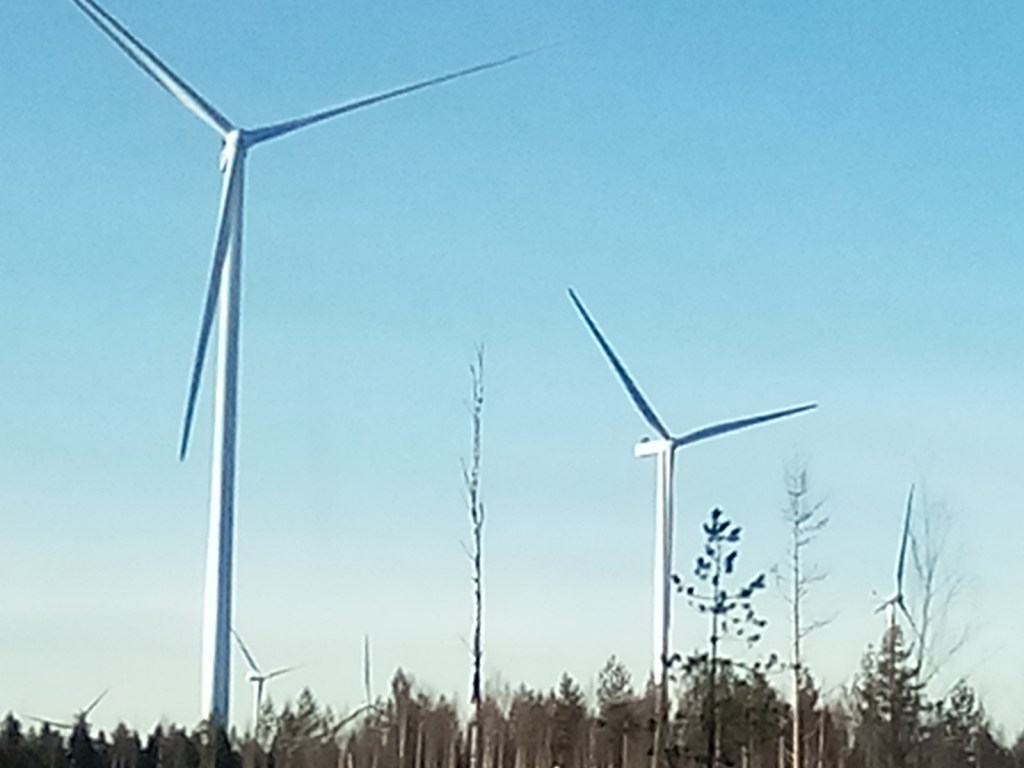
How much of this was hype and how much was counterhype, I don’t know (though I suspect my search engines show me very biased results.) On my recent trip to Finland I saw the changes in the countryside, big wind turbines can cause. It takes lots of land and removal of trees or elimination of agricultural fields to build a wind park.
All these projects, while openly posted on-line, are presented so that opposing voices are portrayed as conspiracy theorists and antienvironmentalists. But is it a conspiracy theory if they themselves tell everyone their plans, or worse, their actions?
At least the most fanatical theses from the now destroyed Georgia Guidestones are not openly touted. There are people, other than just me, who would consider the reduction of world human population to 500 million from (official) 8 billion or by over 93% rather genocidal.
But the Green New Leap is not just for UK, Germany, Netherlands or Ireland. Finland, too, is planning ambitious net zero targets, and I mean really ambitious, as in lauded by WEF.
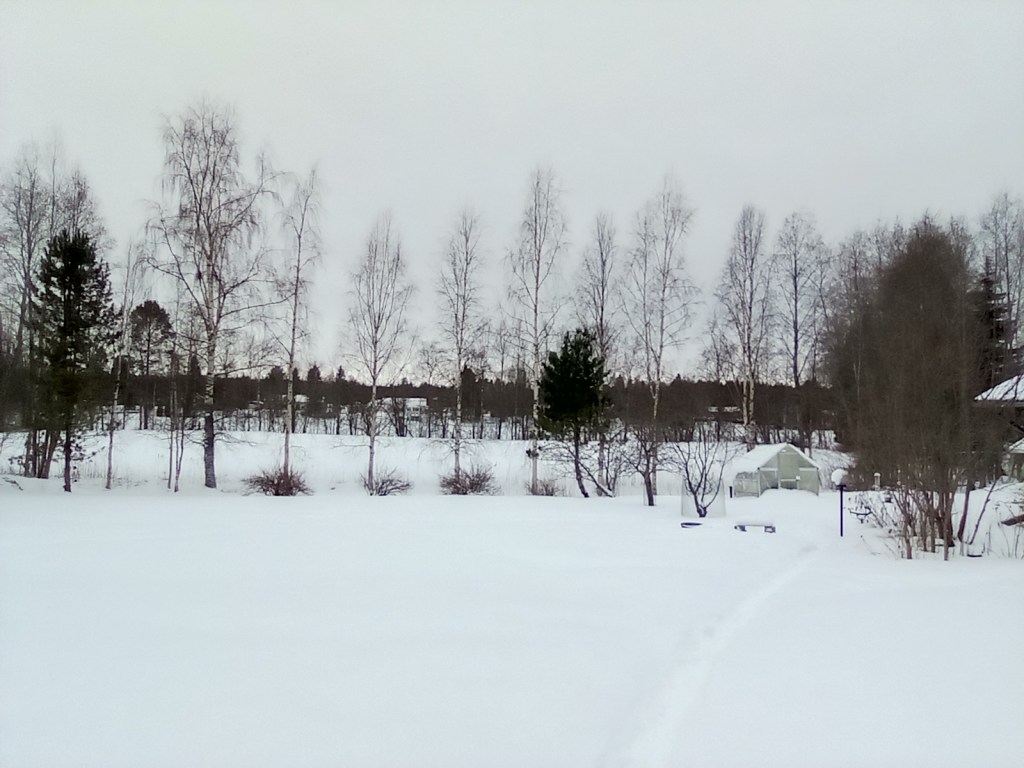
Most of Finland is above 60° latitude, about the same level as Alaska or south end of Greenland, mostly more north than Yakutsk in Siberia. Energy is of utmost importance there. Roughly speaking, a person can survive a few minutes without air, a few hours without heating, a few days without water and a few weeks without food.
Meanwhile in China, 2024 began to build 94.5 GW worth of coal power plants and resumed 3.3 GW of suspended projects according to two think tanks. Only 2.5 GW of old capacity was closed 2024. (Side note: with China’s economy tanking and exports faltering, what do they need this new energy capacity for?)
But what about the reindeer burps?
Indeed, according to our reliable news media, a study was published that Lapland will not be able to meet its greenhouse targets by 2035 because of the large emissions from its agriculture, namely the reindeer. Which as ruminants are burping too much methane, which is a greenhouse gas. Unfortunately, I could not find a link to the original study to check the claims, and to see if the researchers were in earnest or if this was some sort of reductio ad absurdum-document to demonstrate the futility of the Net Zero targets.
However, assuming the reporting is true, reindeer are part of the Arctic ecosystem, and even if the semidomesticated populations in Lapland were counted as human livestock, those globalist net zero plans that would involve reducing the number of large ruminants, such as grazing cows and sheep, come dangerously close to messing the ecosystems by removing large herbivore guild from the food network. While I can see the point in reducing the use of feedlots and grain / soybean based fodder in ranching, eliminating free-range foraging herbivores is IMHO insane.
Ironically, the climate war against cattle (products) is not fully compatible with the idea of rewilding the land, which presumably involves switching domesticated large herbivores with wild large herbivores to the net zero effect on burps per acre in case of free grazing animals. Large scale rewilding is currently hypothetical rather than practical, as the numbers of large wild herbivores are insufficient for the switch. Humans and their cattle, pets and pests account for about 96% of terrestrial mammal biomass. The remaining about 4% is everything else from Etruscan shrew to elephant. Cows alone are ~40% of Earth’s land mammal biomass, meaning there are no replacement herbivores. And without ungulates, the grassland ecosystems will collapse.
When we consider this and other volcanoes, and the coal plants of China and the rest of the world (not to mention everything else that produces greenhouse gases, such as termites), how much effect would it have on the atmospheric chemistry and global climate change if all the reindeer in Lapland stopped burping?
So it looks like the French won the Game of Empires. For now.
(Countries with overseas military bases, like USA, do not count. The territories have to be internationally recognized colonies or dependencies officially under full or partial rule of the empire.)




 PlanktonPunkt