Go back

Your message has been sent

Warning

PlanktonPunkt Designs puzzles available in CreateJigsawPuzzles

link to order print on demand PlanktonPunkt Designs jigsaw puzzles (printed in China)

PlanktonPunkt Designs POD products in Printify

link to order PlanktonPunkt Designs print on demand wares from the source

PlanktonPunkt Designs POD products in Etsy

A link to order from a selection of PlanktonPunkt Designs print on demand wares from Etsy

Category: Statistics

  • Alligator Alcatraz and Other Signs of Times

    Alligator Alcatraz

    Florida is constructing an ‘Alligator Alcatraz‘, a deportation facility in the m Everglades. An abandoned airport project will be (government) quickly converted into a 5000 bed facility with an idea that the surrounding swamp area with its alligators and pythons would be part of the security. Federal government will use FEMA’s Shelter and Services Program money for the center. Presumed Federal costs will be 450 million dollars annually. Assuming processing speed of two weeks per deportee and full occupancy, that housing alone will cost 3750$ per person though I doubt government will be that efficient. But Alligator Alcatraz is a catchy name, good marketing!

    The immigration industry seems to still provide good income for some – left loves to import immigrants with government paying the housing, whereas right loves to deport immigrants with government paying the housing.

    Nigerian Oil Production Woes

    Alleged 7.2 billion US dollar fraud in Nigeria has led to the arrest of two officials in Nigeria’s state owned oil corporation and three other officials are being investigated. Annual allocations of money meant for revamping and rehabilitation of old oil refineries had not been efficient, as Kaduna, Warri and Port Harcourt refineries “haven’t been producing fuel in recent years” as Oilprice.com reports. Nigeria is struggling to meet (as in has not met) its OPEC quota of oil production due to crime and “struggles to launch new projects”(ibid.)

    Sweden has illiteracy problem

    Regardless of the possible reasons for the Swedish education crisis described in this Zerohedge article (originally from Epoch Times but they require registration), about 800000 of 10 million inhabitants of Sweden are categorized as illiterate. While he definitions of literacy may have changed over the centuries, this is according to the author “the highest number since at least the mid-19th century, possibly since the early 18th century.”

    During 18th century Finland was part of the Sweden, and literacy was then enforced by strong state church that demanded that everybody had to pass confirmation (which was prerequisite for get married – premarital relationships were strongly disapproved those days) and to pass confirmation had to know how to read (the material promoted by the state church , other literacy was a bonus.) Perhaps, if literacy would again be a basis for full civil rights (e.g., one would need to be able to read a contract for their signature to be legally binding), the literacy rates would begin to climb again. Without motivation to learn, there will be a segment of population that will not make an effort.

    Also, what was alluded in the article but I think should be emphasized is that many of the modern students do not even speak Swedish, and before they learn the language they won’t be able to read or write it, either. Also the Finnish literacy levels which used to be among the highest in the world are declining, at least according to PISA statistics.

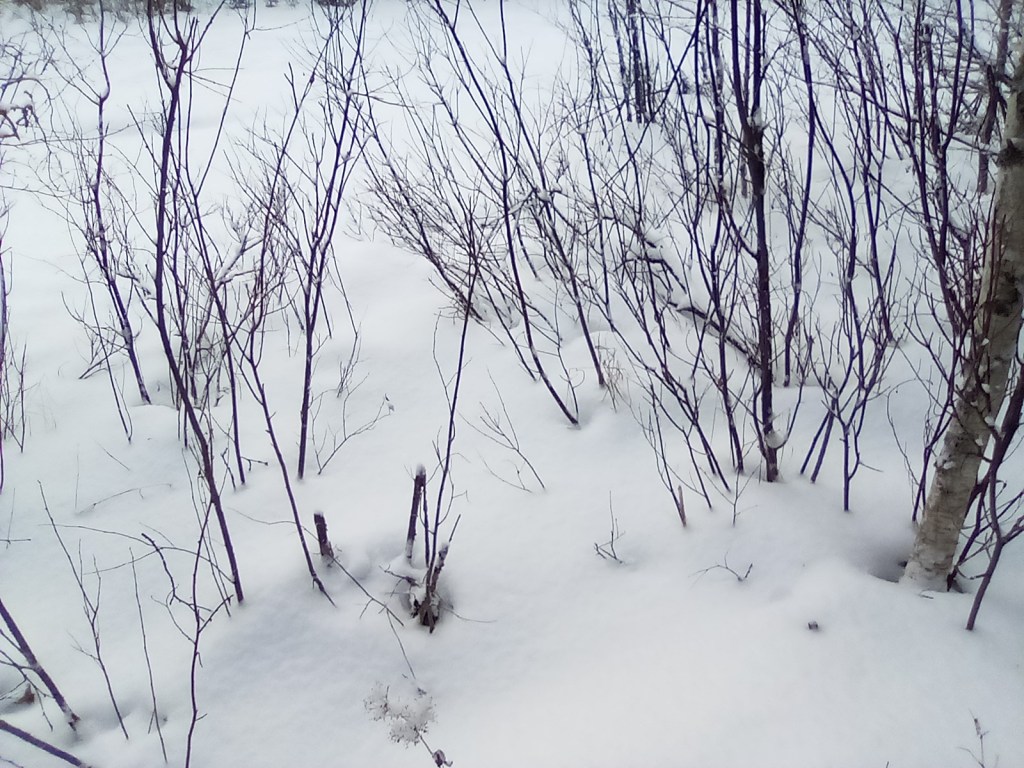
    A picture from Finland, February 2025, not directly related to Alligator Alcatraz, Nigerian oil production or Swedish literacy.

  • Estonia Has a Russian Problem

    No. I am not talking about their eastern neighbor, though the relationship between the two countries is currently even more strained than normal.

    I am talking about their Russian speaking stateless minority that is about 17% of their population (when Russian speaking citizens are included, the percentage climbs to 27.4%). I think that when Soviet Union collapsed and Estonia regained its independence, the native Estonians wanted to kick out the Russians and other Soviet nationals that had been imported or migrated into their country since the WWII, refusing to give citizenship to anyone who did not assimilate enough to pass the Estonian language test, but I thought that the sentiment had faded during the over three decades since, or at least something had been done to resolve the issue of large fraction of population being stateless. If I correctly remember, the newly re-emerged Russia had not wanted to take the Russians and other Russian speakers from Estonia, and I suspect many of the Russian speakers had been born in the country. Without Russian or Estonian passport, these people became stateless. To me, having about 17% of your population as a stateless minority, especially when preparing for war against their supposed native country seems very dangerous.

    An opinion poll comparing Estonian speaking, Russian speaking and bilingual households shows a clear rift in the opinions and attitudes of the ethnic groups. As far as I have seen, the Western media, of course, only publishes the Estonian speakers predominant opinion. The Russian speakers, anyways tend to follow their own media landscape. The pollsters comfort the readers (or themselves) telling that the Russian speakers are not a monolithic group and there is a diversity of opinions among them. This is true, but aside from the commonly differing prevalences of opinions between the linguistic groupings, the other two messages I got from reading this poll were 1) the difference in opinion about Ukrainian war between the region containing Tallinn (more pro-NATO and hawkish) and the rest of the country, and 2) the clear agreement between all groups that ethnic conflict within Estonia is possible, with Estonian speaking majority believing in it more .

  • Tuna

    The Poplar Report alerted me to textured vegetable protein in canned tuna, so I decided to look at the current tuna stocks – are we that close to (commercial) extinction? Or is it just the current trend of substituting food ingredients to cheaper or maybe adding weird chemicals for profit?

    If I correctly remember, I had considered tuna overexploited since 1980s and had avoided eating it maybe since junior high school. Moreover, this century has had lurid food fakery scandals including the percentages of mislabeled fish sold in USA, often cheaper fish species being passed for more expensive ones.

    Tunas, both the canned variety and the sushi can contain mislabeled fish, with especially sushi being notorious for fakery (escolar, also sold as ‘white tuna’, can cause severe gastrointestinal distress), the more expensive varieties were more likely to be faked, risk of fakery presumed to grow with demand exceeding the supply, but sometimes also the cheaper species were mislabeled. (in Spain the likelihood the bluefin tuna you ordered in restaurant is something else is on average 73% with seasonal variation based on bluefin fishing season.)

    Now, checking at the state of the tuna stocks, I was surprised to read that conservation methods to protect commercial tuna stock had apparently worked and that depending on report 15 out of 23 stocks or 11 out of 23 stocks monitored were estimated to be fished at sustainable levels in 2024 reports (assuming I correctly understood their summary tables) with 88% of tuna coming from sustainably fished stocks (according to one of the reports). The contrast to 2007 doomsday news is promising, but when looking at the FAO report from 2007, I noticed that even then 13 – 14 out of 23 stocks were fully or moderately harvested, the status of the rest being unknown (3 stocks), overexploited (4 – 5 stocks) or depleted (2 stocks). Maybe the difference between today and then is in the levels of overexploitation reducing?

    Nevertheless, it is nice to read some good news, assuming the tuna statistics are real. However, considering the unreliable climate reporting, I cannot avoid creeping suspicion that the earlier tuna depletion may have been overrated or the current improvements overstated. And maybe I should go to supermarket myself to check if I can find TVP in tuna can, possibly to buy a can of Albacore labeled as sustainably caught.

  • Crime in Oakland

    A local ABC7 news report from last year informed that the published 2023 Oakland PD clearance rates for violent crime (from assaults to murders) was 3% whereas for property crime the clearance rate (that is, police made an arrest) was 0.1%. For nearby big cities San Francisco and San Jose the respective numbers were 28% and 35% for violent crime and 5% and 7% for property crime. When the ABC7 reporter asked the Oakland PD about the numbers, they were blamed on human error, but they did not have correct numbers available at that time.

    While the statistics of San Jose and San Francisco seem pathetic to anyone living in these cities, the Oakland numbers are so close to zero, that if true, instead of a reporting error, the people there would live essentially without law enforcement, if not for the parking enforcement and municipal code inspectors.

    According to statistics, Oakland issued close to 269000 parking tickets in 2023. Moreover, a 102 year old man was ordered to clean graffiti from his fence or pay fines. He complained that he could have done it when he was younger but now that he is in wheelchair, the task falls to his 70 year old son. The utility box nearby, also covered with graffiti, I suppose, is apparently OK. However, from the original news: “The city inspector contacted KTVU and said that he would do an immediate inspection and, presumably, cancel the citation.”