

I have now made a short video (6 min 45 s) on the subject, its consequences, its causes (especially discussing metapopulation dynamics) and about one idea how to combat this trend (microrewilding.)
Category: Study
-
Insects Are Vanishing
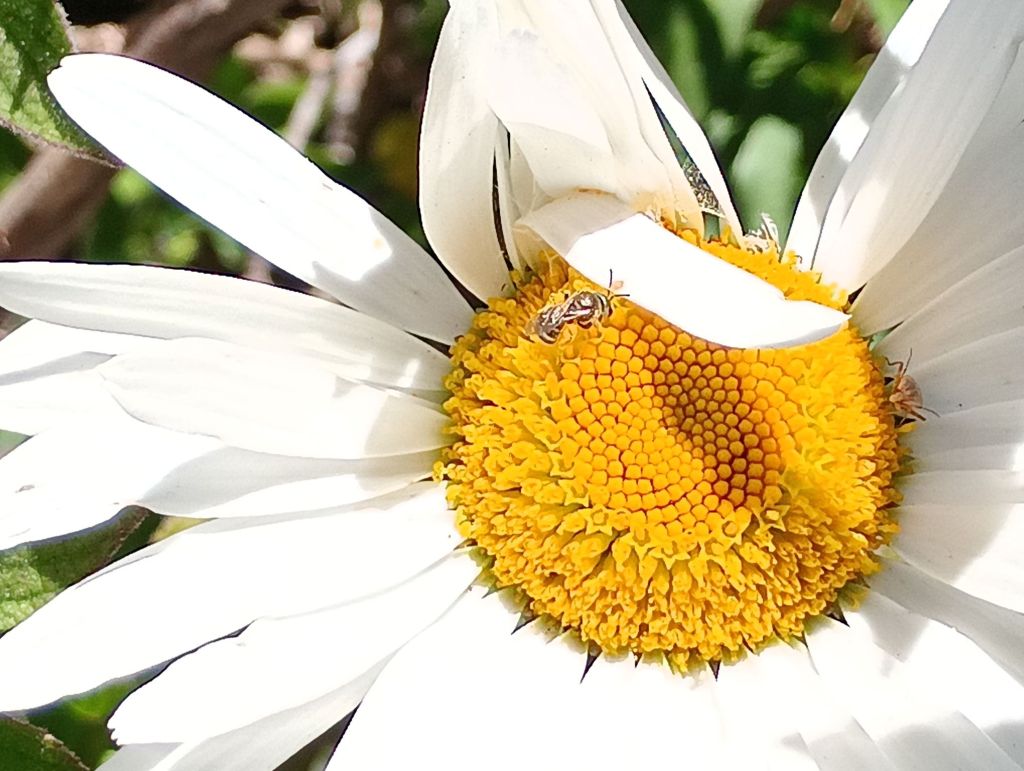
A small Hymenopteran and a probable bug in the same flower in Berkeley, June 2025
Recently, a samizdata channel I watch has had multiple reports that insects are missing this summer, in locations scattered around United States.
This was not unexpected. The reduction in insect numbers started decades ago, if German amateur entomologists’ data is to be believed, but it has since been recorded around the world, including places like Colorado and Costa Rica.
The scientists have sounded an alarm – insect are possibly the most important group of land animals in terms of species numbers and biomass. They are important pollinators, decomposers, soil and biome modifiers, and they disperse nutrients even when not serving as important food source to other species in food web.
Bee colony collapses around USA and the rest of the world have been reported for years, and is important for food production and economic reasons. Without the ~2 million beehives transported annually, canola, almond, citrus, and many other insect pollinated crops would collapse. Because not only the natural pollinators are about gone, all the flowers in monoculture orchards are blooming only few weeks a year.
The loss of insects has been attributed on a variety of reasons, among other things pesticide use (and other environmental poisons, including chemtrails and 5G radiation), monoculture, spreading diseases (especially Varroa mite born in bees), and changing climate. While a large number of species are affected, reading the reports has given me an impression that the selection of missing species seems to vary from place to place, suggesting multifactorial causes. The modern world apparently does not have space for bees or butterflies.
I would probably blame monoculture, i.e., humans have appropriated too fat a slice of ecological resource flows for themselves. Traditional agricultural landscape in Europe had many verges, ditches and hedges, where wild plants and insects that relied on them could flourish. Now such places are rare.
For example, I have observed in horror, how most species of the meadow flowers, once common on road sides near Turku, Finland, seem to have had a population collapse in the past decade. I blame this on the municipal maintenance crews mowing the verges before the seeds have ripened. Annual plants fare the worst, but I suspect perennials will eventually follow. Any insects relying on those flowers also likely fared poorly.
As the small wild spots grow fewer and further between, I suspect we have crossed a critical threshold on insect metapopulation dynamics. Ilkka Hanski, studying Glanville fritillary butterflies living on dry meadows on rocky islands, showed that as long as there were enough patches with butterflies near each other (in this case, the minimum was estimated to be 32 patches covering total 10ha over 5km2 area), individual patches of plants or insects living on them could be ephemeral, i.e., the butterflies on a given patch could disappear or appear from year to year, but the butterfly populations of individual patches form a metapopulation that keeps the species going if the amount and density of patches are sufficient.
Extrapolated onto insects in general, I think the on-going collapse may indicate that despite good people setting their individual gardens for butterflies, bees and other insects, if a garden population is lost, for example to local bad weather or disease outbreak, there are no longer enough insect patches left nearby to repopulate the patch. Sooner or later, isolated gardens will lose their insects. And then the metapopulation is gone.
What can be done to reverse this trend? I suggest starting by restoring some verges. Also not mowing your yard while the flowers are seeding, as ugly as the drying seedheads may look. Insects are not very big, so they do not require nearly as large sanctuaries like roaming megafauna, but there should be plenty enough patches to maintain a viable metapopulation, so that if some species is lost from one spot, it can be colonized by insects from the neighboring spots. I believe this type of microrewilding to be compatible with current human population, possibly even essential if we want to retain their ecosystem services necessary for food production. Assuming there are no confounding factors like (possibly) 5G radiation to prevent its success.
-
Tuna
The Poplar Report alerted me to textured vegetable protein in canned tuna, so I decided to look at the current tuna stocks – are we that close to (commercial) extinction? Or is it just the current trend of substituting food ingredients to cheaper or maybe adding weird chemicals for profit?
If I correctly remember, I had considered tuna overexploited since 1980s and had avoided eating it maybe since junior high school. Moreover, this century has had lurid food fakery scandals including the percentages of mislabeled fish sold in USA, often cheaper fish species being passed for more expensive ones.
Tunas, both the canned variety and the sushi can contain mislabeled fish, with especially sushi being notorious for fakery (escolar, also sold as ‘white tuna’, can cause severe gastrointestinal distress), the more expensive varieties were more likely to be faked, risk of fakery presumed to grow with demand exceeding the supply, but sometimes also the cheaper species were mislabeled. (in Spain the likelihood the bluefin tuna you ordered in restaurant is something else is on average 73% with seasonal variation based on bluefin fishing season.)
Now, checking at the state of the tuna stocks, I was surprised to read that conservation methods to protect commercial tuna stock had apparently worked and that depending on report 15 out of 23 stocks or 11 out of 23 stocks monitored were estimated to be fished at sustainable levels in 2024 reports (assuming I correctly understood their summary tables) with 88% of tuna coming from sustainably fished stocks (according to one of the reports). The contrast to 2007 doomsday news is promising, but when looking at the FAO report from 2007, I noticed that even then 13 – 14 out of 23 stocks were fully or moderately harvested, the status of the rest being unknown (3 stocks), overexploited (4 – 5 stocks) or depleted (2 stocks). Maybe the difference between today and then is in the levels of overexploitation reducing?
Nevertheless, it is nice to read some good news, assuming the tuna statistics are real. However, considering the unreliable climate reporting, I cannot avoid creeping suspicion that the earlier tuna depletion may have been overrated or the current improvements overstated. And maybe I should go to supermarket myself to check if I can find TVP in tuna can, possibly to buy a can of Albacore labeled as sustainably caught.
-
Termites Farting Around
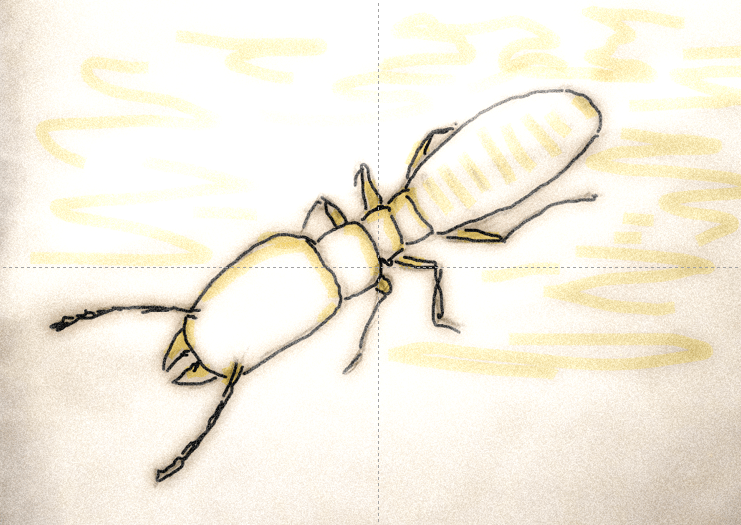
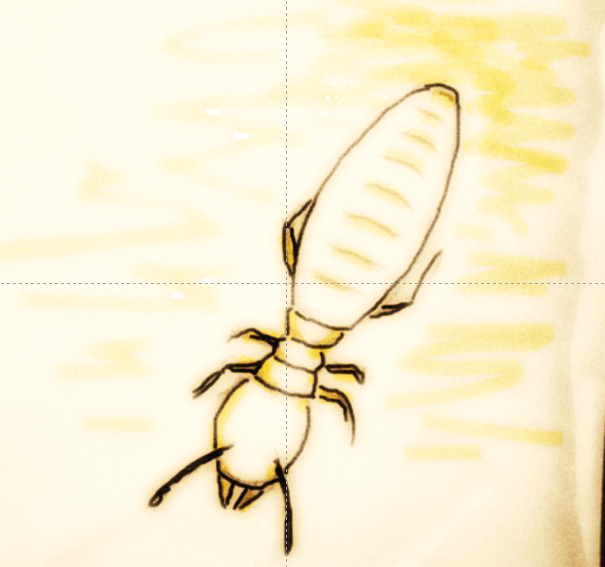
Termite farting has been studied for quite a long time.
A Nature paper by Ito (2023) estimates the global termite methane production 2020 as 14.8 +- 6.7 Tg per year from estimated 122.3 Tg termites (dry weight). Termite biomass estimates range from 40 – 200 Tg (dry weight), and their methane emission estimates vary even more, but by Ito’s estimate, termites produce about 2% of global methane.
The global annual methane production is estimated by IEA to be about 580 metric tons, and Ito’s maybe ~15 metric tons would be on the ballpark of 2.6% of that.These farts are actually produced by termites’ gut symbionts, complex communities of microbes that help termites to digest lignocellulose and contribute to nitrogen metabolism.
Termites evolved some time during Mesozoic from gregarious cockroaches that ate rotting wood with changes in gut symbiont microbiota, diets and eusociality. Today, termites are important in carbon cycle (and other nutrient cycles).
There is some uncertainty about the fate of the termite farts (such as how large fraction of them even make it out of the termite hive or gets absorbed into surrounding terrain). For example, some termite hives can survive tens of thousands of years and may accumulate carbon in the mounds, and affect soil and ground water carbon sequestration.
I was trying to find some papers on their role in Phanerozoic carbon cycles but with poor success, though it could be said that termites (plus their gut symbionts) are currently quite significant decomposers of plant cellulose, and there apparently has been enough of them already 150 million years ago that a mammal species had evolved to eat them.In other words, there is still a niche for people researching the effect of termite farts on global climate – past, present and future. Assuming the atmospheric carbon question remains politically and culturally relevant (for dissenting voices, see, e.g., these articles in Science of Climate Change and The Daily Sceptic).
 PlanktonPunkt