← Back

Thank you for your response. ✨

PlanktonPunkt Designs puzzles available in CreateJigsawPuzzles

link to order print on demand PlanktonPunkt Designs jigsaw puzzles (printed in China)

PlanktonPunkt Designs POD products in Printify

link to order PlanktonPunkt Designs print on demand wares from the source

PlanktonPunkt Designs POD products in Etsy

A link to order from a selection of PlanktonPunkt Designs print on demand wares from Etsy

Tag: Commentary

  • Resource Competition

    I saw an interesting video from YanasaTV. He was discussing about blue pigs and their causes in California. I think this is a symptom of even bigger problem than he described, so I thought to expand a bit.

    The starting point was boar meat that had turned blue in some parts of California, because of liberal use of rat poison, which dyes the meat.

    According to the video, farmers have been fighting against a figurative tidal wave of rodents, whose populations had exploded in four counties due to farm and orchard closures leaving them tens of thousands of acres of prime breeding areas in almond country.

    The orchards and farms are closing because of California’s water policies, justified by drought blamed on climate change, specifically the conservation laws passed 2014 were a death blow to many farms. I remember the wave of orchard cuttings when many farmers got rid of their almond trees and then the markets in the urban areas got bundles of (expensive) almond firewood. After all, you might at least sell the cut trees for the last bit of income. Recent growing season, documented orchard removals took more Kern County almond acreage than those of Stanislaus County. Again, not surprising. When I drove to LA in 2022, Kern County was drought burned chiaroscuro, like Dali painting, only dusty orchards being green, Stanislaus County being greener, though still dry. If I correctly recall, that year Kern County had gotten 100% of its water allocation cut, Stanislaus County 50%.

    The official explanation of the laws was the environment and need to save water. However, an important underlying cause influencing the passing of water laws was consolidation of water rights under the big players. (get reference)

    Any case, according to Yanasa TV, last year California lost 8000 farms, to multifactorial causes, but lack of water is a big one. Oddly enough, Texas lost even more farms, 18000, also often due to lack of water. In Texas, the irrigation competes against AI server farms. And is losing.

    That caught my attention. The news have been buzzing for a couple of years about how the Silicon Valley firms have been moving to Texas because of their nicer regulatory environment. The discussion online had given me the impression that this was due to the taxes and insane regulatory policies of California. I had not thought about the water regulation, but in hindsight, it should be obvious. The firms are moving to what is greener pastures (more resources) for them, never mind the parched pastures of the ranchers. Which are blamed on climate change.

    The final point I got from this YanasaTV video was the question, how do we feed the billions of people if we reallocate agricultural resources to feed AI? The regulations hindering the agriculture are passed under the pretense of ‘conserving the resources’, but to me it seems that most if not all conservation regulations are nowadays just to preserve the ‘protected’ resources for the powerful, whereas the little people like me get to enjoy the Green New Leap as increased energy and food prices. And as shortages of critical resources.

    The California water rationing for urban dwellers and destruction of small farms is not about conserving resources, since water is very much available for the Big Almond, golf courses, and such. It is about extirpating the competition for scarce resources the big players want for themselves. If the side effect is the ballooning fruit, vegetable and meat prices for the small people, someone is making money of that, too. At some point the breakeven point when increasing prices will not bring more profits because the consumers cannot afford to buy will be reached but the availability of food (and energy or other resources) relative to the need will determine whether that happens before or after a mass uprising.

    Speaking of AI and energy, I wrote the other day about rolling blackout warnings in Maryland and New Jersey. I think the AI industry will have to begin to address its effects on the energy grid soon, maybe already next winter. Once people will begin to experience survival threatening acute shortages, backlash is guaranteed. The incoming collapse of the power grid, by the way, is the main reason why I chose coastal California as my bugin place. If the grid fails, I will not freeze to death.

    But my realization about all of the above: there is no such thing as a conservation law. There are only resource reallocation from the poor to the wealthy laws.

    Note added in proof:

    Nova Scotia in Canada banned people from going into woods, either Crown lands or privately owned lands belonging to someone else. Traditionally people had enjoyed access to Crown lands, but now they had been told that this privilege had been taken away to prevent forest fires. 25000$ fine for people trespassing their country’s forests. Would you feel like hemmed in?

    Then I read that the Nova Scotia woods (over 3500 acres of them) are getting sprayed with defoliant that is being used to kill unwanted (less economically useful) tree species. Imagine large swathes of dying and drying trees in the middle of a drought. Controlled burns to free land for more profitable tree species were speculated. The cost to the ecosystem is hideous, so is the loss of immaterial (and material) value to the people.

    Not that immaterial value even matters to the powerful. My uncle back in Finland told that they are planning a data center next to a big hydropower plant in the town he lives in, and the land being developed has stone age sites on it. I don’t know how valuable these sites are archeologically, but I suspect they have not been properly studied, either.


  • Power to the People (Or Not)

    Midwest Chick posted recently that Lava Ridge Wind Project in Idaho was cancelled.

    This project was opposed by the residents but the previous administration gave it go ahead in December 2024 anyways. Now the approval was canceled by the Department of Interior due to legal deficiencies, including proximity to a Minidoka National Historic Site (WWII Internment of Japanese-Americans) and local opposition including lawmakers and local 0fficials

    Meanwhile, Maryland is threatened by rolling blackouts. Rolling blackouts may have lots of proximal reasons, but my gut feeling is that the main causes in some order are: fragility of green power sources, deferred maintenance of the grid, and increasing power demands of everything is computerized AI society. In the end of the article was a warning for people with refrigerated medication or medical devises needing electricity to have an action plan in case of outage. The power prices in Maryland and New Jersey are moving up and the consumers are livid.

    As a Californian, I am not in a position to point fingers on energy grids, but ours should have been a warning example, not something to emulate.

  • Food Inflation in UK

    Armstrong Economics posted that Bank of England is cutting interest rates despite rising inflation, especially of food prices. The BoE tried to put that on employee costs of the supermarkets.

    I have an alternative explanation. Inflation in classical sense is a short for inflation of money supply. BoE apparently worries that lowering interest rates will make lending cheaper leading to increase in money supply, i.e. classical inflation. However, the market prices actually depend on supply and demand. When supplies are low but demand high, prices rise to what the wealthiest market segment can pay for it, whereas if supplies are plentiful, nobody will take the product even for free. Also, the value of British pound had fallen by 4% on July, while the food price inflation was 4% – coincidence?

    I think the inflation pressures on UK food prices are due to combination of increased demand (according to Worldometer, last year UK had 0.4 million more people on the top of 69 million already there, and that is on the top of the growth from the previous years) and reduced supply. The Western countries have reduced food production for environmental reasons, whereas political instability and weather have reduced crop production and / or exports elsewhere. Ant then there are artificial trade barriers and monopsonistic practices of the Western food and agri conglomerates (and Western in this case includes Japan and their rice crisis), which have created artificial scarcities to maintain the high prices.

    All in all, I don’t blame the greedy Tesco cashier for the possible ham or bacon price increases in UK. I think it is the lack of pork anywhere except in government budgets.

  • Resolution Weekend

    I just saw a video on YouTube by a gentleman who seems to be into Bitcoin. Aside from the Bitcoin part, there were interesting little news.

    Bank of England has published a bail-in guide. The term of note is ‘resolution weekend’. That’s when the peoples’ bank accounts will be converted into bank stocks at some fraction of value.

    I had already become aware that millionaires and billionaires are fleeing the UK by their thousands, an exodus greater than that afflicting PCR, despite PRC having vastly larger population. I was surprised at the claim that the departing assets are equal to 4% of UK GDP. Dividing the 91.8B$ cumulative wealth of the departees by 3640B$ estimated GB GDP gives only about 2.5% in mu calculator. It will be interesting to see if the UK government will go full DDR and slam the exit doors shut at this hemorrhage. They already have the hate crime reporting lines and speech crimes police (in case someone could post something UK government does not approve) so why not go for the full experience, complete with empty shops?

    Meanwhile, EU has made a deal of the decade (this century is too young to claim that something even weirder would not be coming through the pipes) agreeing to: 15% export and 0% import tariffs with US, 750 billion euros worth of US fossil fuels while banning all the Russian fossil fuel imports (which had continued despite the war, including quite a lot of natural gas transiting in pipelines through Ukraine), and 600 billion euros of private direct investment to US.

    Exactly what this private investment is and how EU Commission can agree to seems unclear. According to the document description page on EU side, the agreement is not legally binding. I suspect that the tariff and energy deals were a bribe to US to let EU still continue their war – I further suspect large amounts of US military gear to be included in that 0% import tariff. Also, I suspect that EU will rather soon have a resolution weekend for bank accounts as they are already talking about mobilizing funds laying in peoples’ bank accounts to fund plans that are excessive for the public purse. Pension funds are joining the arms bonanza. Bonus points if these ‘privately funded’ imports/investments will count towards the 5% of GDP funding target for non-US NATO members.

    Joker in the game: EU CBDCs, denied by European Central Bank to be programmable with expiration dates (not to mention blocking or sin fees for non-approved uses, which would similarly depend on programmability.) (There are also privacy questions.) I wonder what the actual utility of EU CBDCs for the small people would be, and how CBDCs (programmable or non) would affect application of a Resolution Weekend?

  • Department of Narrative Mismanagement

    I have followed the recent discussions about Jeffrey E., a dead criminal whose suspicious passing away in custody has caused years of speculation (including that he was taken secretly away and is now living somewhere nice.) Namely, he is known to have committed his crimes with lots of people and suspected of blackmailing the said people, which tend to be the very wealthy and powerful type. Which is why he was rumored to have been self-deleted.

    The current administration has loudly and repeatedly promised to publish the list of Jeffrey’s associates, until about a week ago an FBI memo was leaked(?) to Axios claiming: he offed himself, there is no list of people, and he did not blackmail anybody. The administration is trying to sweep the issue under the metaphorical carpet. Then the officials published a video of his cell from the night of his death. Except the video contained about 1 minute gap (or maybe more than 1 minute). It had been stitched together so badly that aside from the gap in the timestamp, the aspect ratios were subtly off. As Asmongold pointed out, there could be legitimate reasons for this blooper, but with all the other circumstatial evidence, to me this points towards a conspiracy concerning Jeffrey E.’s demise, the reasons for it, and the existence of more rot in the circles of power.

    As I keep on watching the government stumble from narrative fail to a narrative fail, with people becoming increasingly convinced that something is off with the official story (which has presented already by the previous administration), I have began to suspect that all this furor is deliberately fanned to distract the hoi polloi from something really important, possibly even more insidious than the idea that we are being governed by a huge criminal blackmail network, until it is too late to do something about it. This is quite a common tactic by the powers that be. For example, in Finland, I have imprecise memories on how government starts making noises about changing regulations or taxes on selling beer, and people get upset. Huge discussions rage over newspaper opinion columns and on-line boards, pro and con, while the government passes something else, much more important for people’s lives. The beer issue can be resolved, or if necessary, retreated from, people will calm down, and meanwhile something actually nasty was done to them.

    While the incompetence of governments can be stupendous, it stretches my credulity to have so many bloopers in the narrative management coming one after each other, and I am beginning to suspect we are being purposefully distracted. Whether it is from the coming (proxy) war against China (maybe started between Thailand and Cambodia, maybe still waiting for the Iran situation to worsen), the ongoing (officially proxy) war against Russia, the economic collapse (US consumers sentiment has been reportedly low earlier this year, though Goldman Sacks just reassured that everything is merely returning to normal), the incoming digital surveillance grid (brought to you in collaboration with Musk and Thiel under the guise of tracking immigrants – spoiler alert: to track immigrants they will “need to” also map the non-immigrants), or something possibly worse, it must be humongous to merit this level of egging of the masses. I don’t think Obama’s referral to Department of Justice for suspicion of having ordered narrative to be manufactured for the Russia Collusion quite qualifies, more likely it is just more noise to distract the masses. By the way, US just moved nukes to UK, but that’s probably a nothing-burger (I am still sitting on the fence about whether to link and comment to the article on the subject in aviationnews.eu.)

    I am also currently sitting on the fence on whether our government truly is this incompetent at narrative management or whether there is some obscure Department of Narrative Management, who are gloating about their latest glorious success in psyop against the people. Or maybe the Department of Narrative Management has gone rogue and is actively fighting against the current administration.

    Although considering the everyday dysfunction I live in due to the ongoing complexity crisis infecting all aspects of modern society and worsened by the ongoing incompetence crisis fanned by the decades of education crisis, I still think that, yes, they really could be that incompetent. Maybe.

  • Insects Are Vanishing

    A small Hymenopteran and a probable bug in the same flower in Berkeley, June 2025

    Recently, a samizdata channel I watch has had multiple reports that insects are missing this summer, in locations scattered around United States.

    This was not unexpected. The reduction in insect numbers started decades ago, if German amateur entomologists’ data is to be believed, but it has since been recorded around the world, including places like Colorado and Costa Rica.

    The scientists have sounded an alarm – insect are possibly the most important group of land animals in terms of species numbers and biomass. They are important pollinators, decomposers, soil and biome modifiers, and they disperse nutrients even when not serving as important food source to other species in food web.

    Bee colony collapses around USA and the rest of the world have been reported for years, and is important for food production and economic reasons. Without the ~2 million beehives transported annually, canola, almond, citrus, and many other insect pollinated crops would collapse. Because not only the natural pollinators are about gone, all the flowers in monoculture orchards are blooming only few weeks a year.

    The loss of insects has been attributed on a variety of reasons, among other things pesticide use (and other environmental poisons, including chemtrails and 5G radiation), monoculture, spreading diseases (especially Varroa mite born in bees), and changing climate. While a large number of species are affected, reading the reports has given me an impression that the selection of missing species seems to vary from place to place, suggesting multifactorial causes. The modern world apparently does not have space for bees or butterflies.

    I would probably blame monoculture, i.e., humans have appropriated too fat a slice of ecological resource flows for themselves. Traditional agricultural landscape in Europe had many verges, ditches and hedges, where wild plants and insects that relied on them could flourish. Now such places are rare.

    For example, I have observed in horror, how most species of the meadow flowers, once common on road sides near Turku, Finland, seem to have had a population collapse in the past decade. I blame this on the municipal maintenance crews mowing the verges before the seeds have ripened. Annual plants fare the worst, but I suspect perennials will eventually follow. Any insects relying on those flowers also likely fared poorly.

    As the small wild spots grow fewer and further between, I suspect we have crossed a critical threshold on insect metapopulation dynamics. Ilkka Hanski, studying Glanville fritillary butterflies living on dry meadows on rocky islands, showed that as long as there were enough patches with butterflies near each other (in this case, the minimum was estimated to be 32 patches covering total 10ha over 5km2 area), individual patches of plants or insects living on them could be ephemeral, i.e., the butterflies on a given patch could disappear or appear from year to year, but the butterfly populations of individual patches form a metapopulation that keeps the species going if the amount and density of patches are sufficient.

    Extrapolated onto insects in general, I think the on-going collapse may indicate that despite good people setting their individual gardens for butterflies, bees and other insects, if a garden population is lost, for example to local bad weather or disease outbreak, there are no longer enough insect patches left nearby to repopulate the patch. Sooner or later, isolated gardens will lose their insects. And then the metapopulation is gone.

    What can be done to reverse this trend? I suggest starting by restoring some verges. Also not mowing your yard while the flowers are seeding, as ugly as the drying seedheads may look. Insects are not very big, so they do not require nearly as large sanctuaries like roaming megafauna, but there should be plenty enough patches to maintain a viable metapopulation, so that if some species is lost from one spot, it can be colonized by insects from the neighboring spots. I believe this type of microrewilding to be compatible with current human population, possibly even essential if we want to retain their ecosystem services necessary for food production. Assuming there are no confounding factors like (possibly) 5G radiation to prevent its success.

  • Possible Bad News

    I fear that if the ceasefire between Israel and Iran fails, USA will be entering into two-front proxy war.

    Our current proxy war in Ukraine is not going well, and we are pulling our weapons help away (every other day, it seems, on the other days we are giving them more). European part of NATO is upset but considering the state of their economies and especially their armies (with a couple of exceptions), I doubt their help will be decisive in any manner. If it would be, this war would have been over years ago.

    I thought the news about us stopping to give missiles to Ukraine was about our economy and military-industrial complex, which in these days is more military than industrial (our industries having been long since outsourced), no longer sufficing for policing the world, but the latest rumor / development, namely China (PRC) strengthening its military support to Iran to counter our support to Israel, if true, means potential opening of a new proxy war. Against the biggest manufacturing powerhouse in the world that desperately needs a boost for its stalled economy. And needs the Iranian oil, the access to which has been complicated by the conflicts involving US backed Israel (although China has benefited hugely from US sanctions which have forced Iran to sell their oil on discount.)

    I have for some time thought about China and Iranian oil and China-Iran railway, and how Japanese got motivated to attack to Pearl Harbor by US blockade of Japanese oil imports. Just having an ominous feeling about this.

  • Rising Rice Crisis

    Japan has a rice shortage. Of staple rice.

    While there has been sporadic rice shortages around the world recent years, Japan is a first world country and a traditional rice producer. The problem is word traditional. According to First Post, the average age of Japanese rice farmer is 71 years, and government agricultural policies in general and rice policies in particular have hit the farmers whose numbers, citing Bloomberg, have shrunk by 25% between 2015 and 2020s.

    Probably not Japanese boiled rice

    The Japanese government rice policies are strictly nationalistic, ostensibly designed to protect Japanese rice farmers and self-sufficiency by preventing rice buying from abroad. Except the consumer prices also had to be regulated, squeezing rice farmer incomes and acreage despite Japanese soft monopoly on domestic rice.

    The some explanations to Japanese rice shortages is that Japanese 2023 rice harvest was bad (already reporting rice rationing in some shops on 2024), there was an earthquake and people are panic buying (also as a hedge for rice inflation, which probably increases the rice shortfall causing more rice inflation), people are eating more rice because the war in Ukraine has increased wheat prices, and that there are hordes of tourists eating rice. And the Japanese government started selling the stored rice from reserves last year. A bit like US sells oil every now and then from strategic reserves to smooth consumer sentiment. Except that Rice News Today blames the shortage on government policy to reduce rice production, which has thinned the buffer between production and consumption to such extent that even slightest consumption increase would cause shortages.

     Now Japan is running low on rice and some shops have implemented rationing. People are upset about the steep rise in rice prices. There has been some talk about buying rice from abroad, but this is against resistance from farming lobby and conservatives, though apparently there is now a trade deal to sell Calrose rice to Japan.

    The Japanese are having an election soon, July 20th. The price of rice and the rice shortages (estimated 1.8 months of annual supermarket sales worth of staple rice – either the consumers will consume something else or Japan will soon import lots of rice) may annoy the electorate enough to lead to political upset. According to Zerohedge, SocGen (a French bank) has predicted that there is about 50% chance of election results leading to governmental crisis in Japan, which may lead to problems in yen bond market. More importantly, the price of rice is part of Japan’s inflation metrics, and if rice prices explode, the rising inflation may trigger BOJ rate hikes.

    The global bond markets are highly interconnected and the financial omnibubble is floating around in search of a pin prick. Thus, the rising rice crisis just could be the trigger of global financial collapse. Though I personally doubt it. The markets are so rigged that full collapse by contagion is unlikely. But what I have seen over the years, is that small retail investors rarely fare well in turbulence. 

  • Happy July 4th, 2025

    Or Treason Day, if you happen to live in UK. In recent years, I have been watching the fascinating news from that side of Atlantic with increasing horror. Sure makes me glad I am a US citizen, not a subject to the whimsies of Prime Minister Starmer. For the past couple of visits to Europe, I even have specified to my travel agent: no stops in UK.

    Why? When Soviet Union was a thing, if you traveled there for cheap vodka (vodka tourism) and other cultural immersion, you would only be charged for drunken and disorderly, such as might happen. Obviously, potential troublemakers would have been screened during visa application, but even people caught inside Soviet Union for the heinous crime of smuggling Bibles were sentenced merely for what they were doing in Soviet Union. Or so I think. However, according to an Internet source, officials in Starmer’s UK have stated that folks traveling to UK are subject to prosecution for doubleplus ungood on-line speech even typed outside the UK borders, even if they are not UK citizens. I think such dictatorships are to be avoided, especially when they have gone clearly bonkers. I love and I am grateful for my First Amendment rights, and this is one of the reasons I am happy this Independence Day.

    I have bought a steak and cherries, to be eaten soon, some canned fish for future, and had an Asian/Pacific Islander style BBQ beef minimeal with teriyaki sauce for breakfast.

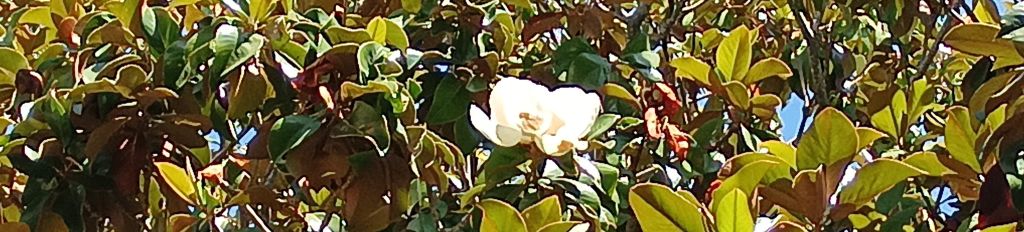
    Big white magnolias are in bloom, and I have tried to get a nice photo of them for days, but that has been difficult. Many of the trees are very big and the flowers tend to be in the upper branches, either too small for my cell phone zoom or obscured by leaves and branches. Or the flowers are not otherwise accessible to photography. When I see a magnolia bud at nice, near to eye level, getting back in time before it has bloomed and is wilting is tricky, apparently the blossoms open and are done at a quick rate.

    Here are a couple of magnolia flowers I photographed with my cell phone today.

    One of these days, I should make more jigsaw puzzles.

  • Alligator Alcatraz and Other Signs of Times

    Alligator Alcatraz

    Florida is constructing an ‘Alligator Alcatraz‘, a deportation facility in the m Everglades. An abandoned airport project will be (government) quickly converted into a 5000 bed facility with an idea that the surrounding swamp area with its alligators and pythons would be part of the security. Federal government will use FEMA’s Shelter and Services Program money for the center. Presumed Federal costs will be 450 million dollars annually. Assuming processing speed of two weeks per deportee and full occupancy, that housing alone will cost 3750$ per person though I doubt government will be that efficient. But Alligator Alcatraz is a catchy name, good marketing!

    The immigration industry seems to still provide good income for some – left loves to import immigrants with government paying the housing, whereas right loves to deport immigrants with government paying the housing.

    Nigerian Oil Production Woes

    Alleged 7.2 billion US dollar fraud in Nigeria has led to the arrest of two officials in Nigeria’s state owned oil corporation and three other officials are being investigated. Annual allocations of money meant for revamping and rehabilitation of old oil refineries had not been efficient, as Kaduna, Warri and Port Harcourt refineries “haven’t been producing fuel in recent years” as Oilprice.com reports. Nigeria is struggling to meet (as in has not met) its OPEC quota of oil production due to crime and “struggles to launch new projects”(ibid.)

    Sweden has illiteracy problem

    Regardless of the possible reasons for the Swedish education crisis described in this Zerohedge article (originally from Epoch Times but they require registration), about 800000 of 10 million inhabitants of Sweden are categorized as illiterate. While he definitions of literacy may have changed over the centuries, this is according to the author “the highest number since at least the mid-19th century, possibly since the early 18th century.”

    During 18th century Finland was part of the Sweden, and literacy was then enforced by strong state church that demanded that everybody had to pass confirmation (which was prerequisite for get married – premarital relationships were strongly disapproved those days) and to pass confirmation had to know how to read (the material promoted by the state church , other literacy was a bonus.) Perhaps, if literacy would again be a basis for full civil rights (e.g., one would need to be able to read a contract for their signature to be legally binding), the literacy rates would begin to climb again. Without motivation to learn, there will be a segment of population that will not make an effort.

    Also, what was alluded in the article but I think should be emphasized is that many of the modern students do not even speak Swedish, and before they learn the language they won’t be able to read or write it, either. Also the Finnish literacy levels which used to be among the highest in the world are declining, at least according to PISA statistics.

    A picture from Finland, February 2025, not directly related to Alligator Alcatraz, Nigerian oil production or Swedish literacy.