This week Iberian Peninsula had a massive power outage that darkened large parts of Spain and Portugal, affected Andorra, France and according to some, Netherlands and Belgium. I have not yet seen the proximal cause for the outage published, though speculations have run from Russian hackers to atmospheric phenomena. What is increasingly clear is that the Western European power grid has become extremely vulnerable to disturbances and even the slightest wobble can collapse the interconnect.
European power grid is at 50 Hz and already 0.5 Hz out of sync causes massive troubles – the power grid can choose to shut down or experience massive damage when the system goes off even that slightly. In Spain, the power grid began to experience fluctuations blamed at some point on ‘induced atmospheric oscillations’ (a mistranslation?) or anomalous heating. However, the power grid had lost large fraction of its buffering capacity as the power production has moved from traditional big power stations with big turbines that maintain inertia against minor fluctuations to renewable energy which uses inverters. In other words, the power grid had become more fragile. Spain had just six days earlier boasted about having produced 100% of its daily energy by renewables. Spain is not alone with its fragile grid, the EU wide race to Net Zero has weakened grids over the Western continent. Individual countries have relied on power production of their neighbors to subsidize their climate programs, and when the neighboring countries transform from help to drain, whole Western Europe is in trouble,
Snake
Unrelated to European problems, Japanese Tokaido Shinkansen line had about an hour and half train stoppage due to a power outage caused by a snake that had slithered into power line. Or maybe the snake was a tool of a global conspiracy against power grids. The article did not know the fate of the snake.
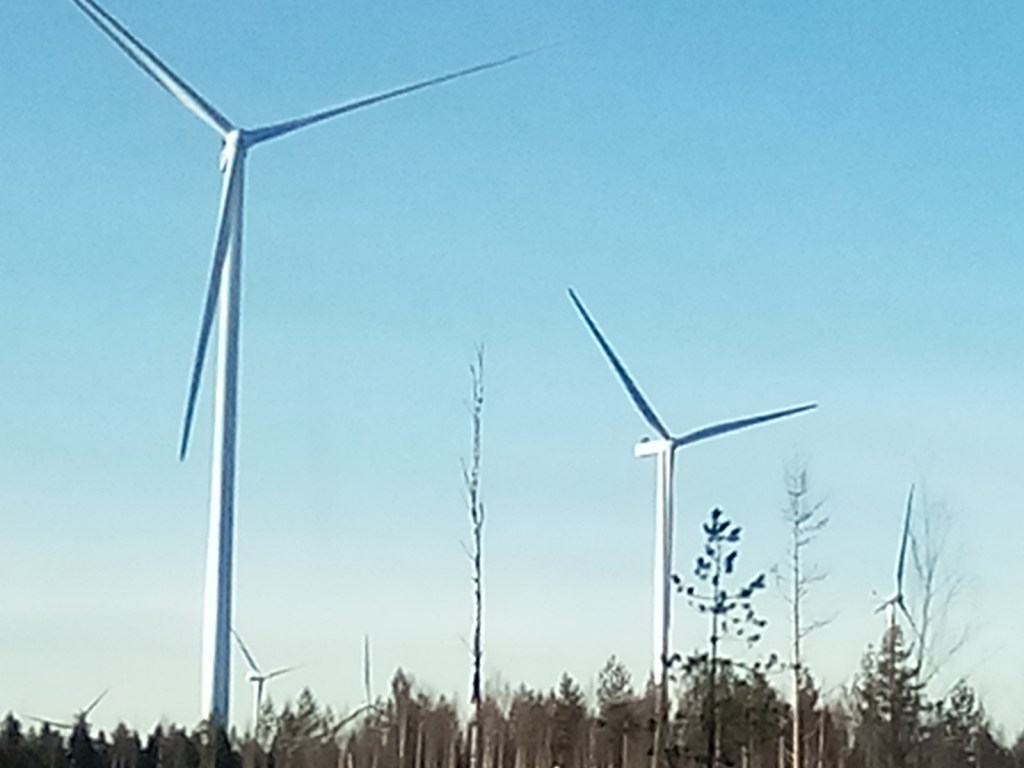
How much of this was hype and how much was counterhype, I don’t know (though I suspect my search engines show me very biased results.) On my recent trip to Finland I saw the changes in the countryside, big wind turbines can cause. It takes lots of land and removal of trees or elimination of agricultural fields to build a wind park.
All these projects, while openly posted on-line, are presented so that opposing voices are portrayed as conspiracy theorists and antienvironmentalists. But is it a conspiracy theory if they themselves tell everyone their plans, or worse, their actions?
At least the most fanatical theses from the now destroyed Georgia Guidestones are not openly touted. There are people, other than just me, who would consider the reduction of world human population to 500 million from (official) 8 billion or by over 93% rather genocidal.
But the Green New Leap is not just for UK, Germany, Netherlands or Ireland. Finland, too, is planning ambitious net zero targets, and I mean really ambitious, as in lauded by WEF.
Most of Finland is above 60° latitude, about the same level as Alaska or south end of Greenland, mostly more north than Yakutsk in Siberia. Energy is of utmost importance there. Roughly speaking, a person can survive a few minutes without air, a few hours without heating, a few days without water and a few weeks without food.
Meanwhile in China, 2024 began to build 94.5 GW worth of coal power plants and resumed 3.3 GW of suspended projects according to two think tanks. Only 2.5 GW of old capacity was closed 2024. (Side note: with China’s economy tanking and exports faltering, what do they need this new energy capacity for?)
But what about the reindeer burps?
Indeed, according to our reliable news media, a study was published that Lapland will not be able to meet its greenhouse targets by 2035 because of the large emissions from its agriculture, namely the reindeer. Which as ruminants are burping too much methane, which is a greenhouse gas. Unfortunately, I could not find a link to the original study to check the claims, and to see if the researchers were in earnest or if this was some sort of reductio ad absurdum-document to demonstrate the futility of the Net Zero targets.
However, assuming the reporting is true, reindeer are part of the Arctic ecosystem, and even if the semidomesticated populations in Lapland were counted as human livestock, those globalist net zero plans that would involve reducing the number of large ruminants, such as grazing cows and sheep, come dangerously close to messing the ecosystems by removing large herbivore guild from the food network. While I can see the point in reducing the use of feedlots and grain / soybean based fodder in ranching, eliminating free-range foraging herbivores is IMHO insane.
Ironically, the climate war against cattle (products) is not fully compatible with the idea of rewilding the land, which presumably involves switching domesticated large herbivores with wild large herbivores to the net zero effect on burps per acre in case of free grazing animals. Large scale rewilding is currently hypothetical rather than practical, as the numbers of large wild herbivores are insufficient for the switch. Humans and their cattle, pets and pests account for about 96% of terrestrial mammal biomass. The remaining about 4% is everything else from Etruscan shrew to elephant. Cows alone are ~40% of Earth’s land mammal biomass, meaning there are no replacement herbivores. And without ungulates, the grassland ecosystems will collapse.
When we consider this and other volcanoes, and the coal plants of China and the rest of the world (not to mention everything else that produces greenhouse gases, such as termites), how much effect would it have on the atmospheric chemistry and global climate change if all the reindeer in Lapland stopped burping?


 PlanktonPunkt