← Back

Thank you for your response. ✨

PlanktonPunkt Designs puzzles available in CreateJigsawPuzzles

link to order print on demand PlanktonPunkt Designs jigsaw puzzles (printed in China)

PlanktonPunkt Designs POD products in Printify

link to order PlanktonPunkt Designs print on demand wares from the source

PlanktonPunkt Designs POD products in Etsy

A link to order from a selection of PlanktonPunkt Designs print on demand wares from Etsy

Category: Economics

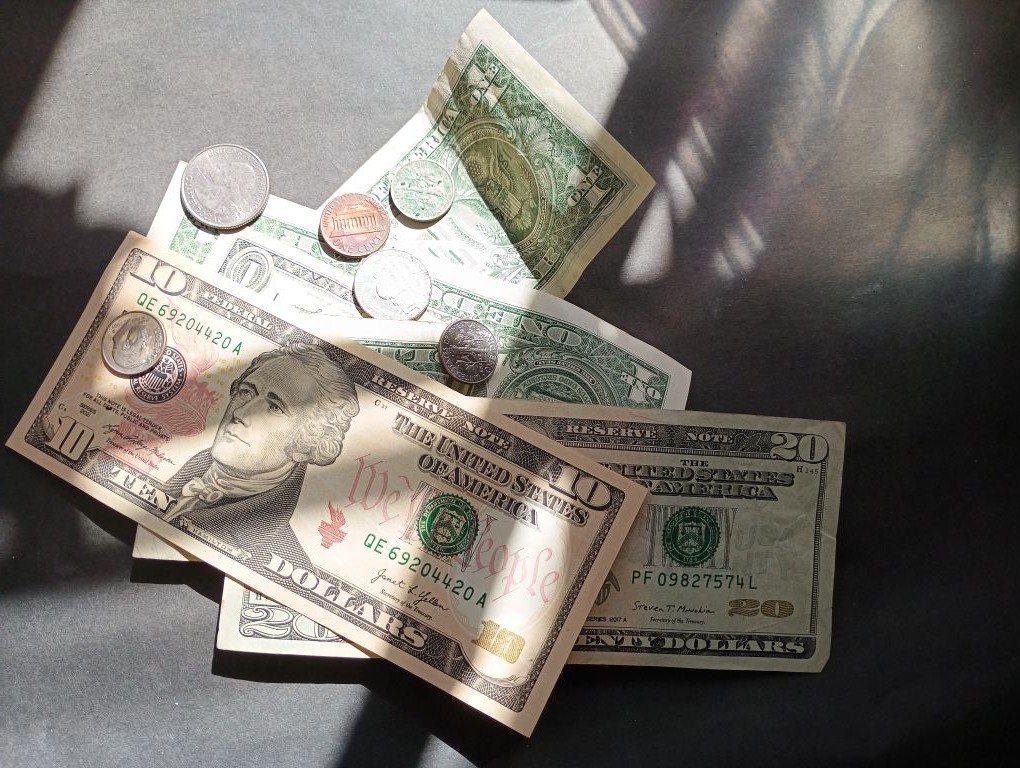
  • My Memories on Collapsing Dollar

    When I moved to California, you could by a cheap carton of greasy fried rice from a Chinese greasy spoon for about $1.00 – $1.50. Now the Chinese greasy spoons are extinct or gentrified, and a bowlful of fried rice cost $10 to $20 per.

    Meanwhile, reading and listening, occasionally even watching people (or AIs) pontificate about the current situation as if this is something that suddenly appeared through this latest Middle-Eastern war seems a bit surreal. The problem with US dollar started long time ago, probably longer than I have been alive, but I will here just ramble a bit based on my own fallible memories. Any factual errors are mine and I blame them on my small and feeble brains.

    I’ll start with Bush Jr. Having arrived after the voting ended and then following the discussions about hanging and pregnant chads, anthrax letters and finally 9/11 which set the tenor until the banking crisis. For USD, 9/11 is significant because using that as a pretext for Iraq war allowed United States to mess up global oil markets, causing price per barrel, and thus the demand for dollars to buy the more expensive oil, to shoot up. This allowed the Greenspan Moderation, which inflated the credit bubble – everyone got a housing loan and the subprime loans were then baked into collateralized debt obligations or CDOs. Michael Lewis wrote a book about The Big Short which was later adapted into a hilarious movie. Although the movie may have been less funny for the hundreds of thousands of people who lost their homes when the adjustable credit rates started moving up.

    The implosion of the credit bubble during 2007 and 2008 was something awesome/awful to behold. I remember picture of Ben Bernanke, the Treasury Secretary on his knees in front of Nancy Pelosi, the Speaker of the House, begging for congress to pass a bailout package. One of the many that bailed out banks, the newly homeless regular folks, notso mucho. Occupy Wall Street was born and Obama got elected.

    After which the Quantitative Easings continued to stabilize the banking system, people were left to survive. I don’t remember exactly what happened to dollar during Euro Crisis 2011, which I think was triggered when Soros publicly doubted Greece’s ability to pay back all the loans they had taken. The doubts spread like a wildfire in arsonist prone chaparral, infecting other shaky economies, especially Portugal, Spain, Italy and eventually Ireland, which were lumped together as PIIGS. The northern EU that had pumped their own economic numbers up by lending to southern EU so that they can buy northern products like tanks and submarines, then sanctimoniuosly castigated the peripheral member states for their economic profligacy despite having their own economic mirages depending on the same.

    The Euro Crisis coincided with Arab Spring which had been triggered by exploding food prices, brought to you by bad weather (droughts, floods and sundry), US agricultural and green energy policies (‘green’ corn-based bioethanol had consumed the US feed corn, so the US ranchers bought cheap corn from abroad, which then raised the food corn prices in Third World), deregulation of wheat futures market (previously open only for farmers and grain processors, anyone could speculate on bad weather, and speculate they did), and Gaddafi’s decision to start selling oil in currencies other than USD. The last one was fatal for Gaddafi and Libya – for me this was the most obvious demonstration how social media could be used for destabilizing fragile countries. Though the Abar Spring itself is credited for having started in Tunisia when some fish cart got confiscated by officials (the famous last straw), Tunisia avoided the worst consequences. Morocco and Algeria had troubles, too but those were ‘handled’, whereas Libya got bombed. The campaign was seemingly started at EU/French initiative and US participating simply because we had to (though in retrospective, I wonder…). It degenerated into multiparty civil war, shenanigans in Benghazi being a side note – I think that was about US running guns to ISIS, but I might be wrong, and it took a major oil producer out of market. Egypt which fell and then stabilized under Muslim Brotherhood and then under military dictatorship (I don’t think Arab Spring brought much democracy anywhere) does not produce oil, but Suez Canal is kind of important, Lebanon, Iraq and especially Syria fared poorly (I wonder if US troops are still in Syria to protect their oil now that ISIS toppled Assad?).

    We also had instituted sanctions against Venezuela during Chavez presidency (also tried to get rid of him by other means), affecting global oil markets, there has been happenings in Nigeria (partly due to destruction of Libya which unleashed islamists all over Northern Africa), all of which have pumped oil price up, helping the demand for US treasuries. That is, trillions of dollars more government debt for bailing out the billionaire class (not just too big to fail banks but many other megacorporations), waging wars and insane government social engineering programs meant to extract control and wealth from the working and middle classes to various bureaucracies and governmental NGOs. A classic example, Obamacare. Marketed as a government healthcare system, it actually manifested as a government mandate to buy a private sector health insurance. Problem: people who could not afford health insurance before Obamacare were still too poor, even though some pressure had been taken off by complex and arcane health insurance subsidy system based on the buyer’s reported annual income.

    In any case, Obama continued the debt bazooka, fueled by oil wars, but since it only benefited the 1%ers, voters went berserk and elected Trump. I had expected 2016 election to be between the anointed Clinton and the anointed Bush, but then the Republican primaries went sideways, with Jeb proving himself unelectable without properly organized party machinery, Trump winning the primaries. If it had been on voters, the Democratic primary winner would have been Bernie, but superdelegates rescued Hillary, who then expected a smooth coronation. Except that the US voters did not co-operate.

    Trump’s first term increased the spending but did not add any oil wars. By 2019 the economy was about to have a coronary arrest – I was expecting banking collapse some time during autumn or early 2020 at the latest, but then came COVID-19 and two weeks to flatten the curve. Giving a great excuse for the economic collapse that IMHO would probably have happened even without the virus, though maybe not as comprehensively.

    Biden was ushered into presidency and once the lockdown mess began to clear, it was obvious that the US treasury was being looted by every (administration aligned interest group) as if the country was under a fire sale. The disastrous withdrawal from Afghanistan was the US equivalent of Byzantine’s Battle of Manzikert. Not the withdrawal itself which should have been done years ago, but the manner it was executed, complete with reenactement of Last Helicopter Out of Saigon. Emboldened by this clear sign of an empire in decline, Russia moved to Ukraine 2022, after waiting for Beijing Olympics so as not to insult their new best friend and fellow BRICS member.

    Technically USA could have ignored Ukraine, but too many corrupt interests converged there, and then there was the fight over superpower prestige. Plus it was a too good opportunity to destroy the EU economically by isolating it from cheap Russian energy resources and markets. Nordstream II exploded. There was self-imposed ban on buying Russian oil (though buying the more expensive Indian distillates made from Russian oil was OK). All this meant more pressure on energy supplies, meaning higher US dollar demand. Meaning the debt could balloon from well over 20 trillion dollars at the end of Trump’s first term to well over 30 trillion dollars after Biden’s only term.

    When Trump took over, he promised a Department of Government Efficiency to weed out fraudulent spending. I wonder what happened to that. He had also promised no new wars, then took out Venezuelan president Maduro (and US oil companies are back in Venezuela, trying to extract the oil there, but years of sanctions have left the infrastructure shaky), threatened to take over Greenland (mineral resources and Northwest Passage), and finally went to Iran.

    Problem with Iran war (among the too many to list): too much oil production has been taken off the market and global economy is failing. The price per barrel has been suppressed by multinational SPR releases, but the tanks are nearing empty. Also the agriculture has been devastated by rising fuel and fertilizer prices, and the summer has been brutal in North America, Europe and Asia.

    The Ukraine and Iran wars had also been a double whammy on the treasury demand. People have spoken of glut in dollars, worried about inflation, but it was the increasing use of economic sanctions as a weapon to all directions have shaken the buyers’ faith on their safety as investment. Also, USA has bled Japan dry with yen carry trade (cheap yen loans to buy a bit higher interest US treasuries and bonds and pay the Japan loans with US paper and pocket the difference has supported the US debt machine), and the recent bail outs IMHO are just a drop in a leaking bucket, an omen of end to arrive.

    Now, on that background we have reached 40 trillion dollars, and borrowing costs have risen to levels that Treasury apparently is uncomfortable with. IMHO, Bessent’s buyback promise is a sign of weakness, and may be remembered by future economic historians as a gross blunder, but blaming the current administration for failing to kick the can one more election cycle further is a bit intellectually dishonest. Bessent’s hands are tied by the realities, namely USA has over the decades squandered its superpower status by living well beyond its means (partially to maintain superpower status, partially to appease voters), and there is very little that can be done to soften or even postpone the dollar collapse, especially with the current incoherent administration. For example, I don’t like how Treasury and Fed are uncoordinated. Nor do I like the AI mania or how our trade policies sabotage our agriculture.

    I expect the official Federal debt to continue at least a couple of trillion dollars higher, possibly up to 50 trillion dollars, but backed by full faith of US government is no longer what it was. Meanwhile, while money gets printed, nobody is printing bread (even vat grown meat is a specialty item and requires way more resources for much unhealthier product to be currently more than a curiosity for healthy technocrat class, though meat glued scraps are the new sausages for plebeians), so I expect food inflation with sporadic shortages and rampant skimpflation in wealthy countries and outright famines in poor countries.

    (A side note back to the Arab Spring; there was a model that predicted the level of food prices when a country undergoes an upheaval and on 2011 all the Arab Spring countries had crossed that level. In Europe, the only country to have food price distress was Latvia, but instead of revolution, the Latvians simply migrated, thanks to EU free mobility. Later, UK, dismayed at all the Eastern Europeans flooding the island, voted for Brexit, but that was then another story.)

  • 40 Trillion

    That’s what the debt clock is now, 2026 August 20th claiming. According to the Department of Treasury Debt to the Penny, the 40 trillion threshold was crossed on August 18th. I was expecting the limit to be broken in the autumn, but then, also the honking geese have flying south over northern California since July, which to me seems a bit early. I’m not a goose expert, maybe they are supposed to start migrating in summer, or maybe they are reacting to some environmental change. The pastures have withered under the drought and geese eat grass so maybe they are trying to find food. Or maybe the winter is coming early. The the geese are going south already in the summer, and so are US finances.

    Treasury and Fed are at odds over economic policy. Fed is not changing rates but the Treasury started buying back (a type of QE) 30 year notes when the rates rose over 5.3%. Promise to double the treasury buybacks helped to push the price of dollar down but inflation is predicted. Meanwhile, 10 year note was at 4.68% when Treasury promised to increase buybacks to 4 billion, causing the yield to dip into 4.63% before rising in 24 hours to 4.71%.

    If the interest rates on US treasuries rise too much, we cannot sell enough paper to pay the interest on existing paper and USA will become insolvent. I’m sure the US government will invent new, outrageous ways to cook the books for some while still, but USA is not Japan, and even Japan is faltering as eventually what is unsustainable will not be sustained.

    Flower(s), I don’t know what species, 2026 August 18th

  • Finland in Financial Finale?

    I wandered into a video about why Finland sucks. Some I agree, some I don’t, but I put a longish comment there and decided to republish it with some modifications and additions.

    The downward turn of Finland became a point of no return at EU membership.

    The money circulating in economy now goes to Brussels and multinational corporations operating under international rules, while Finnish economy is being strangled by EU directives designed to favor the looting of peripheral provinces like Finland. Everything else is downstream symptoms of this colonialism.

    Including chopping state services like electric grid, elder care, and soon common water resources, for sale to international bidders (which I suspect to happen because the administrative and tax structures are heavily stacked against those domestic enterprises that do not use tax sandwiches and cheap foreign labor.)

    Using regulatory capture via EU is a modified version of standard globalist modus operandi, sending economic hitmen to subvert national governments to facilitate their countries looting. Here it is a supranational structure operating under severe democracy deficit that functions as a middleman and a fig leaf of legitimacy to borderless looting. After quick googling, I got the impression EU itself seems to consider the political legitimacy a perception issue, i.e., the system may get (cosmetic?) changes and the EU subjects might be probagandized more, if the issue becomes more relevant to the powers that be.

    Among other economic issues, the video mentioned refugees, which in case of Finland was a GDP Ponzi scheme coordinated at EU level. In general, the whole multiculturalism is just a marketing term used by elites pushing for their ‘remedies’ to economies that are already underperforming because of the epic looting that has been going for a long time.

    The real original reason for the refugee business was at first ‘tax payers are not breeding, let’s import more labor’ (and charge the public purse cost plus for integration services by well-connected providers, which, surprisingly, have zero incentives to run out of people to provide integration services for). If nobody paid for the great social benefits to them (AKA the immigration industrial complex) the immigrants would go somewhere else. As would the integration service providers siphoning this money.

    In California, we have a massive homeless industrial complex, with more and more tax money collected to subsidize more and more homeless services serving more and more homeless. Now people have began asking evaluation of results, even audits to find where 20 billion dollars (20 * 10^9 $$$) paid over 5 years went.

    Then, when the newcomers did not get employed (the economy was still sick due to looting, and using the ‘integration services’ rather than job opportunities as a bait attracts different cohorts of immigrants), the rationale began to shift towards consumer headcount method of economy – more consumers mean more economic activity.

    Except to pay for the new army of unemployed, the successive Finnish governments needed to borrow more money, cut other services and pay taxes. Which did not increase economic productivity but increased money in circulation while shifting it from pocket to pocket. Which means inflation and rising unemployment. But at least the economic numbers were manipulated to the EU standards using approved methodologies.

    I don’t know what the next phase of immigration will be, but I would be surprised if it worked better than the previous two phases. Finland, I think, is still in the first phase but beginning to have doubts about it (I might be wrong because I don’t follow Finnish media that much any more.)

    Slightly expanding on the subject, I think NATO’s current whining for war is just the grand finale in the leveraged buyout of nation states like Finland. The EU cash cows have been milked out of all the profits a peacetime economy can provide, let’s sell them to meatpackers. The military industrial complex, the war bond markets (large parts of Ukraine have been put as collateral for the loans required to continue the war against Russia), the reconstruction contracts, the overall firesale of the desperate (or dead) people’s resources for cheap to multinational investors. Finland is, of course, eager to go against traditional enemy, thinking that NATO will help them or that they will help NATO, or something.

    TLDR: Finland is just a case example what happens to once stable and prosperous countries once EU gets to rule them. I suspect that once looting Finland with just current methodology is no longer cost effective, it will be one of the assets to be liquidated in the war against Russia.

    Economic low pressure over remaining small businesses, a metaphor.

    Checking photos of Finland to best illustrate the situation, I think this is better than one of the runners up, a dead tree full of concs.

    Here is a sky darkened by rain clouds and a thin line of trees, cosmetically around a road rest spot, but no trees behind them. To the right was a rain drenched bog with sparse, stunted pines.

    It could be that the line of trees surrounds a farm (those are also usually under heavy regulatory and financial burdens), but thin lines of trees can be seen standing between roads and clear cut openings all over Finland. Such a line could be easily considered a metaphor for cosmetic ‘Happiest Country Statistics’ masking over the remnants of Finland’s economy, while behind spread ploughed through clear cut openings, that would be the real state of Finlands economy. And the dark clouds of global economic collapse and war are looming.

  • Fuel Rumors.

    I’ll treat this as a rumor but where there is smoke, there could be fire. Some spot(s) in Texas are said to be running out of diesel and gasoline – this could be just a temporary and local supply chain hiccup, but in my lived experience, all sorts of hiccups are becoming the norm. Another rumor from the same report claims that New Jersey is running out of diesel and gasoline for big companies, as well as of motor oil. The motor oil issue spooked me already some months ago to buy a couple of pints extra in case I need it, when I learned that Toyota relaxed its oil specifications because there was not enough fancy oil available.

    The purported low price per barrel of crude may be due to demand destruction, or so it has been speculated. As economies crater (especially Chinese), the world oil consumption presumably goes down, and there is suddenly enough barrels after all. Problem: can official numbers of anything, including fuel supply and consumption, be trusted? And even if the numbers are real, are models correct?

    Meanwhile, I saw a video about people no longer affording fun like bowling, boating or going to movies. I think that entertainment downturn is also caused by demoralization. Nobody has time or energy for formerly fun hobbies, even if they had money. And people do still watch TV, play computer games and stream movies. They just are not consuming the new ones. I can sympathize. Call me old-fashioned, but I, too, used to watch more movies before COVID. I think that event fractured the society badly. Having said that, the last movie I saw in theater was Project Hail Mary, which I liked.

    The gasoline prices are currently lower but that may be temporary as the action in Strait of Hormuz and elsewhere intensifies.

  • Food.

    Dead meat. And lots of it. In California, in July. Though I suspect most of the biomass stored there was not meat, more like a mix of meat, fish, ice cream, frozen fruit and vegetables, and lots and lots of TV dinners, imagine the smell of 65 million pounds of rotting food stuff. And logistics of dealing with the mess. The panel in the video behind the link tried to. In this case, I suspect flies and other scavengers like mice and ants will become a plague, but still preferable to the putrescing health hazard. Having seen the organizational abilities of California in general and LA region in particular (Palisades fires, for example), having the mess to fly away after the maggot phase might be the fastest and most efficient way of dealing with it.

    Heat dome is destroying our crops and cattle. Corn is currently silking, too much heat destroys the ears before they have formed. Soybean flowers are suffering, too. Cattle pastures are parched, meaning strain on supplemental feed supplies. Not to mention animals themselves at risk of heat strokes. And the farms are already under water stress, fighting for supplies.

    In general, our wheat production is the lowest in 50 years. The US wheat acreage is lowest in over a century and when weather and fertilizer effects are added, the amount of wheat to be produced is in danger.

    President has declared a national emergency over the availability of fertilizers. One reason for low wheat acreage is the unaffordability of fertilizer and if the farms do not get their fertilizer in the autumn, next year will be worse. This autumns fertilizer needs to start moving to wholesalers already to make it in time for the farmers. Next year’s crops depend on whether we can source enough now.

    The past few years have reminded me of Revelation, chapter 6, verses 5 – 6, where Famine is given orders in terms of food inflation.

  • PSA: Tax Abatements? (Edited)

    Information about this got into my feed some time ago and I got interested, and this morning I started looking for info about the June 10th 2026 deadline for filing an abatement for interest and late payment penalties (part I of the text behind this link.)

    I am not a tax expert but I thought I should post the links here in case it is of interest or use to someone else. Even though the filing deadline, according to the articles, is already next week.

    https://www.cnbc.com/2026/05/11/kwong-v-united-states-tax-refund-deadline.html

    Update: Looks like the deadline is July 10th, 2026. My bad. Or a benign Mandela Effect affecting the texts on different sites? (Much, much more likely, my bad.)

  • Sometimes I Get Paranoid…

    Looks like Peter Thiel, the Palantir billionaire, has moved his wife and children to a safer country, namely Argentina. Paranoids like me would be curious, why?

    Mr. Thiel bankrolled J D Vance’s career, and with his Palantir surveillance and Anduril military intelligence company, is one of the powers behind the throne for Trump administration. If someone knows what is happening and when, it would be him. And considering that he is probably one of the most powerful men in USA, if not in the world, idea of him moving his family to safety from what is supposed to be the world’s most powerful superpower, despite owning a substantial fraction of its oligopoly of violence and being a billionaire.

    I first read about it yesterday morning and got curious.

    Some of these articles speculate that he might be fleeing billionaire taxes. Ultra-wealthy in general have been buying additional residency permits and passports in various countries for “just in case”, often to park their assets to lower tax region. Maybe Mr Thiel was tax planning, but I think he has a small army of accountants and lawyers, not to mention a layered multinational corporate structure to minimize tax consequences, even if Palantir and Anduril would need to be nominally American to officially maintain security clearances. Some mention that he is worried about nuclear war and the Southern Hemisphere would be less affected by the exchange.

    I thought that maybe the fire he was fleeing was not nuclear but from torches of pitchfork crowd. The sentiment online has during past few years considerably hardened on both left and right sides of the isle against billionaires and AI and surveillance state, and Mr. Thiel represents all three, and probably knows about the rising sentiment, having the first hand access to online moods.

    Then, later yesterday, I saw a link to this posting…

    I instinctively mistrust when an anonymous leak is fed through influencer (which used to be a mainstream paper like New York Times and it famous Deep Throat), but if true, could explain why Mr. Thiel felt a need to relocate, at least his family, despite being very influential individual in US politics, due to providing the tools for the surveillance state (and modern military).

    Also, while I understand the need to protect his family, his quest for additional passports (New Zealand and Malta were mentioned) feels in this light a bit like a rat fleeing a sinking ship after gnawing a hole in the hull. In any case, he does not seem to have much loyalty to United States. The same could be said about the other 0.001%ers, who have helped to grow this Doomsday Machine of an economic system and are scouring the globe for bugout residencies – loot a country and flee with profits to the next jurisdiction.

    What I would like to know, what are the 0.001% going to do when they run out of countries to loot? What is the end game? A luxury bunker? Face the torches and pitchforks? (And in reverse, what is there for us peasants after everything is gone)? Is there a backup plan? (Other than build an AI master and hope that it will solve the mess – BTW did they hear that it only takes 250 data points to poison even a large LLM? Do they trust the input data? Or do they just “Trust The Plan” – assuming there is one?)

    By the way: New Zealand, which was fashionable some years ago, is now suffering from energy crisis brought by long-term malinvestment, meaning any bunkers there better be stocked with fuel. And anything else imported with planes or ships that require fuel to function.

  • Reproduction

    A blog post by Nom de Plume Yrjoperskeles about Finns becoming minority in Finland got me thinking about the low birth rates of the First and Second World countries, also receding in the Third World.

    Aside from the discussion about immigration and emigration, there is a question why don’t people have babies. The capitalist explanation is poverty – poor people cannot afford babies, so they do not have them. I don’t think this is a whole explanation, since most people throughout human history have been poor and the struggle to feed children was no doubt an issue to prehistoric people, even to other human species. Even today birthrates are high in poor countries, to the moral condemnation of Western experts who blame the natives not planning properly. I think they are planning quite appropriately, local realities considering.

    Many flowers, Berkeley, CA, 2026, March 29th.

    Therefore, I think there is something inherently antinatalist in modern Western socioeconomic models, which have been spread by the power of gun and international banking to all inhabited lands of the Earth. Except North Sentinel Island and possibly many of the uncontacted tribes in Amazon rain forest. Below is my partial list of possible reducers of birth rates, with the caveat that not all of them may act in the same context and some may be wrong.

    1) Long education

    Many modern jobs require complex education, which is given as an excuse for long education, but in reality most relevant skills for an average modern job can be taught in much shorter time.

    Worse, modern education is not. The rot of education is especially prevalent in USA, where high school graduates may require remedial reading and math classes in universities where they were accepted despite educational deficit, but also Finns are moaning about the collapse of vocational education. Schools have become warehouses for children and youth, who are led to believe that if they do not complete and comply they will not receive jobs. Which, thanks to persistent and structural under/unemployment do not exist in any case, unless the young one has connections and/or money.

    The longer the young person spends in the education system, the later comes the family formation or extramarital offspring. By warehousing young people, while telling them that without this process they will not have future or prospects, governments around the world are killing birth rates.

    Slow maturation with few offspring with higher per offspring parental investment with intent to increase the offspring’s future reproductive success is known as K-strategy. Spawning many offspring with minimal parental investment in hopes that numbers beat the low odds of individual survival is known as r-strategy. r-strategy is optimized for unstable conditions where individual survival is uncertain, whereas K-strategy is for stable conditions where an edge in intraspecies competition is required.

    Long education mimics K-selection, but since the education system does not deliver, it actually has become a tool for sabotaging the masses in competition for resources – elites can afford actual schools or home tutors, such as necessary, after all, their income is not dependent on good grades or compliance with The System. I recently heard a brief blurb about California having 7x the expected loss of school enrolled children this year, both public and private schools and even home schooling registrations had gone down. The news put this on current immigration policies which had driven the undocumented migrants to pull their children out of schools or packing their family and leaving the country. Methinks there are additionally quite a few Californians with children who moved out of the state. But I also suspect that some of the missing children have been pulled out because their parents do not believe the current school system to be good for their children despite not being able to afford anything better. And then there are the consequences of years of declining birth rates, i.e., fewer potential students.

    2) Female employment

    Warehousing of young people is especially poison to female reproduction, which is further curtailed by economic realities. To survive in modern society, most young women need to enter workforce. Many do it voluntarily, because they have been taught that women’s work is not proper work but they should aspire to be like men. Do men’s work, have a career. This suits well to many women, but others do it because of grim necessity. Speaking from experience, studying hard and working harder are too exhausting to consider dating. Without dating, there won’t be children. And so women’s fertility rates in rat race societies are collapsing. Even those women who find their soul mates often need to defer pregnancies, because the minimum wages or less the couple brings home are barely enough for roof, heating and eating. And the employment for either sex in these days is increasingly ephemeral.

    Again, 40% of the jobs in the private sector (in public sector probably more) are bullsh!t jobs, that I suspect exist because The System needs to warehouse consumers. Private companies usually don’t hire people just for the sake of employing people, there tends to be financial logic behind private sector bullsh!t jobs – often it is the government regulatory apparatus rewarding those who do and punishing those who don’t hire to fill bullsh!t positions dictated by government edicts or bribes, or an activist wealth fund providing cheap loans based on ESG score, or something analogous. Governments, of course, are incentivized both to reduce unemployment numbers, e.g., by legislating a need to compost and then hiring compost inspectors to ensure that people compost according to regulations, or to hire friends and relatives of the politically connected or party comrades for well-paid low impact or no-show jobs. Lots of those pointlessly employed on public and private sectors alike are women, both because women need the money, and because there is an ideological push to get as many women into workforce as possible. Again, governments like the idea, because it nearly doubles the current tax take. That the tax take 20 years down the line might be endangered as the working women today do not have time for children is a secondary issue. And in any case, workers are interchangeable, they can be imported from other continents as needed, right?

    Off topic, it has been interesting to see how IT and related industries have been shedding thousands and tens of thousands jobs past year, blaming it on AI and post-covid overstaffing. Obviously the layoffs have nothing to do with rumored roll-back of government (and private sector) pressure to meet the ESG metrics? Or maybe it just is a sign of The System meeting the limits imposed by economic realities – the reality being that the economy never properly recovered the 2007 crash, and then COVID lockdowns combined with The Green New Leap had shaved so much of the economic output that the system is teetering at the edge of collapse. Facing weakening consumer spending and rising input costs, corporations now must trim extraneous spending or face bankruptcy proceedings. Maybe, if the government removed its finger from workforce manipulation, an organic balance better suited to the needs and wants of the people (regardless of their gender) would emerge.

    3) Urbanization and resource allocation

    My mother used to say (roughly translated): “What is poverty in countryside, is destitution in city.” She meant that even with subminimal income, rural people had access to more resources like garden plots for vegetables, nearby lakes for fishing and forests for firewood, berries and meat. Small crofters might keep a cow or two and a pig for a summer and a flock of chicken. None of this is possible in a fourth floor concrete cube of a commieblock planted between inner ringroads between factories and office buildings. Thus, an income that would be survivable in countryside would be death by starvation in a concrete jungle. Unless social services intervened, or the urban pauper was healthy enough to participate in black economy. In other words, raising children in rural parts is more affordable than in city. Unless social services can be harnessed to help with the costs.

    Additionally, rural living is more spacious allowing room for children – a room in a shared apartment (analogous to Soviet Union kommunalkas) or a studio apartment in a social housing project will not be nearly as nice place to raise a baby as even one room croft.

    Cities tend to have lower birth rates than countryside. Cities have also had higher morbidities (before modern living standards and hospital systems) being polluted plague pits where food was both suspicious and expensive. Why did people then flock into cities? They were driven off their lands. In British Isles, the industrialization coincided with enclosure of the commons, the bigwigs privatized the lands, and the peasants had to migrate to big cities or overseas. In modern Africa, wars are a big driver for urbanization when villagers flee armed factions into slums where they will not be killed for being wrong tribe, religion or having something the looters need. In modern Western countries, rural youth do not need to worry about marauding warlords, but The System itself is making rural survival increasingly precarious by regulating or outlawing nearly any economic or survival activity into de facto extinction. And this is in purpose, the elites want masses as resource-constrained as possible, all in the name of protecting the planet. The reduction of birth rates, over which they then shed crocodile tears, is just an extra bonus – every mouth not born is one fewer ‘useless eater’.

    4) Pension system

    The majority of the people in Western countries labor according to the rules that dictate they need a job (self-employment is a possibility, but increasingly difficult to achieve, not the least because of modern equivalent of enclosure, namely of intellectual property, and of myriad regulations to commercial activities strangling young businesses before their birth) to pay taxes to contribute to public welfare, healthcare, law enforcement, defense, education, roads, and pension system. In exchange, The System allows the people to keep part of the fruits of their labor (which is taxed heavier than passive income) and provides law enforcement to protect it from other people. Based on the state of our roads, education system, defense and healthcare, and thriving people vs people crime, I have suspicion that the pension system is also a scam. It is definitely structured like a Ponzi scheme, where the later investors pay the expenses of the earlier investors and which presupposes ever expanding economy with more and more payers in each generation. Then there is the persistent inflation eating the value of the savings and periodic market corrections to loot the 401Ks.

    Which will be tragic for Gen X and Millenials (I doubt Zoomers or Alphas will even dream about pension.) One of the reasons for children in older days was that there was no public pension system, you had to raise your old age support yourself and hope that your offspring survived, succeeded and was grateful or dutiful enough to take care of you in your dotage. Gen X and Millenials did not have this added incentive, after all The System would provide a pension, so children were optional fun, not an essential. Besides, the modern economic realities have made children a luxury item for the middle and working classes (actually the lower middle classes, or professional belong to working classes because both work for living.) Upper classes are not constrained by opportunity costs of raising children instead of working and for non-working classes having children may increase the family net income. Except The System is now broke, and childless Gen X’ers and Millenials better hope that there will at least a robot nurse allocated for their dotage.

    5) Rules based society

    How are the above absurdities possible? None of the above would work, if people were not trained to believe in The System. In the school civics lessons we were told that we live in the best available system and that if we obey the rules and work hard The System will reward us. This is a Load Bearing Lie of our current capitalist system. It was the Load Bearing Lie of the communist system. As soon as people stop believing The System rewarding them for good behaviour, or worse, being able to survive despite obedience to the rules, people begin to ignore the rules instead of merely twisting them for their own advantage.

    The much reviled welfare queens who realized babies could be used for extracting resources from social services were an early version of this phenomenon. Social services providing for welfare of the babies and their mothers was originally meant as an insurance for catastrophal failure in family circumstances, but in modern times replacing work income with social subsidies is a valid career strategy, as exemplified by one 2024 calculation where in Finland nine babies to a single mother provide as much after tax income as 11 392 EUR per month job. Combined with “Learing Center”-scams with other neighborhood baby mamas, it is possible to earn quite a comfortable income by not having a career or an alimony. Ironically, the very existence of welfare queens proves that women in workforce are being scammed by the idea of rules based society.

    Rules based society also allows making rules that deprive masses of their survival resources and herds them into big cities with even fewer resources. The rules are enforced not only by the state violence machinery (police, commissars, gendarmerie, judges, bailiffs, tax inspectors, etc.) but by financial punishments and rewards, such as social services, business permits or fines and tax incentives.

    The media constantly repeats that young people move into cities because that’s where the opportunities are. What is conveniently left out of this statement are the aggregate decisions depriving the rural opportunities by increasingly centralized governments. And the opportunities do exist in the cities, even though the price may literally be your firstborn child (and all the other children that might follow.) Many people succeed in having both urban career and children, despite everything stacked against them, through luck or skill or combination of both, but The System is designed to reduce the resources of the masses to prevent uprisings against the elites and their digital dictatorship, so also the fraction of people with luxury items like children decreases.

    There is an ideology that believes that rational governance requires central control, the bigger the better. We saw what happened to Soviet Union. We are seeing what is happening to EU and USA as the grips of Brussels and Washington DC tighten. The centralization of control is only possible within rules based systems. The more the people obey, the tighter rules, and the larger The System can grow. Except for the complexity collapse. As the number of rules increases, internal contradictions and wasted resources multiply creating a drag in performance. Which is what killed people’s faith in Soviet System.

    Unfortunately, wasted resources in terms of The System mean people with lives and their hopes. Also the opportunity cost for societal improvement – nothing improves under sclerotic bureaucracy that, despite failing, labors mightily to prevent people from having alternatives. Locked into ever-shrinking space within this cage of rules, obedient people are the ones suffering the most. They are hence the least likely to have children, leaving reproduction to those who either ignore the rules or only use them when it is advantageous to them.

    Ironically, this is a deathblow to a high trust society: whether the antiorganizational trait relies on genetic or memetic inheritance, the result will be future generations growing less obedient to rules and consequent erosion of rules based society regardless of its performance otherwise. In other words, thanks to the reduced ability to make children within a current rules based society, the conformists have a very strong selective disadvantage – future generations will be born to the more feral parents, and growing up feral themselves will not maintain the rules based society.

    6) Antinatalist fanaticism

    Today’s left is decidedly antinatalists. In certain circles, children are not wanted because they pollute and consume resources. They are an economic drag and hinder hedonism. Today’s right is more likely to want children both because of religious reasons and because moving in conservative circles they encounter children more often and baby fever is socially contagious. Thus, there is a birth rate gap between the progressives and the traditionalists.

    7) Evolutionary consequences

    In the end, future belongs to those who arrive there, Western (or Asian) rules based societies are an evolutionary dead end. Whether the tendency for obedience that is the basis of Rules-Based Society is memetic or genetic is irrelevant, thanks to Freeloaders Paradox. The linked paper only models genetic freeloading, but shows that freeloaders and their groups exist in oscillating equilibrium – when freeloaders are few, the group as a whole is efficient and benefit per freeloader is high, when freeloaders are many, the group becomes so inefficient that there is no benefit to freeloading. I think communism shows that memetic crash of altruistic tendencies under state mandated freeloader burden collapses a group faster than genetics (which is good for humans suffering under it), but the oscillations will guarantee a bumpy ride, or interesting times, as the Chinese put it.

    Meanwhile, in long term, societies and systems can grow only as much as the “natural” freeloading tendencies of the people within the system allows. Mass-migration provides an interesting social experiment, wherein Western countries imported en masse freeloaders from other countries. There are also millions of productive people migrating around the world, but the productive people tend to emigrate into those countries where their efforts benefit themselves the most, whereas freeloaders tend to migrate into those countries where they most benefit from the efforts of the others. Conspiratorially minded might come to conclusion that the Western elites know this and are purposefully collapsing the Western welfare society, but many Western countries are losing their wealthiest (i.e., the most resource-rich) as well as the young educated professionals to countries where these individuals can maximize their personaI welfare (another type of freeloader, according to the socialists – which by the way would be a valid POV if humans were eusocial like termites or certain Hymenopterans). Therefore, I think the collapse of social security, pensions and healthcare systems are just an aspect of the total societal collapse, after which the more competitive societies with less freeloader acceptance (outgroup or ingroup) will take the lead of global cultural evolution. TLDR; groups with high freeloader burden are in competitive disadvantage to groups with low freeloader burden, and the latter will outcompete the former, leading to lower systemic freeloader burden overall.

    P.S. Apologies for not putting many links towards the end of the posting, many of the interesting or informative links are unfortunately behind a copyright enclosure, and searching for suitable links takes more time than writing.

    More flowers. We are many, but only because the conditions allow it.

  • Wisterias – with Update

    The wisteria season is going out. This post was meant to be out earlier, but my internet started acting up so finishing it got delayed. In any case, redbuds are done, but new flowers are showing up. There were within nearby blocks weird, fluffy white flowered, presumably fruit trees that I have loved to observe for a couple of years already but this year I have been busy and missed the start of their blooming.

    The spring was very warm and quick, and it feels like a summer here, though some plants did not get the memo and are still without leaves or flowers. Also, I partially missed spring posting because of internet issues – for some unknown reason my home internet again allowed me to blog dashboard again yesterday. The Liquidambar are full of new leaves and many have new small ‘spiky balls’ growing, light green like the new leaves. The balls began to grow despite many trees had many of their last year’s dark and hardened ‘spiky balls’ hanging, too. Some Liquidambar even had last year’s leaves left among the new growth. Confused about seasons or insufficient winter storms?

    Insects had been active, and birds were still singing when I began to draft this post (now the chorus has quieted, presumably they are busy with chicks.) Multiple species of butterflies, not just the wintering monarchs, were flitting around and in flowers. As a testimony of warm weather, I even saw a skipper butterfly, though I do not have photographic evidence – the little beast was too fast.

    That was on my walk to a shop and back to get 10lb elbow macaroni. I bought cans of corned beef last weekend and failed to buy canned sprats. By my estimates (based on empirical experience on how many times I can eat the same meal before I lose appetite), I can eat max 1-2lb macaroni boiled with a couple of cans of meat a week (preferably less often than more) thus cutting my grocery bills, should the food situation worsen, either through supply shock (geopolitics), through reduced income (read unemployment) or through inflation (economic collapse.) Adding fresh greens and fruits to stored food to balance the diet should stretch the supplies meant to be a buffer for temporary shocks. There should be at least lemons in Berkeley, CA, barring the most exceptional circumstances. I got 10 more macaroni on my next shopping trip, also keeping my eyes peeled for cheap sprats (protein + fatty acids) and more corned beef or other non-perishable meat products (protein). If the situation lasts over three months, I’ll be in trouble. But then, so will be everyone else.

    For the people who are surprised at 3 month preps, rather than a homestead with doomsday bunker, most of the SHTF events are either short term (storms, blips in supply system, specialized economical events) or personal (accidents, injuries, corporate lay-offs) so it makes sense to invest some resources on stuff that might realistically happen to anyone that to invest a lot in case an extremely long tail event like a total thermonuclear war happens.

    Remembering the collapse of the Soviet Union, a definite SHTF event for the Soviets, the society remained largely intact, bureaucracies existed, and economy muddled on, as did the regular people. I am expecting similar circumstances in United States, the Obama years reminded me of Brezhnev Era, Biden years of the Andropov/Chernenko years at the twilight of the Soviet Union. I expected Trump to be the Gorbachev of the United States, overseeing the economic collapse and centrifugal tendencies of increasingly assertive states overriding the Federal legislation and enforcement, but apparently our trajectory of failure will resemble more the end of the British Empire, that died by Suez Canal. Meanwhile, canned fish is getting expensive.

    But the wisterias were pretty this spring, and I’m happy that I got some pictures.

    Wisterias from 2026, March 21. Better late than never.

  • Still Internet Troubles

    Typing in a coffee shop but wanting to show signs of life. Nevertheless, need to keep it brief, I’m just commenting briefly some news. And going off tangent on AI. With some pretty visuals.

    A fluffy white (and green and gray) tree, 2026 April 3rd, Berkeley, CA

    Around the Moon – on any other year (well most other years) the Artemis II flight would have been the main news. The space race in 1960s and -70s especially. I am glad it happened successfully and hope that the space exploration continues

    Meanwhile, on Earth, it looks like we are at the peak easy energy, with the activity in and around the Strait of Hormuz being both the symptom and the trigger of anticipated economic crash. I think the left, especially “environmentalists” are silently happy about the starting restrictions on energy usage (as long as it does not apply on their needs,) Prepare accordingly. The shortages are not only about gasoline and diesel, it is transportation in general (dependent on fuels), agriculture (dependent on fuels, fertilizers and pesticides made of hydrocarbons), plastics (made of hydrocarbons) including consumer stuff like soda bottles and cereal bags.

    As the economy gets tighter for those in the bottom rungs of the consumer economy, people are cracking. The social contract has become increasingly lopsided, with compliance only expected from the lower levels of food chain. Then I learned that someone had been tossing Molotov’s cocktails on Sam Altman’s residence in San Francisco. Already before that, a disgruntled third party warehouse worker burned down Kimberly-Clark warehouse in LA region, muttering something about living wage. In Berkeley, CA, a naked man with shotgun visited a Tesla service center, got arrested (nobody got shot, but based evidence in his warehouse, he is also accused of reckless discharge of weapon.) Meanwhile, Stanford Review denies that the reason why recent Stanford computer science graduates cannot find jobs is AI, blaming the economy instead. Economy is a genuine factor, and CEOs blaming AI transition instead of company not doing well is a great excuse for job cuts, but I doubt the graduates would find those jobs even if per capita GDP grew 5% a year – I think cheap and crappy AI will replace expensive and potentially crappy human labor, namely the entry level jobs. Meanwhile, professionals with 10 years of experience will be expected to work on entry level wages, because the salary floor is no longer set by Bangalore but by AI bot.

    Meanwhile, on WTF?!? side, Ford has patented a lipreading technology in order to follow the drivers’ behavior. Presumably to aid selecting the ads to be shown to the driver, or to sell to data brokers. I suspect one of the clients to be .gov. Better not even to subvocalize your dissident thoughts in these vehicles. The modern cars already store your text messages, apparently permanently, if you allow your car to access them. The lipreading technology is apparently based on echolocation, i.e., the car is scanning you to keep tabs on you. This is another huge check mark against the social contract as currently is.

    Combined with effects on labor markets, I’d say that the surveillance AI is not your friend. And every AI is a surveillance AI. It is owned by the system, and it informs the system of your every interaction (read the fine print of any EULA involving AI products.) The adoption of AI is facilitated by the system that provides it favorable zoning with energy and big contracts (except when reality collides or the system clashes with itself). Commercial AI is probably favored by large sections of the system (of elites) because combined to robotics it is assumed to make proletariat superfluous, whereas surveillance AI is necessary to control the masses as the people are getting thinner and thinner slices of the (methinks shrinking) GDP pie, but AI adoption even within the system seems to currently have internal friction, as the AI sector clashes with copyright laws which especially are the basis of the entertainment sector of the system.

    And to make this less gloomy, here is another clip of a tree with white flowers in April sunshine. A video instead of a GIF, because I don’t want to overtax the site on the top of my ongoing internet issues.

    I think AI was probably involved in editing this video: the clip was stabilized in my mobile phone with some artefacts, and edited in and exported from Clipchamp. Yes, I am a hypocrite, but I think properly applied AI could be useful and fun.