

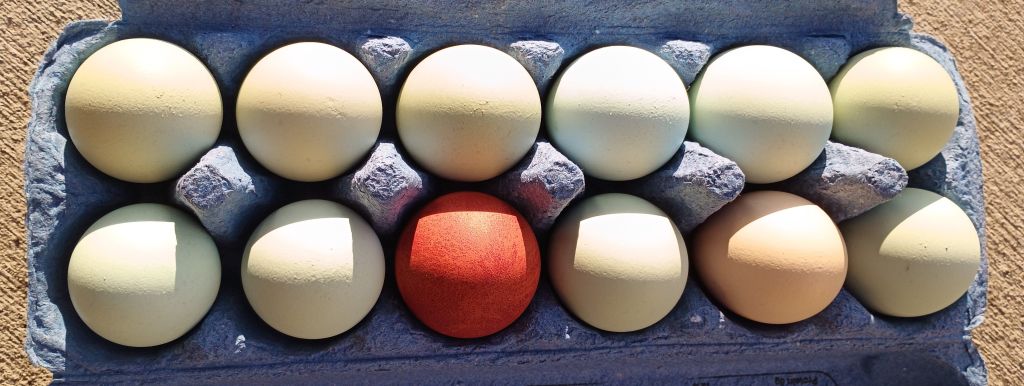
Eggs with their natural colors (102 pieces). Dyed eggs are a common part of Easter celebration.
PlanktonPunkt Designs puzzles available in CreateJigsawPuzzles
link to order print on demand PlanktonPunkt Designs jigsaw puzzles (printed in China)
PlanktonPunkt Designs POD products in Printify
link to order PlanktonPunkt Designs print on demand wares from the source
PlanktonPunkt Designs POD products in Etsy
A link to order from a selection of PlanktonPunkt Designs print on demand wares from Etsy
Eggs with their natural colors (102 pieces). Dyed eggs are a common part of Easter celebration.
The Poplar Report alerted me to textured vegetable protein in canned tuna, so I decided to look at the current tuna stocks – are we that close to (commercial) extinction? Or is it just the current trend of substituting food ingredients to cheaper or maybe adding weird chemicals for profit?
If I correctly remember, I had considered tuna overexploited since 1980s and had avoided eating it maybe since junior high school. Moreover, this century has had lurid food fakery scandals including the percentages of mislabeled fish sold in USA, often cheaper fish species being passed for more expensive ones.
Tunas, both the canned variety and the sushi can contain mislabeled fish, with especially sushi being notorious for fakery (escolar, also sold as ‘white tuna’, can cause severe gastrointestinal distress), the more expensive varieties were more likely to be faked, risk of fakery presumed to grow with demand exceeding the supply, but sometimes also the cheaper species were mislabeled. (in Spain the likelihood the bluefin tuna you ordered in restaurant is something else is on average 73% with seasonal variation based on bluefin fishing season.)
Now, checking at the state of the tuna stocks, I was surprised to read that conservation methods to protect commercial tuna stock had apparently worked and that depending on report 15 out of 23 stocks or 11 out of 23 stocks monitored were estimated to be fished at sustainable levels in 2024 reports (assuming I correctly understood their summary tables) with 88% of tuna coming from sustainably fished stocks (according to one of the reports). The contrast to 2007 doomsday news is promising, but when looking at the FAO report from 2007, I noticed that even then 13 – 14 out of 23 stocks were fully or moderately harvested, the status of the rest being unknown (3 stocks), overexploited (4 – 5 stocks) or depleted (2 stocks). Maybe the difference between today and then is in the levels of overexploitation reducing?
Nevertheless, it is nice to read some good news, assuming the tuna statistics are real. However, considering the unreliable climate reporting, I cannot avoid creeping suspicion that the earlier tuna depletion may have been overrated or the current improvements overstated. And maybe I should go to supermarket myself to check if I can find TVP in tuna can, possibly to buy a can of Albacore labeled as sustainably caught.
Today’s survivalism tip – how to prepare meat and cabbage. People think survivalism as some sort of rugged post-apocalyptic adventure, but most of the prepping is for everyday hardships like unemployment or other forms of poverty. Ability to make food cheaply is very important for modern survival.

The potatoes in the picture are not involved.
Ingredients:
meat about 1lb
or
meat with bones about 2lb
medium sized cabbage (about 4lb)
water about 1qt
beef bouillon (Herb ox) 3 or 4 cubes
salt heaping teaspoon
nice to add:
whole yellow or white onion(s)
ground black pepper
First, buy the ingredients.
Meat: I prefer lamb’s neck bones for taste and collagen and they make a good cooking timer, but most of the time they are sold out in a nearby market, so the second choice would be lamb shoulder chops fortified with one lamb round bone chop. Beef will also work, I prefer fattier meats like chuck roast or boneless rib. London broil is a bit dry for my taste. If the cuts include bone, the weight should be increased to get approximately 1lb of meats. Lamb’s neck bones are typically cheaper than meatier parts, beef chuck is typically cheaper than lamb shoulder chops. 10$ is a good current price for meats.
Cabbage: I prefer to buy the cheapest, usually white cabbage but sometimes cauliflower is on sale. They taste about the same, but behave slightly differently while cooking (cauliflower is slower to compress). I have not tried the more exotic varieties. Cabbage typically currently varies between about $0.80 and $1.40 so this would cost somewhere around 4 or 5 dollars.
Water: I prefer bought water to avoid chloramines. The latest water was $1.49 per gallon + crv.
Beef bouillon: Herb ox is my favorite, and typically goes 1 cube per mug of water. This is cheap, a can of few dollars lasts over multiple soups. This also stores well for a Doomsday larder.
Salt: I like cheap iodized salt, but about any other salt will do. This is not some weird ritual.
Optional onion: yellow or white, whichever is on sale. One is enough, but if you like onions, go for it. Onion soups can be tasty, too.
Optional black pepper: I prefer freshly ground for the taste, others prefer whole peppers, while some prefer no peppers.
Cooking:
0. Take a really big pot with a lid and pour a quart of water in it. Add the bouillon cubes
1a. Green cabbage: Take the cabbage and peel the wilting and or dirty surface leaves and toss them to garbage, rip the remaining leaves into the pot with water and bouillon cubes, tear the soft part of the core into the pot and toss the hard stem into garbage. The pot should be mostly full of cabbage with water in the bottom.
or:
1b. Cauliflower: I prefer the ones that come in plastic bags, but event those should be rinsed for dirt and other nasties. Check the florets for possible wilting or moldy bits and toss those into garbage, toss the good florets into the pot with water and bouillon cubes, tear the soft part of the core into the pot and toss the hard stem into garbage.
(2a. If you are adding onion(s), peel them, toss the wilting and or dirty outer peels into garbage and cut the fresh parts into the pot. Not the hard stem, which goes to garbage.)
2. Rinse the meat (with or without bones) and put it into the pot. It can stay on the top of the cabbages at the beginning.
3. Sprinkle a heaping teaspoonful of salt onto the meat and cabbages.
(3b. Grind the black pepper on the meat and cabbages or drop a few peppercorns in the mix.)
4. Cover with the lid and bring the pot to boil. Remember that only the water, somewhere below the cabbages and meat, boils.
5. Let the soup simmer at low heat until cabbages compress to the water level, mix the meat with the cabbages and continue slow boil until the meat separates from bones and can be eaten with spoon. Remember to keep the lid on! If you use lamb’s necks, the soup is ready when the vertebrae separate from each other. This will usually take a couple of hours which can be spent doing something else.
6, When the bones separate, turn the heat off, allow the pot to cool and enjoy the soup. If you kept the lid on, the water did not evaporate burning the soup.
This recipe has typically given me three or four meals. Unless I forget to eat it before it went bad.
The cost estimate for a potful is about 15 – 20$ depending on the price of meat and cabbages and if the other ingredients were already at hand or needed to be obtained or replenished (the biggest initial investment is the pot with a lid, but that can be used for other recipes, as can be the water, salt, peppers and bouillon.)
“It became necessary to destroy the village in order to save it”, (said during Vietnam War, where the United States went to help French with their Indochina, ending with Vietnamese eventually kicking out France, USA and China.)
To me, the modern environmentalism increasingly resembles this insane sentiment.
Last year, there was an uproar, when Reinhardswald in Germany was slated to make room for wind turbines ‘necessary’ for Energiewende.
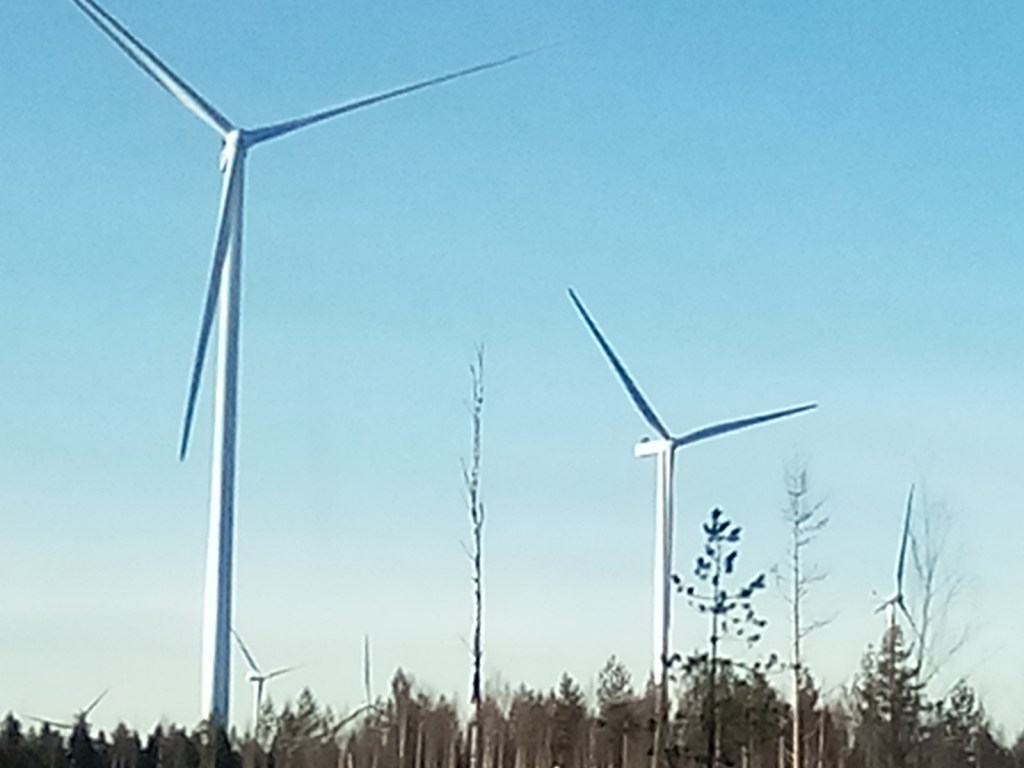
How much of this was hype and how much was counterhype, I don’t know (though I suspect my search engines show me very biased results.) On my recent trip to Finland I saw the changes in the countryside, big wind turbines can cause. It takes lots of land and removal of trees or elimination of agricultural fields to build a wind park.
In reality, it may be environmentally less harmful to build nuclear reactors than wind turbines (depending on how you calculate EROI – my Google searches were inconclusive because the studies were either old or seemed to be shilling for one form of energy or another), and they kill fewer people (not to mention them having smaller radiation plume) than coal plants.) While there remains need for petroleum, its increasingly difficult extraction reduces its EROI, which means that in future it will probably remain as a raw material for industrial processes, maybe special fuel for internal combustion engines.
Nevertheless, EU (including Germany) is dedicated to net zero project, which increasingly begins to seem like some weird suicide / flagellant cult with reduction in living standards (rationing energy by rising costs, attacking food production, limiting transportation and movement, and increasing housing density) and reduction in human-accessible territory.
All these projects, while openly posted on-line, are presented so that opposing voices are portrayed as conspiracy theorists and antienvironmentalists. But is it a conspiracy theory if they themselves tell everyone their plans, or worse, their actions?
At least the most fanatical theses from the now destroyed Georgia Guidestones are not openly touted. There are people, other than just me, who would consider the reduction of world human population to 500 million from (official) 8 billion or by over 93% rather genocidal.
But the Green New Leap is not just for UK, Germany, Netherlands or Ireland. Finland, too, is planning ambitious net zero targets, and I mean really ambitious, as in lauded by WEF.
Most of Finland is above 60° latitude, about the same level as Alaska or south end of Greenland, mostly more north than Yakutsk in Siberia. Energy is of utmost importance there. Roughly speaking, a person can survive a few minutes without air, a few hours without heating, a few days without water and a few weeks without food.
Finns have survived without fossil fuels for centuries, but that was by burning wood, which is also not OK with the eurocrats – small particle pollution will kill! Presumably freezing to death is more efficient and environmental. At least the official media reassures the Finns that saunas are safe from this regulation. For now. Anyways, the war against Russia and certain realities of energy production have resulted in complications in banning wood in energy production.
Meanwhile in China, 2024 began to build 94.5 GW worth of coal power plants and resumed 3.3 GW of suspended projects according to two think tanks. Only 2.5 GW of old capacity was closed 2024. (Side note: with China’s economy tanking and exports faltering, what do they need this new energy capacity for?)
Indeed, according to our reliable news media, a study was published that Lapland will not be able to meet its greenhouse targets by 2035 because of the large emissions from its agriculture, namely the reindeer. Which as ruminants are burping too much methane, which is a greenhouse gas. Unfortunately, I could not find a link to the original study to check the claims, and to see if the researchers were in earnest or if this was some sort of reductio ad absurdum-document to demonstrate the futility of the Net Zero targets.
However, assuming the reporting is true, reindeer are part of the Arctic ecosystem, and even if the semidomesticated populations in Lapland were counted as human livestock, those globalist net zero plans that would involve reducing the number of large ruminants, such as grazing cows and sheep, come dangerously close to messing the ecosystems by removing large herbivore guild from the food network. While I can see the point in reducing the use of feedlots and grain / soybean based fodder in ranching, eliminating free-range foraging herbivores is IMHO insane.
Ironically, the climate war against cattle (products) is not fully compatible with the idea of rewilding the land, which presumably involves switching domesticated large herbivores with wild large herbivores to the net zero effect on burps per acre in case of free grazing animals. Large scale rewilding is currently hypothetical rather than practical, as the numbers of large wild herbivores are insufficient for the switch. Humans and their cattle, pets and pests account for about 96% of terrestrial mammal biomass. The remaining about 4% is everything else from Etruscan shrew to elephant. Cows alone are ~40% of Earth’s land mammal biomass, meaning there are no replacement herbivores. And without ungulates, the grassland ecosystems will collapse.
But back to the reindeer burps.
When it comes to climate, worrying about the relative inputs of reindeer burps vs the rest of the nature makes even less sense. In Hunga Tonga-Hunga Ha’apai eruption January 2022 estimated 146 million cubic meters of Pacific salt water causing a couple of years of cooling with effects possibly lasting for the rest of the decade. The atmospheric CO2 concentration near Australia and New Zealand increased from the expected 412 ppm to 414 ppm, about the size of interannual fluctuation on those parts.
When we consider this and other volcanoes, and the coal plants of China and the rest of the world (not to mention everything else that produces greenhouse gases, such as termites), how much effect would it have on the atmospheric chemistry and global climate change if all the reindeer in Lapland stopped burping?
I like macaroni soup. It has calories.
12 ounces of cheap elbow macaronis
3 x 12 ounces of water
3 Herb ox bouillon cubes
10 ounce can of corned beef.
Put the macaronis, water and bouillon cubes into water, and bring it to boil.
Keep them boiling for a lower heat while opening the corned beef can and carving its contents with the macaronis.
Keep on slow boil for about 10 minutes.
If you want, you can add cheese slices or beef bacon or other stuff, but the above four ingredients should be sufficient for multiple meals for an adult.
Cheese should be added last to melt on the top of the macaroni-corned beef soup (adds a little to the cooking time), whereas bacon should be boiled with the corned beef and macaroni.
Enjoy.
Nutritional content:
An important part of survivalism is to be able to live off your preparations. The rule of the thumb is to store those foodstuffs you will actually want to eat. There is nothing more embarrassing than suffering from gastric upset and awful tasting food because you prepared unwisely. (For the many people who have stored cans of Spam, this recipe should also work with that, though I think corned beef tastes better.)
Take 12 ounces of cheap elbow macaroni (European, to avoid GMOs and more dangerous pesticides, while hoping the grain was not smuggled from Ukraine near Chernobyl or grown on industrial wasteland). Rinse the macaroni with water in case their manufacturer had insects, rat droppings or other such impurities.
Take 3 x 12 ounces of pure drinking water without chloramines – chloramines kill aquarium fish but officially are harmless to humans at the concentrations used (do you trust the government???). Chloramines are nowadays used because the municipal water companies want more durable disinfection chemical than the traditional chlorine. (Bonus points for rinsing your macaroni with clean water, though I think the modern foodstuff is so full of impurities that I use chloraminated tap water because I am cheap.)
Put the pure water and rinsed macaronis in a pot, turn the stove on while peeling 3 Herb ox bouillon cubes into the slowly warming water. You did remember to buy more Herb ox to replenish your Doomsday Cache, right?
While the water is beginning to boil, open a 10 ounce can of corned beef bought on sale from an Asian supermarket (Brazilian, made in China – wonder about the Amazon rain forest, cattle hormones and Chinese food hygiene standards, then decide to ignore the paranoia because the can was cheap) and carve the contents into the boiling liquid.
Also add the beef bacon you bought yesterday and needs to be eaten before it goes bad.
Turn the heat down to let the macaroni soup boil at low temperature while watching a dozen minute conspiracy video.
Turn the stove off, add some cheese slices into the pot and in your bowl on hot macaroni soup. Let them melt while watching another conspiracy video.
Enjoy, while checking conspiracy news updates.
Nutritional content:
 PlanktonPunkt