If you are bored with the Big Corporate flavors but do not want to pay $$$ for specialty sodas, do as I do.
Buy cheap, no brand or shop brand bubble water (mineral or seltzer) and add juice concentrate to your taste. Bonus points if home made from self-grown and picked berries, but commercial juice concentrates should work just as well. The amount of extra chemicals in the ‘soda’ depend mostly on the concentrate used. As a city slicker, I buy concentrates with minimal numbers of additives, especially avoiding artificial sweeteners and azo dyes, which may make the ersatz sodas healthier than many big brand sodas.
This may or may not count as Survival September 2025 post, but IMHO survival comes in many forms, and if this helps others with their finances and health, that is preparedness, too, and more resources for other prepping.
Armstrong Economics posted that Bank of England is cutting interest rates despite rising inflation, especially of food prices. The BoE tried to put that on employee costs of the supermarkets.
I have an alternative explanation. Inflation in classical sense is a short for inflation of money supply. BoE apparently worries that lowering interest rates will make lending cheaper leading to increase in money supply, i.e. classical inflation. However, the market prices actually depend on supply and demand. When supplies are low but demand high, prices rise to what the wealthiest market segment can pay for it, whereas if supplies are plentiful, nobody will take the product even for free. Also, the value of British pound had fallen by 4% on July, while the food price inflation was 4% – coincidence?
I think the inflation pressures on UK food prices are due to combination of increased demand (according to Worldometer, last year UK had 0.4 million more people on the top of 69 million already there, and that is on the top of the growth from the previous years) and reduced supply. The Western countries have reduced food production for environmental reasons, whereas political instability and weather have reduced crop production and / or exports elsewhere. Ant then there are artificial trade barriers and monopsonistic practices of the Western food and agri conglomerates (and Western in this case includes Japan and their rice crisis), which have created artificial scarcities to maintain the high prices.
All in all, I don’t blame the greedy Tesco cashier for the possible ham or bacon price increases in UK. I think it is the lack of pork anywhere except in government budgets.
While there has been sporadic rice shortages around the world recent years, Japan is a first world country and a traditional rice producer. The problem is word traditional. According to First Post, the average age of Japanese rice farmer is 71 years, and government agricultural policies in general and rice policies in particular have hit the farmers whose numbers, citing Bloomberg, have shrunk by 25% between 2015 and 2020s.
The some explanations to Japanese rice shortages is that Japanese 2023 rice harvest was bad (already reporting rice rationing in some shops on 2024), there was an earthquake and people are panic buying (also as a hedge for rice inflation, which probably increases the rice shortfall causing more rice inflation), people are eating more rice because the war in Ukraine has increased wheat prices, and that there are hordes of tourists eating rice. And the Japanese government started selling the stored rice from reserves last year. A bit like US sells oil every now and then from strategic reserves to smooth consumer sentiment. Except that Rice News Today blames the shortage on government policy to reduce rice production, which has thinned the buffer between production and consumption to such extent that even slightest consumption increase would cause shortages.
The Japanese are having an election soon, July 20th. The price of rice and the rice shortages (estimated 1.8 months of annual supermarket sales worth of staple rice – either the consumers will consume something else or Japan will soon import lots of rice) may annoy the electorate enough to lead to political upset. According to Zerohedge, SocGen (a French bank) has predicted that there is about 50% chance of election results leading to governmental crisis in Japan, which may lead to problems in yen bond market. More importantly, the price of rice is part of Japan’s inflation metrics, and if rice prices explode, the rising inflation may trigger BOJ rate hikes.
The global bond markets are highly interconnected and the financial omnibubble is floating around in search of a pin prick. Thus, the rising rice crisis just could be the trigger of global financial collapse. Though I personally doubt it. The markets are so rigged that full collapse by contagion is unlikely. But what I have seen over the years, is that small retail investors rarely fare well in turbulence.
Or Treason Day, if you happen to live in UK. In recent years, I have been watching the fascinating news from that side of Atlantic with increasing horror. Sure makes me glad I am a US citizen, not a subject to the whimsies of Prime Minister Starmer. For the past couple of visits to Europe, I even have specified to my travel agent: no stops in UK.
Why? When Soviet Union was a thing, if you traveled there for cheap vodka (vodka tourism) and other cultural immersion, you would only be charged for drunken and disorderly, such as might happen. Obviously, potential troublemakers would have been screened during visa application, but even people caught inside Soviet Union for the heinous crime of smuggling Bibles were sentenced merely for what they were doing in Soviet Union. Or so I think. However, according to an Internet source, officials in Starmer’s UK have stated that folks traveling to UK are subject to prosecution for doubleplus ungood on-line speech even typed outside the UK borders, even if they are not UK citizens. I think such dictatorships are to be avoided, especially when they have gone clearly bonkers. I love and I am grateful for my First Amendment rights, and this is one of the reasons I am happy this Independence Day.
I have bought a steak and cherries, to be eaten soon, some canned fish for future, and had an Asian/Pacific Islander style BBQ beef minimeal with teriyaki sauce for breakfast.
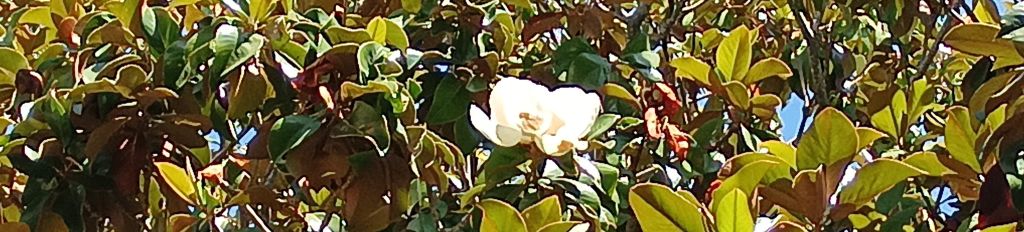
Big white magnolias are in bloom, and I have tried to get a nice photo of them for days, but that has been difficult. Many of the trees are very big and the flowers tend to be in the upper branches, either too small for my cell phone zoom or obscured by leaves and branches. Or the flowers are not otherwise accessible to photography. When I see a magnolia bud at nice, near to eye level, getting back in time before it has bloomed and is wilting is tricky, apparently the blossoms open and are done at a quick rate.
Here are a couple of magnolia flowers I photographed with my cell phone today.
One of these days, I should make more jigsaw puzzles.
Särä is a traditional meat dish from Karelia which has been in use since Medieval times (with modern adjustments) in Finland.
The recipe is for cooking brined sheep with salt in birch wood vessel (supposedly giving name to the dish) in wood fired oven. The meat is turned and extra fat was drained at about midway of cooking. Towards the end of the cooking, some half-boiled potatoes (in the meal photo, they appeared to be peeled, too) are added under the meat for the final hour of baking. The original Medieval recipe probably used turnips instead of potatoes, since potatoes arrived to Finland later, during 18th century.
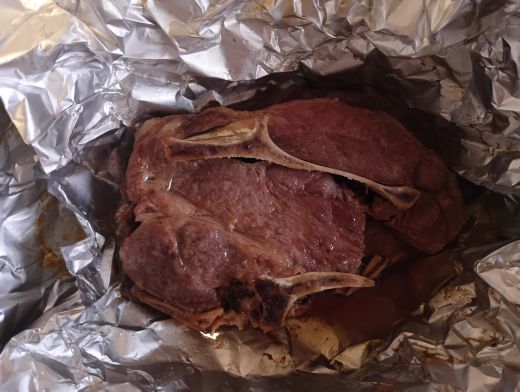
My modern lamb in oven uses unbrined lamb shoulder chops with bone in them, sprinkled with iodized salt, and wrapped in aluminum foil (I know, very dangerous, and misuse of hat material) to be baked in oven that has been set at 350°F until the meat smells cooked. Not särä, really, but I like the ease of cooking and the taste.
California and Federal government are increasingly hostile in open. California has years of experience in ignoring Federal laws, some notable example issues being cannabis, immigration, and gender identity.
During Biden(?) administration, Californian values seemed to become the US standard regardless of other states’ opinions, and California became more assertive also in foreign and trade policy, most notable event being the summit with president Xi and Biden in San Francisco (preceded by a climate lobbying visit of governor Newsom to Beijing.) Various California politicians were also courting China, although also opposite happened. Does anyone still remember 2022 when the then Speaker of the House, California representative Pelosi flew to Taiwan and caused jitters over potential armed conflict between USA and PRC? (Whether this was part of a policy by a bigger faction within the administration and if so, which one of them is murky to me.)
Now, the issues between quite untethered California and the Federal government have finally come to boil. The trigger to me seems to be the transgender athletes competing against girls, where the Federal government sees California Title IX application to this issue as violation and the regular people just unfair. California continued this practice, despite warnings from Washington DC, and the current administration threatened to withhold Federal funds for California sports. Thereafter, Newsom threatened to withhold the Federal share of California state taxes, a move somewhat reminiscent to the Nullification Crisis prior to the Civil War in 1800s.
Meanwhile, a group of Antifa or similar group(s) coordinated an attack on ICE that had done a raid in Los Angeles.
More importantly, both the Los Angeles mayor Karen Bass and governor Newsom publicly refused to help to quell the rioters, even opposing the Federal efforts. The rioters were attacking Federal law enforcement with stones and were painting graffiti putting things in fire. In fact, a roster of California political people have come in defense of David Huerta who got arrested for participating in the riot, but their support to anti-Federal action.
I am writing this in Helsinki-Vantaa Airport, waiting for a flight that would take me back to California Bay Area via Frankfurt am Main and Los Angeles Airports. By the time I have landed, well before the time I can post this (I need to add links to sources), we will see if the California or Federal authorities have caved in. If the California stops protecting the violent mobs, removes transgender athletes from girls competitions and possibly even ponies up some tax tithes to Federal government, the incipient civil war will be averted. If the Federal government fails to enforce its rules also in California, I fear that this was the opening shot of the active phase of the disintegration of the United States. Worst case scenario, neither gives in, we may have active civil insurgency in multiple blue states by the end of the summer. The most likely outcome will be a frozen conflict, that is: both sides will pretend nothing significant happened but neither will acknowledge that the other side might have won.
I also predict there will be lots of pundits dissecting irrelevant minutiae from the utterances of either side, and thanks to the strong left bias of the main stream media, the reporting will mostly support California and its allies, meaning tailwinds for civil war or mostly peaceful disintegration of USA and headwinds for peace and prosperity. The biggest losers will be the regular people trapped in the middle, looting and violence disrupting supply chains, especially for groceries and fuel, and then collapsing the teetering economy in general.
Update: Much has happened since Sunday. California did not capitulate and the National Guard activated in Los Angeles is up to 4000 and 700 marines are in readiness. When I arrived on Sunday evening to Bay Area, I took the BART from airport to hometown. The train did not take or drop passengers at Embarcadero station due to political activism nearby, but let out a handful of burly police officers and while the train waited a couple of minutes next to the platform, I could observe the officers running and so did a couple of the people already there. There was still a crowd waiting for the next train or something, though the trains had started skipping that station for the duration. Sorry, no video footage of that.
More ominously, a Walmart heiress is funding (in a small part) a nationwide call for unrest June 14th, another weak indicator supporting my hypothesis that the riots that started last weekend are part of elites’ civil war, raging over who gets to loot the treasury.
In social media there are reports of incidents in Denver, Charlotte (NC), Boston (MA), Chicago, New York City and Atlanta, things are escalating fast. This indicates that this is not a question of secession (California from USA) but of civil war by proxy between the progressive left and the conservatives over the control of Federal government. The presidency and the Congress are currently held by Republicans, but vast swathes of the administrative state are governed by the Deep State currently (mostly) promoting leftist ideologies (reasons for that are too long to expostulate in a single post and in any case speculative to the tinfoil hattery territory.) Individual states and their administrative apparati are a hodgepodge of ideologies, but the Left Coast in general and California in particular is the current vanguard and bastion of progressive establishment, so troubles beginning here makes sense.
Finally, whether true or not, the possibility of a fleet of robotaxis fleeing LA riots in order not to get burned by Mexican flag waiving ‘mostly peaceful’ protesters shows what kind of timeline we are living in. In any case, Waymo services have been suspended in downtown LA are for the time being.
Looks like I need to pick some canned meat while it is still available.
The Poplar Report alerted me to textured vegetable protein in canned tuna, so I decided to look at the current tuna stocks – are we that close to (commercial) extinction? Or is it just the current trend of substituting food ingredients to cheaper or maybe adding weird chemicals for profit?
If I correctly remember, I had considered tuna overexploited since 1980s and had avoided eating it maybe since junior high school. Moreover, this century has had lurid food fakery scandals including the percentages of mislabeled fish sold in USA, often cheaper fish species being passed for more expensive ones.
Tunas, both the canned variety and the sushi can contain mislabeled fish, with especially sushi being notorious for fakery (escolar, also sold as ‘white tuna’, can cause severe gastrointestinal distress), the more expensive varieties were more likely to be faked, risk of fakery presumed to grow with demand exceeding the supply, but sometimes also the cheaper species were mislabeled. (in Spain the likelihood the bluefin tuna you ordered in restaurant is something else is on average 73% with seasonal variation based on bluefin fishing season.)
Now, checking at the state of the tuna stocks, I was surprised to read that conservation methods to protect commercial tuna stock had apparently worked and that depending on report15 out of 23 stocks or 11 out of 23 stocks monitored were estimated to be fished at sustainable levels in 2024 reports (assuming I correctly understood their summary tables) with 88% of tuna coming from sustainably fished stocks (according to one of the reports). The contrast to 2007 doomsday news is promising, but when looking at the FAO report from 2007, I noticed that even then 13 – 14 out of 23 stocks were fully or moderately harvested, the status of the rest being unknown (3 stocks), overexploited (4 – 5 stocks) or depleted (2 stocks). Maybe the difference between today and then is in the levels of overexploitation reducing?
Nevertheless, it is nice to read some good news, assuming the tuna statistics are real. However, considering the unreliable climate reporting, I cannot avoid creeping suspicion that the earlier tuna depletion may have been overrated or the current improvements overstated. And maybe I should go to supermarket myself to check if I can find TVP in tuna can, possibly to buy a can of Albacore labeled as sustainably caught.
Today’s survivalism tip – how to prepare meat and cabbage. People think survivalism as some sort of rugged post-apocalyptic adventure, but most of the prepping is for everyday hardships like unemployment or other forms of poverty. Ability to make food cheaply is very important for modern survival.
The potatoes in the picture are not involved.
Ingredients:
meat about 1lb or meat with bones about 2lb
medium sized cabbage (about 4lb)
water about 1qt
beef bouillon (Herb ox) 3 or 4 cubes
salt heaping teaspoon
nice to add: whole yellow or white onion(s) ground black pepper
First, buy the ingredients.
Meat: I prefer lamb’s neck bones for taste and collagen and they make a good cooking timer, but most of the time they are sold out in a nearby market, so the second choice would be lamb shoulder chops fortified with one lamb round bone chop. Beef will also work, I prefer fattier meats like chuck roast or boneless rib. London broil is a bit dry for my taste. If the cuts include bone, the weight should be increased to get approximately 1lb of meats. Lamb’s neck bones are typically cheaper than meatier parts, beef chuck is typically cheaper than lamb shoulder chops. 10$ is a good current price for meats.
Cabbage: I prefer to buy the cheapest, usually white cabbage but sometimes cauliflower is on sale. They taste about the same, but behave slightly differently while cooking (cauliflower is slower to compress). I have not tried the more exotic varieties. Cabbage typically currently varies between about $0.80 and $1.40 so this would cost somewhere around 4 or 5 dollars.
Water: I prefer bought water to avoid chloramines. The latest water was $1.49 per gallon + crv.
Beef bouillon: Herb ox is my favorite, and typically goes 1 cube per mug of water. This is cheap, a can of few dollars lasts over multiple soups. This also stores well for a Doomsday larder.
Salt: I like cheap iodized salt, but about any other salt will do. This is not some weird ritual.
Optional onion: yellow or white, whichever is on sale. One is enough, but if you like onions, go for it. Onion soups can be tasty, too.
Optional black pepper: I prefer freshly ground for the taste, others prefer whole peppers, while some prefer no peppers.
Cooking:
0. Take a really big pot with a lid and pour a quart of water in it. Add the bouillon cubes
1a. Green cabbage: Take the cabbage and peel the wilting and or dirty surface leaves and toss them to garbage, rip the remaining leaves into the pot with water and bouillon cubes, tear the soft part of the core into the pot and toss the hard stem into garbage. The pot should be mostly full of cabbage with water in the bottom.
or:
1b. Cauliflower: I prefer the ones that come in plastic bags, but event those should be rinsed for dirt and other nasties. Check the florets for possible wilting or moldy bits and toss those into garbage, toss the good florets into the pot with water and bouillon cubes, tear the soft part of the core into the pot and toss the hard stem into garbage.
(2a. If you are adding onion(s), peel them, toss the wilting and or dirty outer peels into garbage and cut the fresh parts into the pot. Not the hard stem, which goes to garbage.)
2. Rinse the meat (with or without bones) and put it into the pot. It can stay on the top of the cabbages at the beginning.
3. Sprinkle a heaping teaspoonful of salt onto the meat and cabbages.
(3b. Grind the black pepper on the meat and cabbages or drop a few peppercorns in the mix.)
4. Cover with the lid and bring the pot to boil. Remember that only the water, somewhere below the cabbages and meat, boils.
5. Let the soup simmer at low heat until cabbages compress to the water level, mix the meat with the cabbages and continue slow boil until the meat separates from bones and can be eaten with spoon. Remember to keep the lid on! If you use lamb’s necks, the soup is ready when the vertebrae separate from each other. This will usually take a couple of hours which can be spent doing something else.
6, When the bones separate, turn the heat off, allow the pot to cool and enjoy the soup. If you kept the lid on, the water did not evaporate burning the soup.
This recipe has typically given me three or four meals. Unless I forget to eat it before it went bad.
The cost estimate for a potful is about 15 – 20$ depending on the price of meat and cabbages and if the other ingredients were already at hand or needed to be obtained or replenished (the biggest initial investment is the pot with a lid, but that can be used for other recipes, as can be the water, salt, peppers and bouillon.)
Privacy & Cookies: This site uses cookies. By continuing to use this website, you agree to their use. To find out more, including how to control cookies, see here: Cookie Policy.