← Back

Thank you for your response. ✨

PlanktonPunkt Designs puzzles available in CreateJigsawPuzzles

link to order print on demand PlanktonPunkt Designs jigsaw puzzles (printed in China)

PlanktonPunkt Designs POD products in Printify

link to order PlanktonPunkt Designs print on demand wares from the source

PlanktonPunkt Designs POD products in Etsy

A link to order from a selection of PlanktonPunkt Designs print on demand wares from Etsy

Category: Speculation

  • Cookies and Milk

    Doomscrolling my news sources, I stumbled on these two gems, cookies and milk:

    cookies

    https://www.sciencealert.com/radical-overhaul-to-milk-production-would-use-up-to-96-less-land-than-cows-study-suggests

    and milk.

    The purpose of microbial ferment of plastic into proteins (and metabolic byproducts, I suspect) is to compress them into cookies that can feed people. Most of whom, according to some poll, would eat it if resource constrained.

    My comment to that:

    “First they destroy farming, pave the nature with concrete and solar farms, and then they offer plastic cookies. This article is probably a psychological test to see if it actually works on masses. Methinks there will be a mass extinction of anything larger than rats and a global desertification to the tune of Sahara before we reach that level of resource constrain.

    More ominously, the elites may have realized that they have destroyed too much of the food system, and the resource constrained conditions might cause social instability like torches and pitchforks, i.e., Arab Spring II. The fact that this sort of dystopia is even attempted to be normalized shows what level of famine they are expecting in their pipeline.”

    was missing the risk of microplastics and exotic chemical impurities.

    I have already cut down eating certain foods for their suspected plastic content, would not trust the cheap mass manufactured plastic cookies, could not afford expensive mass manufactured cookies.

    Lots of current plastics contain many toxic elements or chemicals from manufacturing, and even those that were inert in the original product might be freed during fermentation process. Others, like phthalates were not safe to begin with. And then there are microbial metabolic side products which cannot be cheaply removed fully and may convert inert to toxic. Not to mention that recycled plastic has encountered many environments during its travels and may have collected dangerous souvenirs. I remember from years ago that granola in boxes made of recycled cardboard needed to be bagged into clean plastic bags, because of the hazardous impurities in recycled cardboard.

    As for the milk, I believe in whole milk to be the healthiest alternative, unless one is lactose intolerant or is allergic to milk (different ailments but both unpleasant), and I would not trust the manufacturing processes to be safe enough for microbial milk substitutes, especially for people who have yeast allergies.

    But based on my understanding on the linked original article, it discussed substituting milk in point of view how much land is saved when rapeseed oil and sugar beet residue is used instead of dairy cows. The paper’s point was not improving human nutrition. The final product is supposed to be nearly as good as milk, but without lactose or cholesterol, and fats coming from rapeseed oil, minerals, vitamins and other nutrients were assumed to be added from somewhere but even the authors admitted that since the fat profile differs from milk fat profile, the milk substitute might not be a substitute for all milk uses.

    Why do we want to ‘save’ land? Rewilding, settlement and other agricultural uses were mentioned, as was Net Zero. I have previously discussed rewilding and destruction of food production, but why exactly do we need more settlement when most of the worlds population lives in countries where fertility rates are below replacement level, and soon their populations are beginning to collapse?

    I do not trust the nutritional value of microbial milk substitute. Having read some of the baby formula ingredients lists, I am not surprised that babies fed with formula develop lower IQ than breastfed babies, though I am not condemning their mothers, who often do not have a realistic alternative option for formula. Economics may be too brutal to stay home to nurse, and not all mothers produce enough milk to feed a baby. I have not seen the microbial milk ingredients list, the original paper was speaking of rather generalized data, but whatever the final products to be pushed to us are, I expect their industrial requirements to be about as healthy as an average baby formula.

    Summa summarum, these milk and cookies would be something I would leave for modern Winter Holiday Santa, the commercial one that is supplanting Christmas Santa and older characters like Joulupukki and Krampus. Even if the hypothetical Winter Holiday Santa would leave me lumps of coal as gifts after such skimpflation, those probably would be welcome in the approaching fuel shortage. And if it were anthracite coal, it might even contain a fossil or two!

  • My Memories on Collapsing Dollar

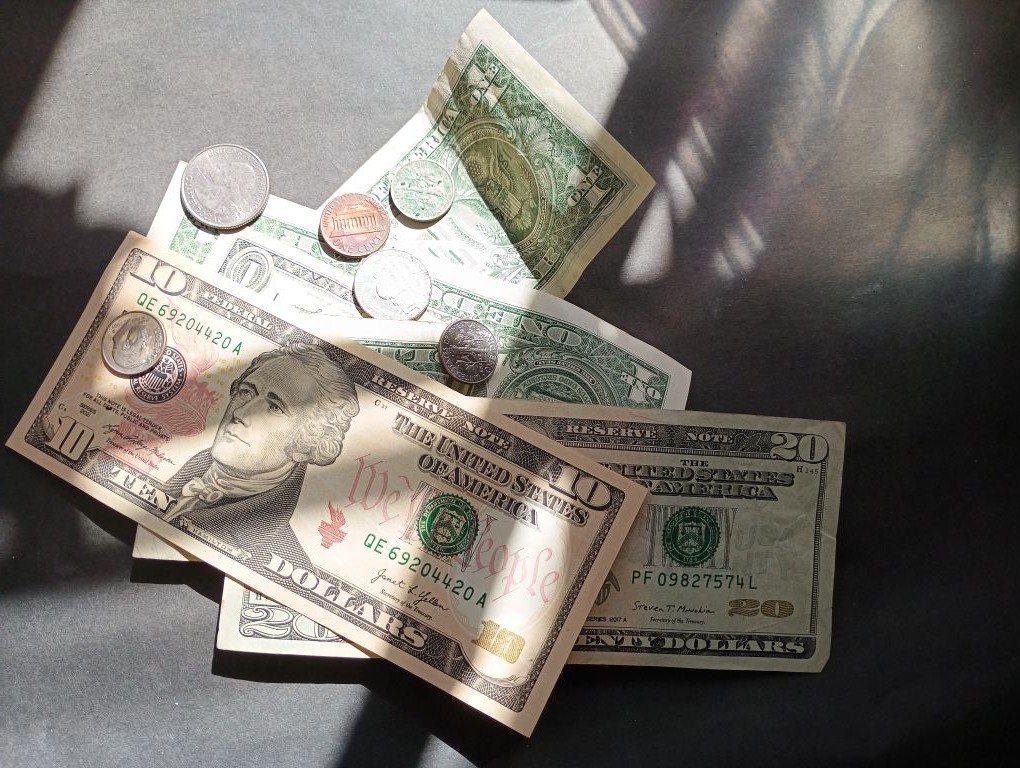
    When I moved to California, you could by a cheap carton of greasy fried rice from a Chinese greasy spoon for about $1.00 – $1.50. Now the Chinese greasy spoons are extinct or gentrified, and a bowlful of fried rice cost $10 to $20 per.

    Meanwhile, reading and listening, occasionally even watching people (or AIs) pontificate about the current situation as if this is something that suddenly appeared through this latest Middle-Eastern war seems a bit surreal. The problem with US dollar started long time ago, probably longer than I have been alive, but I will here just ramble a bit based on my own fallible memories. Any factual errors are mine and I blame them on my small and feeble brains.

    I’ll start with Bush Jr. Having arrived after the voting ended and then following the discussions about hanging and pregnant chads, anthrax letters and finally 9/11 which set the tenor until the banking crisis. For USD, 9/11 is significant because using that as a pretext for Iraq war allowed United States to mess up global oil markets, causing price per barrel, and thus the demand for dollars to buy the more expensive oil, to shoot up. This allowed the Greenspan Moderation, which inflated the credit bubble – everyone got a housing loan and the subprime loans were then baked into collateralized debt obligations or CDOs. Michael Lewis wrote a book about The Big Short which was later adapted into a hilarious movie. Although the movie may have been less funny for the hundreds of thousands of people who lost their homes when the adjustable credit rates started moving up.

    The implosion of the credit bubble during 2007 and 2008 was something awesome/awful to behold. I remember picture of Ben Bernanke, the Treasury Secretary on his knees in front of Nancy Pelosi, the Speaker of the House, begging for congress to pass a bailout package. One of the many that bailed out banks, the newly homeless regular folks, notso mucho. Occupy Wall Street was born and Obama got elected.

    After which the Quantitative Easings continued to stabilize the banking system, people were left to survive. I don’t remember exactly what happened to dollar during Euro Crisis 2011, which I think was triggered when Soros publicly doubted Greece’s ability to pay back all the loans they had taken. The doubts spread like a wildfire in arsonist prone chaparral, infecting other shaky economies, especially Portugal, Spain, Italy and eventually Ireland, which were lumped together as PIIGS. The northern EU that had pumped their own economic numbers up by lending to southern EU so that they can buy northern products like tanks and submarines, then sanctimoniuosly castigated the peripheral member states for their economic profligacy despite having their own economic mirages depending on the same.

    The Euro Crisis coincided with Arab Spring which had been triggered by exploding food prices, brought to you by bad weather (droughts, floods and sundry), US agricultural and green energy policies (‘green’ corn-based bioethanol had consumed the US feed corn, so the US ranchers bought cheap corn from abroad, which then raised the food corn prices in Third World), deregulation of wheat futures market (previously open only for farmers and grain processors, anyone could speculate on bad weather, and speculate they did), and Gaddafi’s decision to start selling oil in currencies other than USD. The last one was fatal for Gaddafi and Libya – for me this was the most obvious demonstration how social media could be used for destabilizing fragile countries. Though the Abar Spring itself is credited for having started in Tunisia when some fish cart got confiscated by officials (the famous last straw), Tunisia avoided the worst consequences. Morocco and Algeria had troubles, too but those were ‘handled’, whereas Libya got bombed. The campaign was seemingly started at EU/French initiative and US participating simply because we had to (though in retrospective, I wonder…). It degenerated into multiparty civil war, shenanigans in Benghazi being a side note – I think that was about US running guns to ISIS, but I might be wrong, and it took a major oil producer out of market. Egypt which fell and then stabilized under Muslim Brotherhood and then under military dictatorship (I don’t think Arab Spring brought much democracy anywhere) does not produce oil, but Suez Canal is kind of important, Lebanon, Iraq and especially Syria fared poorly (I wonder if US troops are still in Syria to protect their oil now that ISIS toppled Assad?).

    We also had instituted sanctions against Venezuela during Chavez presidency (also tried to get rid of him by other means), affecting global oil markets, there has been happenings in Nigeria (partly due to destruction of Libya which unleashed islamists all over Northern Africa), all of which have pumped oil price up, helping the demand for US treasuries. That is, trillions of dollars more government debt for bailing out the billionaire class (not just too big to fail banks but many other megacorporations), waging wars and insane government social engineering programs meant to extract control and wealth from the working and middle classes to various bureaucracies and governmental NGOs. A classic example, Obamacare. Marketed as a government healthcare system, it actually manifested as a government mandate to buy a private sector health insurance. Problem: people who could not afford health insurance before Obamacare were still too poor, even though some pressure had been taken off by complex and arcane health insurance subsidy system based on the buyer’s reported annual income.

    In any case, Obama continued the debt bazooka, fueled by oil wars, but since it only benefited the 1%ers, voters went berserk and elected Trump. I had expected 2016 election to be between the anointed Clinton and the anointed Bush, but then the Republican primaries went sideways, with Jeb proving himself unelectable without properly organized party machinery, Trump winning the primaries. If it had been on voters, the Democratic primary winner would have been Bernie, but superdelegates rescued Hillary, who then expected a smooth coronation. Except that the US voters did not co-operate.

    Trump’s first term increased the spending but did not add any oil wars. By 2019 the economy was about to have a coronary arrest – I was expecting banking collapse some time during autumn or early 2020 at the latest, but then came COVID-19 and two weeks to flatten the curve. Giving a great excuse for the economic collapse that IMHO would probably have happened even without the virus, though maybe not as comprehensively.

    Biden was ushered into presidency and once the lockdown mess began to clear, it was obvious that the US treasury was being looted by every (administration aligned interest group) as if the country was under a fire sale. The disastrous withdrawal from Afghanistan was the US equivalent of Byzantine’s Battle of Manzikert. Not the withdrawal itself which should have been done years ago, but the manner it was executed, complete with reenactement of Last Helicopter Out of Saigon. Emboldened by this clear sign of an empire in decline, Russia moved to Ukraine 2022, after waiting for Beijing Olympics so as not to insult their new best friend and fellow BRICS member.

    Technically USA could have ignored Ukraine, but too many corrupt interests converged there, and then there was the fight over superpower prestige. Plus it was a too good opportunity to destroy the EU economically by isolating it from cheap Russian energy resources and markets. Nordstream II exploded. There was self-imposed ban on buying Russian oil (though buying the more expensive Indian distillates made from Russian oil was OK). All this meant more pressure on energy supplies, meaning higher US dollar demand. Meaning the debt could balloon from well over 20 trillion dollars at the end of Trump’s first term to well over 30 trillion dollars after Biden’s only term.

    When Trump took over, he promised a Department of Government Efficiency to weed out fraudulent spending. I wonder what happened to that. He had also promised no new wars, then took out Venezuelan president Maduro (and US oil companies are back in Venezuela, trying to extract the oil there, but years of sanctions have left the infrastructure shaky), threatened to take over Greenland (mineral resources and Northwest Passage), and finally went to Iran.

    Problem with Iran war (among the too many to list): too much oil production has been taken off the market and global economy is failing. The price per barrel has been suppressed by multinational SPR releases, but the tanks are nearing empty. Also the agriculture has been devastated by rising fuel and fertilizer prices, and the summer has been brutal in North America, Europe and Asia.

    The Ukraine and Iran wars had also been a double whammy on the treasury demand. People have spoken of glut in dollars, worried about inflation, but it was the increasing use of economic sanctions as a weapon to all directions have shaken the buyers’ faith on their safety as investment. Also, USA has bled Japan dry with yen carry trade (cheap yen loans to buy a bit higher interest US treasuries and bonds and pay the Japan loans with US paper and pocket the difference has supported the US debt machine), and the recent bail outs IMHO are just a drop in a leaking bucket, an omen of end to arrive.

    Now, on that background we have reached 40 trillion dollars, and borrowing costs have risen to levels that Treasury apparently is uncomfortable with. IMHO, Bessent’s buyback promise is a sign of weakness, and may be remembered by future economic historians as a gross blunder, but blaming the current administration for failing to kick the can one more election cycle further is a bit intellectually dishonest. Bessent’s hands are tied by the realities, namely USA has over the decades squandered its superpower status by living well beyond its means (partially to maintain superpower status, partially to appease voters), and there is very little that can be done to soften or even postpone the dollar collapse, especially with the current incoherent administration. For example, I don’t like how Treasury and Fed are uncoordinated. Nor do I like the AI mania or how our trade policies sabotage our agriculture.

    I expect the official Federal debt to continue at least a couple of trillion dollars higher, possibly up to 50 trillion dollars, but backed by full faith of US government is no longer what it was. Meanwhile, while money gets printed, nobody is printing bread (even vat grown meat is a specialty item and requires way more resources for much unhealthier product to be currently more than a curiosity for healthy technocrat class, though meat glued scraps are the new sausages for plebeians), so I expect food inflation with sporadic shortages and rampant skimpflation in wealthy countries and outright famines in poor countries.

    (A side note back to the Arab Spring; there was a model that predicted the level of food prices when a country undergoes an upheaval and on 2011 all the Arab Spring countries had crossed that level. In Europe, the only country to have food price distress was Latvia, but instead of revolution, the Latvians simply migrated, thanks to EU free mobility. Later, UK, dismayed at all the Eastern Europeans flooding the island, voted for Brexit, but that was then another story.)

  • Water for Suspicion

    Water, somewhere in Finland, 2025, May 31st

    My crawl though murkier parts of internet brought me to the subject of Water Wars, that is: who gets to decide who gets water?

    While the subject has been surfacing my feeds in waves as new item or old opinion makes splashes, I thought the post behind the link above to be a nice summary of many of he main points.

    One of the voices for monitoring and monetizing the access to water is WEF. On private sector, the role of Nestle in various water related controversies in Americas, Asia, Africa and Europe have been reported. But surely privatization will work this time, right? People joke about communism, as in “but this time it will be different”, but I have noticed exactly the same issues with capitalism. In the end, it does not matter whether the central command is the Chairman of the Politburo or the Chairman of the Board, access to resources will become a dialogue between the oppressor and the oppressed. By inference, the only way to prevent the water distribution from becoming a tool of dictatorship is to maintain local control over access.

    AI, of course, is now part of the mix, and it does not give me warm and fuzzy feelings that they are often prioritized over people. I suspect many of the local water crises only happened once a data center was added to the drinkers. But every crisis will be exploited to justify control, not only locally but globally. Just last month we were told that world is entering water bankruptcy. We know water is scarce in Sahara, Arizona and Mongolia. However, Canada and Sweden have plenty of water, and most countries should have reasonable rainfall levels, though politicians may do their best to worsen the situation. For example, despite nearly double snowpack on Sierras 2019, political decisions were made and California told residents not to water lawns. So even though UN acknowledges water scarcity is unevenly distributed, and even locally, like in UK, I think the shortfall is due to bad politics and mismanagement, possibly even profiteering, rather than actual environment, I suspect the control grid will be global.

    At which point, I would extrapolate from central command to the dangers of central command at hands of anti-humanist ideologies of WEF, technocratic dreams of Club of Rome and John Maynard-Keynes (and his followers), not to mention the trans-humanist tendencies of technocracy (some of who are prioritizing AI not as a tool for wealth but as a stepping stone for a manmade god to rule the stupid biological masses in their controlled hives). The publicly allowed zeitgeist seems to clearly wish there were fewer of us and people are without censorship and overtly talking what should be done about it, calling for ‘sustainable development’.

    Helped by the swarms of opportunists rushing to exploit the chaos caused by the disruption, the technocrats hope to push their anti-human control and wealth extraction agendas through (regardless of the consequences to environment, environmentalism being just pretext.)

    Lil’ PlanktonPunkt needs water to survive. Lil’ PlanktonPunkt does not like that another vital resource is taken over by the wealthy and the powerful behind paywall. Lil’ PlanktonPunkt remembers years ago in a faraway land everybody had access to water and swimming and fishing (angling was mostly free, nets required fishing license.) If you wanted water piped into your home and then out of it, you had to pay for municipal water authorities. Water bills were not really an issue, or maybe Lil’ PlanktonPunkt just does not remember. Some supermarkets had free well water for customers to refill their containers if they did not like the chemical taste of municipal pipe water. City slickers, of course, were obligate users of municipal water and sewer services. Today, on another continent, authorities decide if you are allowed to drill a well on land you own and if you are allowed to water your fields from that well, and there are places where storing rain water that fell on your roof for watering your garden into too many barrels requires a permit. But then there are fights over whether you are allowed to grow a garden, on land you own. And that is not even including laws requiring registered seeds. PlanktonPunkt worries about food. And access to water.

    Running water and bird song, 2025 May 30th, Muhos, Finland

    (Note: the links in my postings sometimes contain ads but I’m not sponsored by any of them)

  • Finland in Financial Finale?

    I wandered into a video about why Finland sucks. Some I agree, some I don’t, but I put a longish comment there and decided to republish it with some modifications and additions.

    The downward turn of Finland became a point of no return at EU membership.

    The money circulating in economy now goes to Brussels and multinational corporations operating under international rules, while Finnish economy is being strangled by EU directives designed to favor the looting of peripheral provinces like Finland. Everything else is downstream symptoms of this colonialism.

    Including chopping state services like electric grid, elder care, and soon common water resources, for sale to international bidders (which I suspect to happen because the administrative and tax structures are heavily stacked against those domestic enterprises that do not use tax sandwiches and cheap foreign labor.)

    Using regulatory capture via EU is a modified version of standard globalist modus operandi, sending economic hitmen to subvert national governments to facilitate their countries looting. Here it is a supranational structure operating under severe democracy deficit that functions as a middleman and a fig leaf of legitimacy to borderless looting. After quick googling, I got the impression EU itself seems to consider the political legitimacy a perception issue, i.e., the system may get (cosmetic?) changes and the EU subjects might be probagandized more, if the issue becomes more relevant to the powers that be.

    Among other economic issues, the video mentioned refugees, which in case of Finland was a GDP Ponzi scheme coordinated at EU level. In general, the whole multiculturalism is just a marketing term used by elites pushing for their ‘remedies’ to economies that are already underperforming because of the epic looting that has been going for a long time.

    The real original reason for the refugee business was at first ‘tax payers are not breeding, let’s import more labor’ (and charge the public purse cost plus for integration services by well-connected providers, which, surprisingly, have zero incentives to run out of people to provide integration services for). If nobody paid for the great social benefits to them (AKA the immigration industrial complex) the immigrants would go somewhere else. As would the integration service providers siphoning this money.

    In California, we have a massive homeless industrial complex, with more and more tax money collected to subsidize more and more homeless services serving more and more homeless. Now people have began asking evaluation of results, even audits to find where 20 billion dollars (20 * 10^9 $$$) paid over 5 years went.

    Then, when the newcomers did not get employed (the economy was still sick due to looting, and using the ‘integration services’ rather than job opportunities as a bait attracts different cohorts of immigrants), the rationale began to shift towards consumer headcount method of economy – more consumers mean more economic activity.

    Except to pay for the new army of unemployed, the successive Finnish governments needed to borrow more money, cut other services and pay taxes. Which did not increase economic productivity but increased money in circulation while shifting it from pocket to pocket. Which means inflation and rising unemployment. But at least the economic numbers were manipulated to the EU standards using approved methodologies.

    I don’t know what the next phase of immigration will be, but I would be surprised if it worked better than the previous two phases. Finland, I think, is still in the first phase but beginning to have doubts about it (I might be wrong because I don’t follow Finnish media that much any more.)

    Slightly expanding on the subject, I think NATO’s current whining for war is just the grand finale in the leveraged buyout of nation states like Finland. The EU cash cows have been milked out of all the profits a peacetime economy can provide, let’s sell them to meatpackers. The military industrial complex, the war bond markets (large parts of Ukraine have been put as collateral for the loans required to continue the war against Russia), the reconstruction contracts, the overall firesale of the desperate (or dead) people’s resources for cheap to multinational investors. Finland is, of course, eager to go against traditional enemy, thinking that NATO will help them or that they will help NATO, or something.

    TLDR: Finland is just a case example what happens to once stable and prosperous countries once EU gets to rule them. I suspect that once looting Finland with just current methodology is no longer cost effective, it will be one of the assets to be liquidated in the war against Russia.

    Economic low pressure over remaining small businesses, a metaphor.

    Checking photos of Finland to best illustrate the situation, I think this is better than one of the runners up, a dead tree full of concs.

    Here is a sky darkened by rain clouds and a thin line of trees, cosmetically around a road rest spot, but no trees behind them. To the right was a rain drenched bog with sparse, stunted pines.

    It could be that the line of trees surrounds a farm (those are also usually under heavy regulatory and financial burdens), but thin lines of trees can be seen standing between roads and clear cut openings all over Finland. Such a line could be easily considered a metaphor for cosmetic ‘Happiest Country Statistics’ masking over the remnants of Finland’s economy, while behind spread ploughed through clear cut openings, that would be the real state of Finlands economy. And the dark clouds of global economic collapse and war are looming.

  • Fuel Rumors.

    I’ll treat this as a rumor but where there is smoke, there could be fire. Some spot(s) in Texas are said to be running out of diesel and gasoline – this could be just a temporary and local supply chain hiccup, but in my lived experience, all sorts of hiccups are becoming the norm. Another rumor from the same report claims that New Jersey is running out of diesel and gasoline for big companies, as well as of motor oil. The motor oil issue spooked me already some months ago to buy a couple of pints extra in case I need it, when I learned that Toyota relaxed its oil specifications because there was not enough fancy oil available.

    The purported low price per barrel of crude may be due to demand destruction, or so it has been speculated. As economies crater (especially Chinese), the world oil consumption presumably goes down, and there is suddenly enough barrels after all. Problem: can official numbers of anything, including fuel supply and consumption, be trusted? And even if the numbers are real, are models correct?

    Meanwhile, I saw a video about people no longer affording fun like bowling, boating or going to movies. I think that entertainment downturn is also caused by demoralization. Nobody has time or energy for formerly fun hobbies, even if they had money. And people do still watch TV, play computer games and stream movies. They just are not consuming the new ones. I can sympathize. Call me old-fashioned, but I, too, used to watch more movies before COVID. I think that event fractured the society badly. Having said that, the last movie I saw in theater was Project Hail Mary, which I liked.

    The gasoline prices are currently lower but that may be temporary as the action in Strait of Hormuz and elsewhere intensifies.

  • Food.

    Dead meat. And lots of it. In California, in July. Though I suspect most of the biomass stored there was not meat, more like a mix of meat, fish, ice cream, frozen fruit and vegetables, and lots and lots of TV dinners, imagine the smell of 65 million pounds of rotting food stuff. And logistics of dealing with the mess. The panel in the video behind the link tried to. In this case, I suspect flies and other scavengers like mice and ants will become a plague, but still preferable to the putrescing health hazard. Having seen the organizational abilities of California in general and LA region in particular (Palisades fires, for example), having the mess to fly away after the maggot phase might be the fastest and most efficient way of dealing with it.

    Heat dome is destroying our crops and cattle. Corn is currently silking, too much heat destroys the ears before they have formed. Soybean flowers are suffering, too. Cattle pastures are parched, meaning strain on supplemental feed supplies. Not to mention animals themselves at risk of heat strokes. And the farms are already under water stress, fighting for supplies.

    In general, our wheat production is the lowest in 50 years. The US wheat acreage is lowest in over a century and when weather and fertilizer effects are added, the amount of wheat to be produced is in danger.

    President has declared a national emergency over the availability of fertilizers. One reason for low wheat acreage is the unaffordability of fertilizer and if the farms do not get their fertilizer in the autumn, next year will be worse. This autumns fertilizer needs to start moving to wholesalers already to make it in time for the farmers. Next year’s crops depend on whether we can source enough now.

    The past few years have reminded me of Revelation, chapter 6, verses 5 – 6, where Famine is given orders in terms of food inflation.

  • Summer Solstice

    Also a Father’s Day in United States. Congratulations to all the fathers, it is, unironically, an important task.

    Since today is a celestial event, this is a good place to mention an update on K2-18b, this potentially hycean exoplanet, that may or may not harbor life (it resides in a habitable zone of a red dwarf but the spectral signs of biosignature molecules are not very reliable and the molecules may also have been formed by abiotic means.) Now, SETI had included this solar system to their radioastronomical survey for alien radio signals. They did not find any, but got plenty of data for future negative controls.

    IMHO, microbial life on exoplanets and larger moons is likely (how common is another matter), but assumption that alien civilizations would communicate via strong radio transmissions seems oddly specific. I expect that if we ever find proof of advanced material civilizations, it would be something like Dyson structures or remnants of extraterrestrial advanced materials not formed by natural processes.

    I thought to get some photos of the sunset of the longest day of the year, but gray clouds had crept over and obscured the sky. It often happens in Berkeley, days are sunny but as the evening sets, the cloud cover spreads from sea to hills. I did not get up there, but in many nights, the blanket of water which is cloud cover over the flats is fog or mist in the hillside. So, instead, here is a picture of jasmine flowers, size reduced from the original taken earlier today.

    These are either from South Berkeley or from North Oakland, the city border crosses the block where the plant grows.

  • Sometimes I Get Paranoid…

    Looks like Peter Thiel, the Palantir billionaire, has moved his wife and children to a safer country, namely Argentina. Paranoids like me would be curious, why?

    Mr. Thiel bankrolled J D Vance’s career, and with his Palantir surveillance and Anduril military intelligence company, is one of the powers behind the throne for Trump administration. If someone knows what is happening and when, it would be him. And considering that he is probably one of the most powerful men in USA, if not in the world, idea of him moving his family to safety from what is supposed to be the world’s most powerful superpower, despite owning a substantial fraction of its oligopoly of violence and being a billionaire.

    I first read about it yesterday morning and got curious.

    Some of these articles speculate that he might be fleeing billionaire taxes. Ultra-wealthy in general have been buying additional residency permits and passports in various countries for “just in case”, often to park their assets to lower tax region. Maybe Mr Thiel was tax planning, but I think he has a small army of accountants and lawyers, not to mention a layered multinational corporate structure to minimize tax consequences, even if Palantir and Anduril would need to be nominally American to officially maintain security clearances. Some mention that he is worried about nuclear war and the Southern Hemisphere would be less affected by the exchange.

    I thought that maybe the fire he was fleeing was not nuclear but from torches of pitchfork crowd. The sentiment online has during past few years considerably hardened on both left and right sides of the isle against billionaires and AI and surveillance state, and Mr. Thiel represents all three, and probably knows about the rising sentiment, having the first hand access to online moods.

    Then, later yesterday, I saw a link to this posting…

    I instinctively mistrust when an anonymous leak is fed through influencer (which used to be a mainstream paper like New York Times and it famous Deep Throat), but if true, could explain why Mr. Thiel felt a need to relocate, at least his family, despite being very influential individual in US politics, due to providing the tools for the surveillance state (and modern military).

    Also, while I understand the need to protect his family, his quest for additional passports (New Zealand and Malta were mentioned) feels in this light a bit like a rat fleeing a sinking ship after gnawing a hole in the hull. In any case, he does not seem to have much loyalty to United States. The same could be said about the other 0.001%ers, who have helped to grow this Doomsday Machine of an economic system and are scouring the globe for bugout residencies – loot a country and flee with profits to the next jurisdiction.

    What I would like to know, what are the 0.001% going to do when they run out of countries to loot? What is the end game? A luxury bunker? Face the torches and pitchforks? (And in reverse, what is there for us peasants after everything is gone)? Is there a backup plan? (Other than build an AI master and hope that it will solve the mess – BTW did they hear that it only takes 250 data points to poison even a large LLM? Do they trust the input data? Or do they just “Trust The Plan” – assuming there is one?)

    By the way: New Zealand, which was fashionable some years ago, is now suffering from energy crisis brought by long-term malinvestment, meaning any bunkers there better be stocked with fuel. And anything else imported with planes or ships that require fuel to function.