Yesterday, there was a brief break from more urgent tasks (just kidding – I wanted to take a break and do something fun), so started checking my latest video clips for something interesting to post.
My original target was a set of ants in flower(s) clips, but before those were three hummingbird clips taken 2026, October 15th, that might make something viewable. Poststabilized, trimmed, cropped and with fade through black transitions.
Hummingbird feeding in red flowers
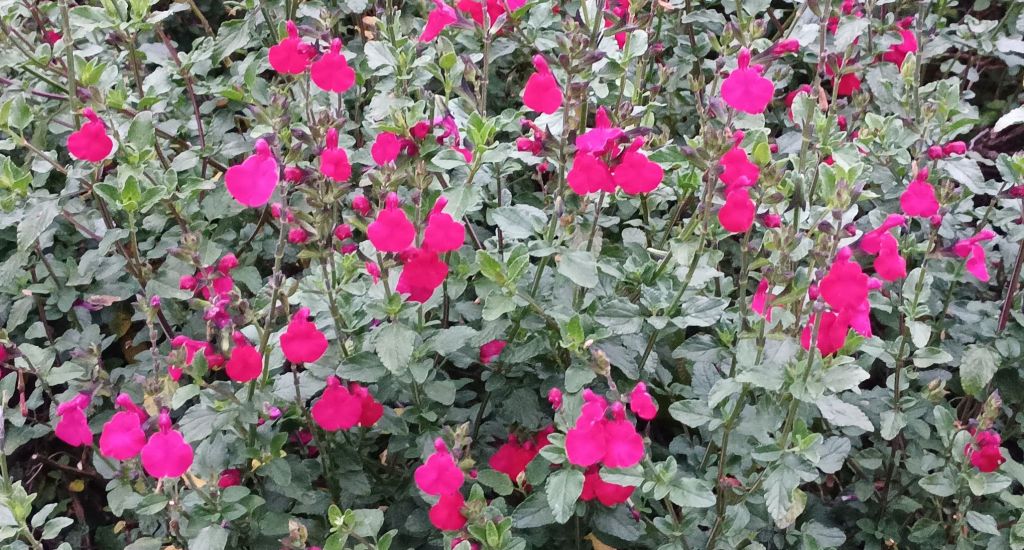
It was a sunny day, and I had been neglecting my flower walks, when I saw a hummingbird that was intent on feeding from red flowers. A couple of times she flew aside when pedestrians walked past, but returned to feed nearly instantly after they had passed. She must have been hungry.
And she was most likely she because of her muted colors – male hummingbirds have brilliant, iridescent coloration, females are better camouflaged. Although spotting a bright green, leaf-shaped male hummingbird singing in a tree can be very challenging, and often I just walk away knowing that he was there but I could not see the bird from the leaves.
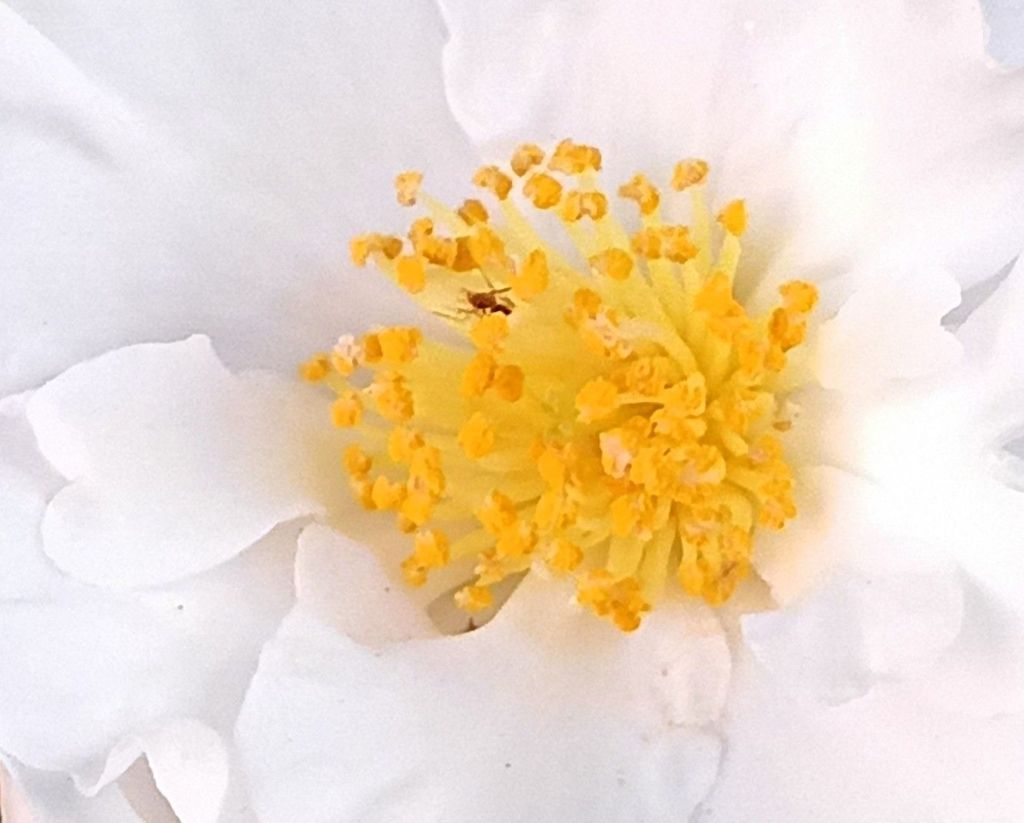
An ant in a flower. Some of the ant clips taken were not very happening ones, the ant kept on feeding(?), not walking much.
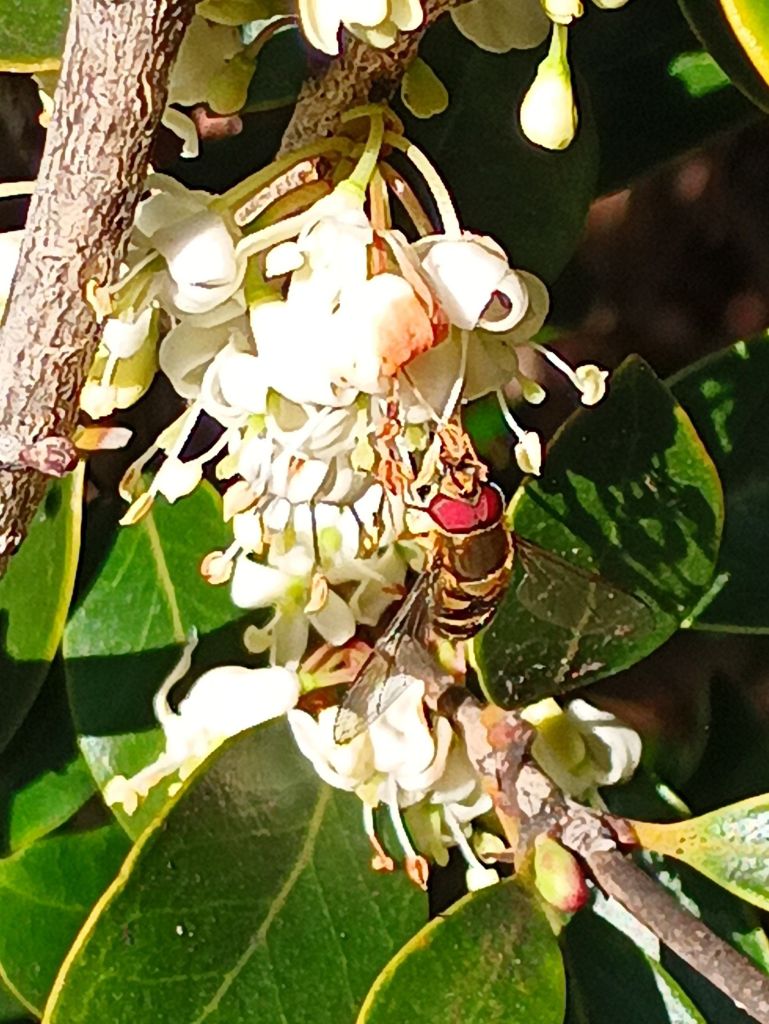
A couple of clips of fruit fly (fruit flies?) being fruit fly on my door.
Species unknown, footage clipped to square and joined with fade through white, text added but otherwise unedited. Shaky hands were filming these, but the stabilized versions were even worse.
Fruit fly (or two)
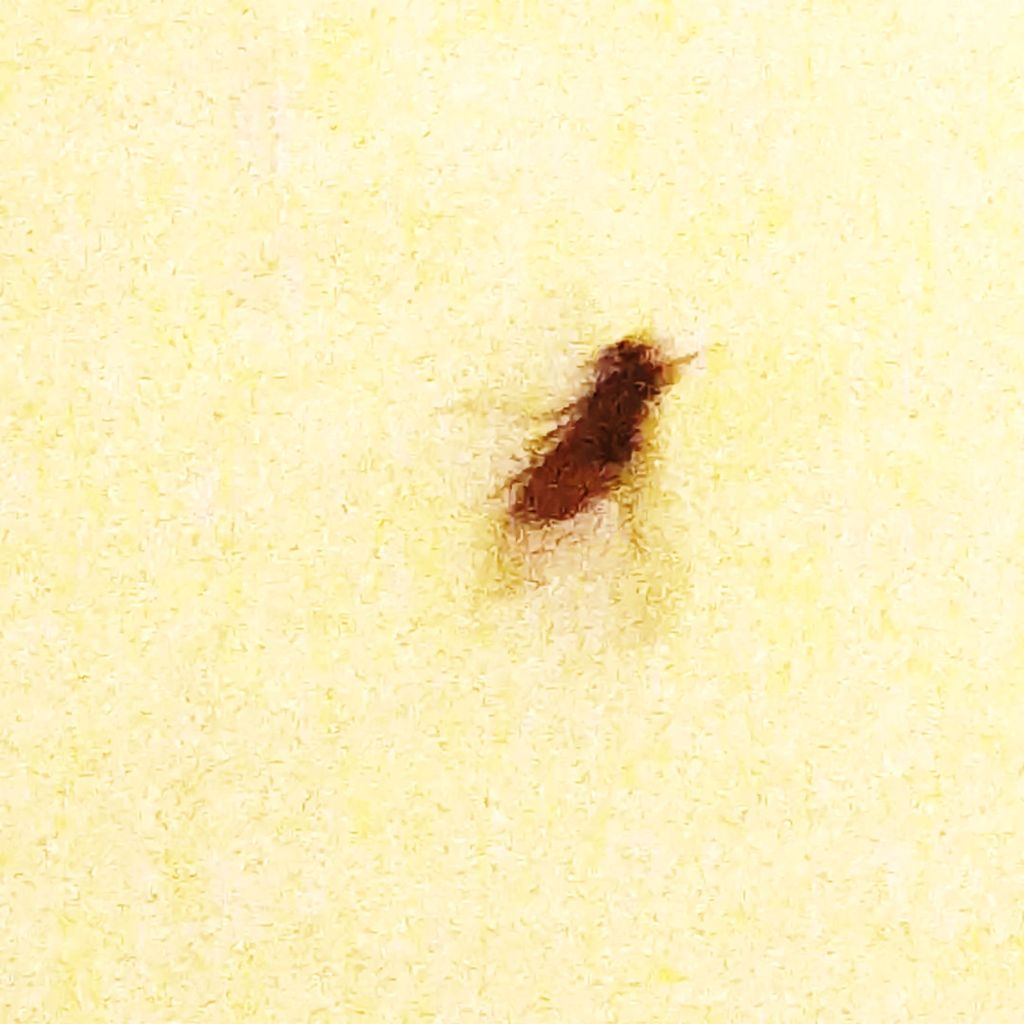
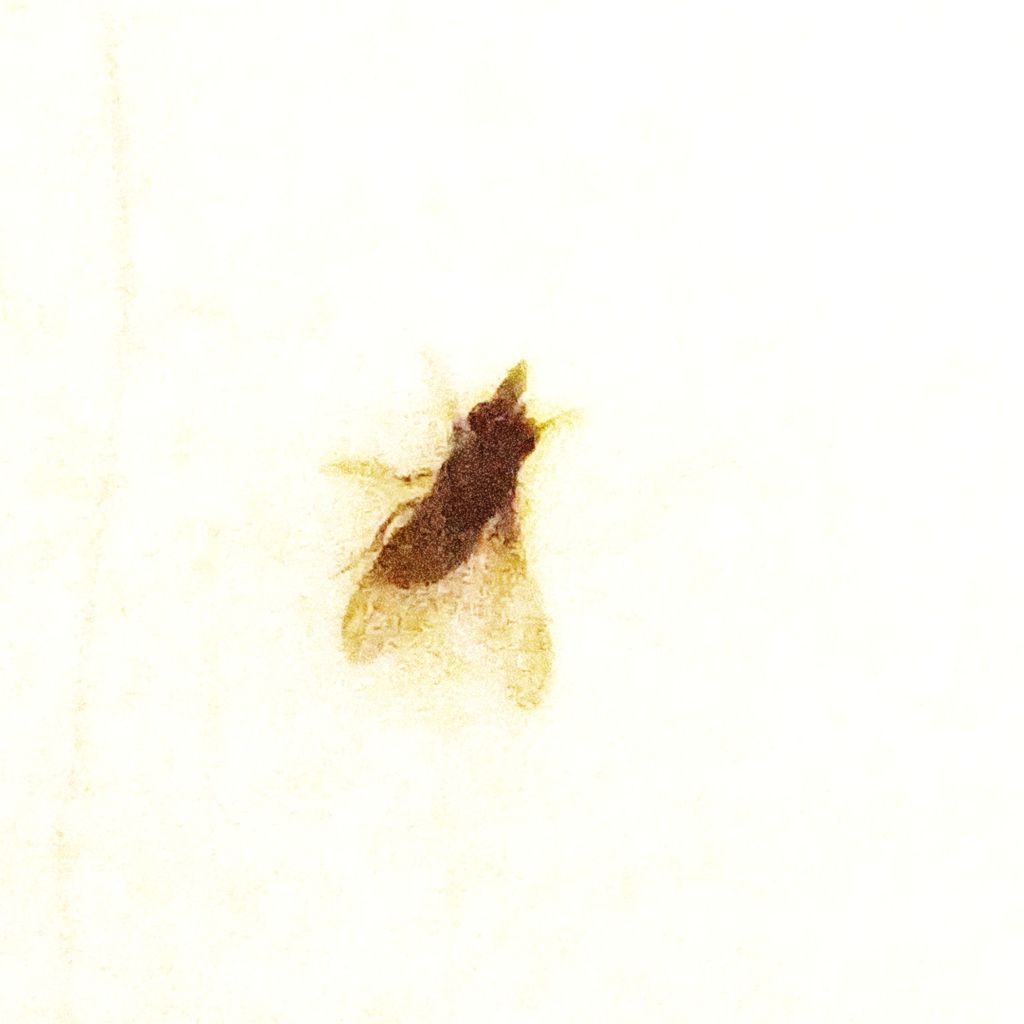
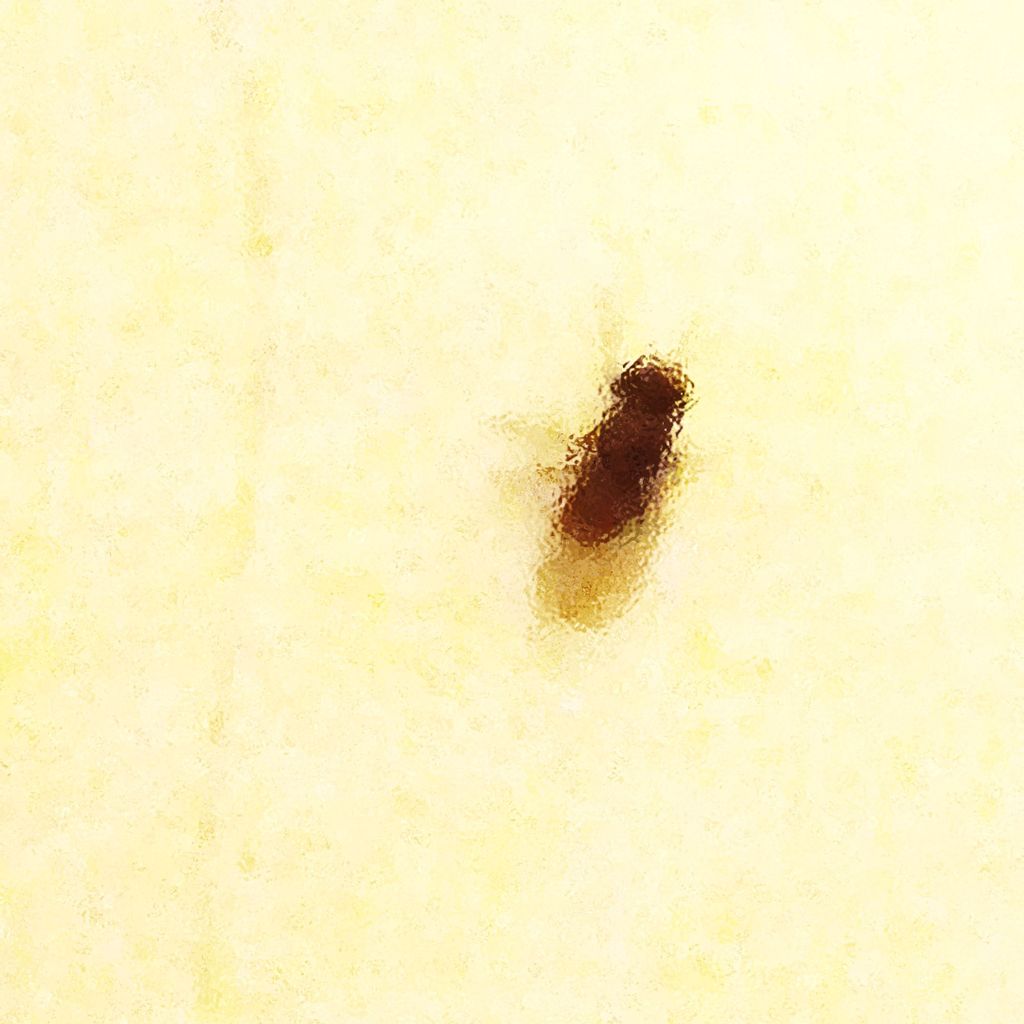
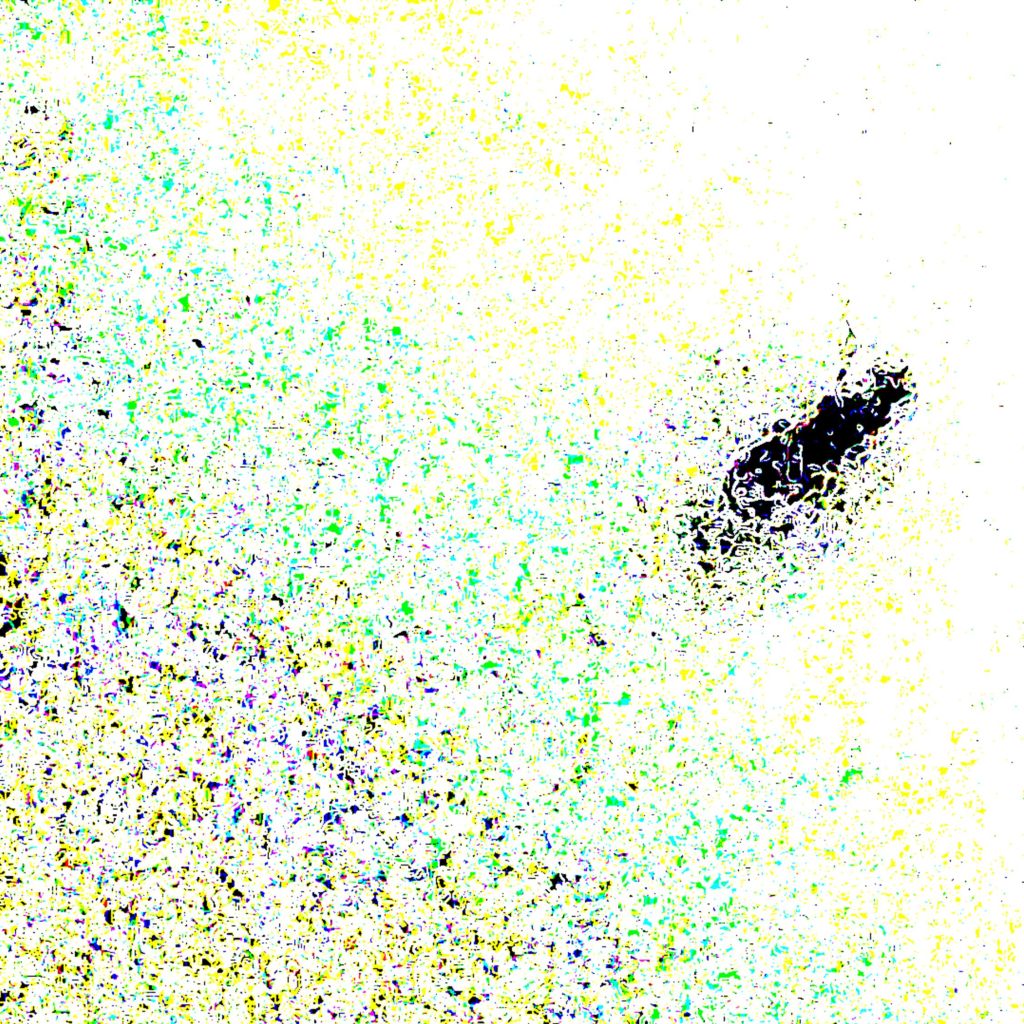
Once I had the grainy video, I started thinking what could be done with screenshots, and here are four, after image manipulations and resizing.
At approximately 4s, the first frame, adjusted brightness and contrast.
At approximately 4s b (less than second away from the previous, I presume). Increased brightness and contrast and glow diffused filter.
At approximately 9s. Increased brightness and contrast and glass effect.
At approximately 11s. Brightness, contrast, sharpness, inverted colors. The dark fruit fly in the right has devolved to near abstraction.
I think these types of image manipulations can be applied to get art out of many a failed video clip that cannot be shown as a video. What do you think?
White butterfly (looks like a Pierid) seen on 2026 Aug 03, (in sidereal Cancer, if that bit of info is topical to this post)
When I was very small, some auntie had asked me what my zodiac sign was. I did not know how zodiac signs were assigned, I just assumed one picks an animal, so I answered that I am a butterfly.
It was only recently that I realized that butterfly could actually be interpreted as a valid zodiac sign, if you are a Cancer. Insects are part of Pancrustacea, albeit closer to Brachiopoda, such as waterfleas, than to Malacostraca, such as lobsters and crabs.
Carcinisation has happened in at least five groups of Decapod Crustaceans (within Malacostraca), I presume due to ecological advantage. Evolution is very flexible, and the morphospace within Pancrustacea is staggering, ranging from parasitic barnacles, through coconut crabs (a hermit crab, not a true crab) to fairyflies (very small flying insects.) Thus, I would speculate that even insects, when exposed to sufficiently long evolutionary opportunity might undergo carcinisation, though at the current levels of ecological occupancy, this is extremely unlikely on Earth. Maybe on some terraformed environment…
Assuming the insect potential to carcinisation, I would then expand the postulate that insects could be considered equivalent to crabs. At least, if squinting hard from some non-Euclidean, deeply imaginary angle. Thus, butterfly would be a valid zodiac sign.
Of course, considering the deep divergence of Decapod and Insect crown lineages (Communostraca and Allotrichocrdia, respectively) some time during Cambrian or even Neoproterozoic era, on the same logic Leo, Pisces, Aries, Taurus, Gemini, Capricorn, Sagittarius and Aquarius would be interchangeable, whereas Scorpio would still form an evolutionary outgroup. I do not include Virgo here, because the presumed fertility/judicial deity is represented by constellation Furrow with Spica (signifying grain), and Furrow is neither a Chordate nor an arthropod (or maybe the constellation was named after the things she represents and Virgo should be among Chordata). Also excluded is the putative thirteenth zodiac, Ophiuchus, since the standard calendar uses only twelve signs. And to fully confuse the issue, astronomically, the Buttefly Cluster resides within the constellation of Scorpius, which after all, is another arthropod.
As the origins of the zodiac signs would require another, deeper dive into Mesopotamian mythology, and the origins or Western calendar, mathematics and astronomy, none of which are my strong points, I’ll skip them here. And what do I think of astrology in general? I presume that during the Bronze Age and earlier times, human biology was much more connected to annual variation in circadian rhythms and seasonal variations in diet, and thus a baby born in summer months would have different gestational environment and early infancy than a child born in winter or spring. The differences were probably strong enough to affect the later health and psychological development of the individual, causing observable differences between cohorts born, e.g, when Sun was in Leo rather than in Sagittarius. Modern horoscope warnings about tall dark strangers approaching on Tuesday, are nonsense, I think.
Summa summarum, I consider butterfly to be approximately as valid a zodiac sign as the zodiac signs in general, and depending on taste, equivalent of Cancer or Scorpio.
Brown butterfly seen on 2026 July 17th, still in tropical Cancer
2026, August 07, small birds in a bush. The video is a bit dark but at least the closest bird seems like a chickadee and I assume the others are the same (though other tit birds have been known to mingle with other species when feeding.) I kept the sound for bird song, though I cut the clip short when the traffic noises got loud.
A clip from May 9th, 2026. Summer has been blasting hot and busy, and the annual fire season has begun, but here flowers are getting scarce many having gone to seed and dried. I have managed to get more material, but not really processed it, having been preoccupied with getting my Etsy sales channel to EU shape (unless something dramatic happens, over halfway though). However, I have some older clips ready for those times when I need to post something quickly.
Not sure what the purple flowers are but they smell and look kind of like mint. The white flowers are one of the many jasmine smelling species. The big black insect looks like a carpenter bee but I could be wrong.
As for posting, I have also a couple drafts of longer posts that have been waiting for suitable time and reference checks and links, years have taught me not to trust my little bubble brain before publishing. Unless it is listed under Speculative writings or at least Unorthodox Ideas. Wettenhovi-Aspa tag is for deriving meanings from extremely implausible, if not chance associations. Maybe I should one of these days try reductio ad absurdum, but it is very difficult to parody modern world. Which is why I prefer to just do news commentary, as grim as it may from time to time get.
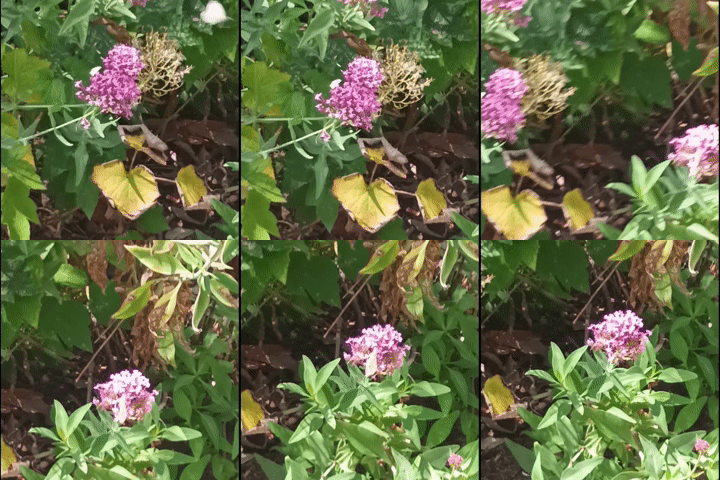
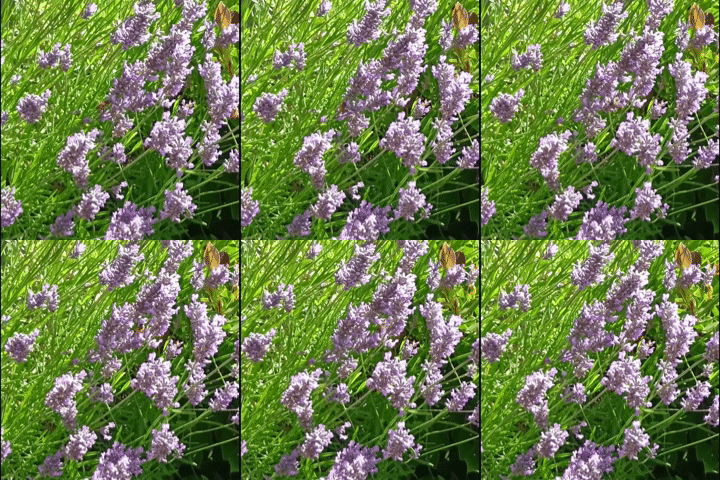
Been busy, but managed to get some photography and short video clips, joined three together into a short silent video (standard stabilization artefacts apply), two clips of giant white poppies, probably Romneya or Matilija poppies which are native to California, and one clip of bees foraging in lavender.
I like the floppy petals of the poppies. The lavender and bees seem to be an all year feature – when one lavender bed withers, another seems to begin to bloom somewhere else, if not immediately, then soon.
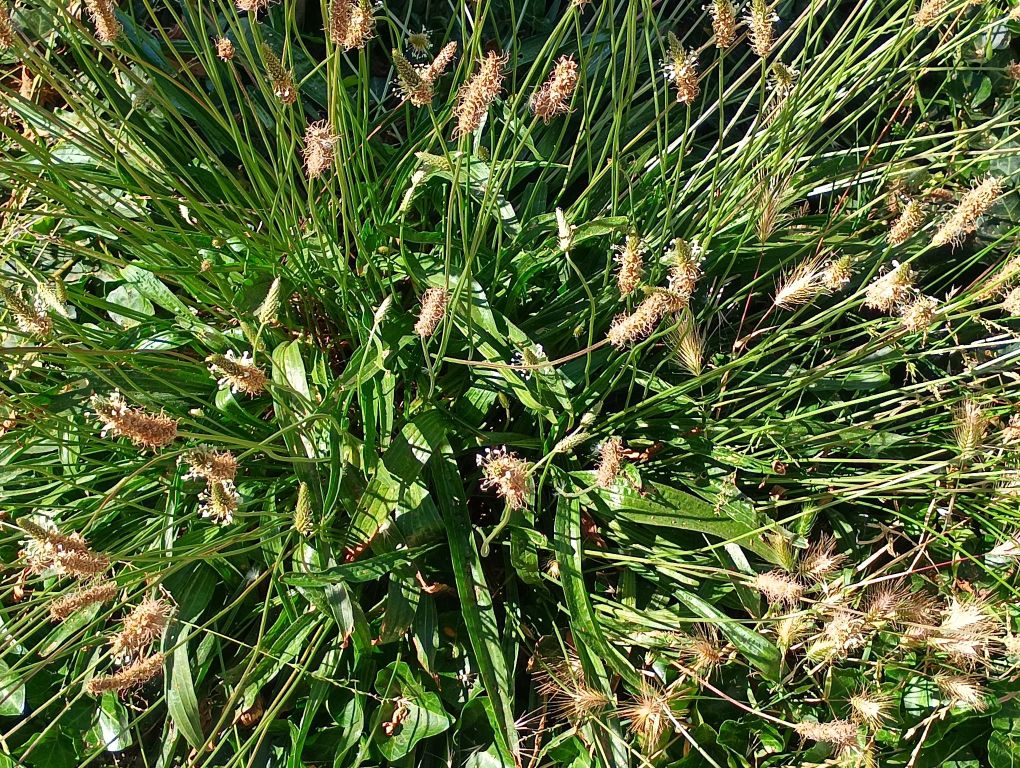
Not all flowers are showy – here is Plantago (I don’t know the species, but it’s not Plantago major based on the narrow .leaves). I would love to process some day a photo of a Plantago flower from close up, they are quite funky to look at but difficult to photograph so as to show it.
I don’t have very much topical or important to post as of this morning today, so how about a couple of clips of small woodpecker(s)?
(For those who are interested, here is a link to a selection of topical verses but for TLDR, Pentecost commemorates the event when the Church got upleveled.)
However, a few days earlier (May 22nd), I was walking around looking for pretty plants to photograph, when I heard a racket from the trees, sounded like multiple small birds. I searched for a while and discovered the source of the sound – holes high up in the tree where a small woodpecker was fussing about. A nest of woodpecker chicks plus a parent. Somewhere further away a woodpecker was drumming, as noted by a passerby while I was trying to video.
After some cutting and editing last night, here are the highlights:
This video is silent, commentary removed.
And here is some birdsong. And drumming.
Other than that, I have been selecting and editing photos for POD and tinkering with my writing.
I wonder if I should some day post some of my fiction in this blog? On one hand I am tempted, on the other hand, I am still shy. It took me a long time to start even a blog.
I also saw a flight of geese (based on honks and flight pattern) going north-north west, but they had disappeared by the time I had adjusted my device for photography. Weird.
The night after that, it was really windy. There was a tree branch on the sidewalk, when I was getting to my car. The morning wind came from north, soon after it turned and arrived from east. There were a few more geese, seemed to be going sort of westward (towards the Bay). The direction does not matter, I was surprised to see any, going any direction.
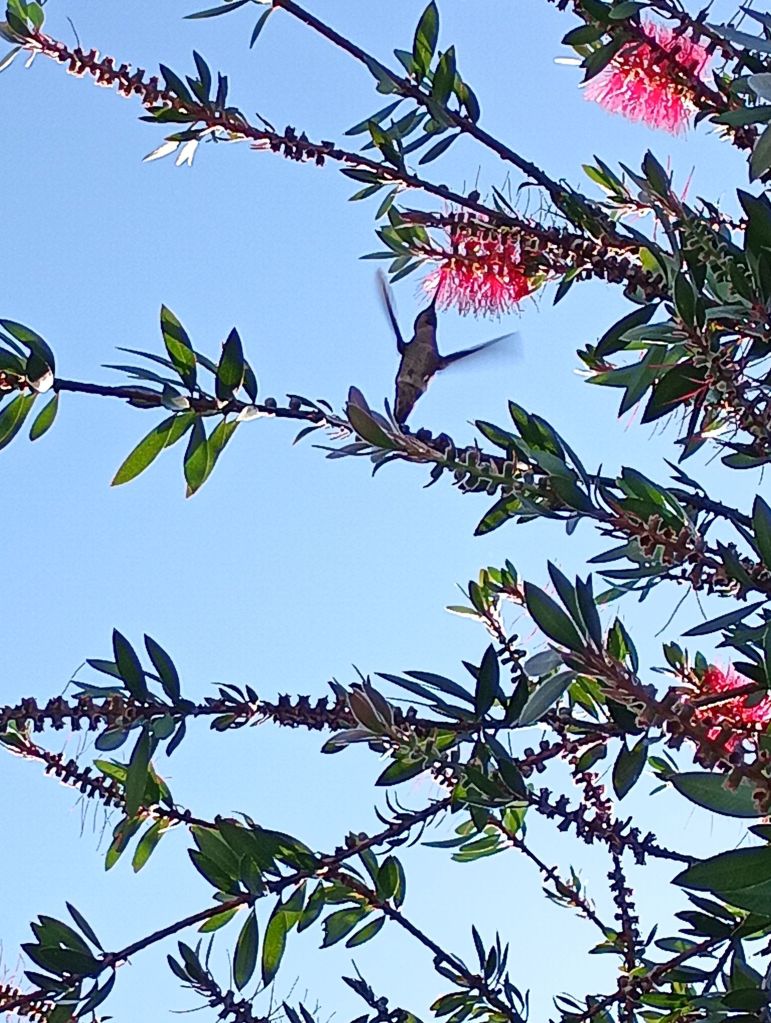
Today, while walking with my mobile ready to snap a picture or even a video, I noticed a number of hummingbirds, not as a flock but a hummingbird or two every now and then. More than I could photograph. Aside from being fast, the little birds are well camouflaged when sitting among the green leaves of a tree. Also, they are small, which means my camera’s resolution will not be sufficient for a good picture or a video. Hummingbirds are migratory, moving south for winter and flowers. I don’t know if they stay here in Berkeley for winter, maybe they are just passing through, but some were singing.
A photo of a hummingbird and a bottle brush plant, October 19th, 2025, Berkeley, CA
Monday’s rain had apparently inspired little green shoots to peek from the ground. Hopefully this was not a false start. The best part of the winter is the greenery as the rainy season ushers new growth.
Skipper butterflies were still around, though this time I did not see a swarm. There were also occasional Monarchs and smaller white butterflies.
I was lucky enough to be aiming for a red bottle brush flower, when a hummingbird flew to feed. Quick switch to video mode captured a few seconds of hummingbird and red flower.
A short video of a hummingbird and a bottle brush plant, October 19th, 2025, Berkeley, CA
Privacy & Cookies: This site uses cookies. By continuing to use this website, you agree to their use. To find out more, including how to control cookies, see here: Cookie Policy.