← Back

Thank you for your response. ✨

PlanktonPunkt Designs puzzles available in CreateJigsawPuzzles

link to order print on demand PlanktonPunkt Designs jigsaw puzzles (printed in China)

PlanktonPunkt Designs POD products in Printify

link to order PlanktonPunkt Designs print on demand wares from the source

PlanktonPunkt Designs POD products in Etsy

A link to order from a selection of PlanktonPunkt Designs print on demand wares from Etsy

Tag: Collapse

  • Cookies and Milk

    Doomscrolling my news sources, I stumbled on these two gems, cookies and milk:

    cookies

    https://www.sciencealert.com/radical-overhaul-to-milk-production-would-use-up-to-96-less-land-than-cows-study-suggests

    and milk.

    The purpose of microbial ferment of plastic into proteins (and metabolic byproducts, I suspect) is to compress them into cookies that can feed people. Most of whom, according to some poll, would eat it if resource constrained.

    My comment to that:

    “First they destroy farming, pave the nature with concrete and solar farms, and then they offer plastic cookies. This article is probably a psychological test to see if it actually works on masses. Methinks there will be a mass extinction of anything larger than rats and a global desertification to the tune of Sahara before we reach that level of resource constrain.

    More ominously, the elites may have realized that they have destroyed too much of the food system, and the resource constrained conditions might cause social instability like torches and pitchforks, i.e., Arab Spring II. The fact that this sort of dystopia is even attempted to be normalized shows what level of famine they are expecting in their pipeline.”

    was missing the risk of microplastics and exotic chemical impurities.

    I have already cut down eating certain foods for their suspected plastic content, would not trust the cheap mass manufactured plastic cookies, could not afford expensive mass manufactured cookies.

    Lots of current plastics contain many toxic elements or chemicals from manufacturing, and even those that were inert in the original product might be freed during fermentation process. Others, like phthalates were not safe to begin with. And then there are microbial metabolic side products which cannot be cheaply removed fully and may convert inert to toxic. Not to mention that recycled plastic has encountered many environments during its travels and may have collected dangerous souvenirs. I remember from years ago that granola in boxes made of recycled cardboard needed to be bagged into clean plastic bags, because of the hazardous impurities in recycled cardboard.

    As for the milk, I believe in whole milk to be the healthiest alternative, unless one is lactose intolerant or is allergic to milk (different ailments but both unpleasant), and I would not trust the manufacturing processes to be safe enough for microbial milk substitutes, especially for people who have yeast allergies.

    But based on my understanding on the linked original article, it discussed substituting milk in point of view how much land is saved when rapeseed oil and sugar beet residue is used instead of dairy cows. The paper’s point was not improving human nutrition. The final product is supposed to be nearly as good as milk, but without lactose or cholesterol, and fats coming from rapeseed oil, minerals, vitamins and other nutrients were assumed to be added from somewhere but even the authors admitted that since the fat profile differs from milk fat profile, the milk substitute might not be a substitute for all milk uses.

    Why do we want to ‘save’ land? Rewilding, settlement and other agricultural uses were mentioned, as was Net Zero. I have previously discussed rewilding and destruction of food production, but why exactly do we need more settlement when most of the worlds population lives in countries where fertility rates are below replacement level, and soon their populations are beginning to collapse?

    I do not trust the nutritional value of microbial milk substitute. Having read some of the baby formula ingredients lists, I am not surprised that babies fed with formula develop lower IQ than breastfed babies, though I am not condemning their mothers, who often do not have a realistic alternative option for formula. Economics may be too brutal to stay home to nurse, and not all mothers produce enough milk to feed a baby. I have not seen the microbial milk ingredients list, the original paper was speaking of rather generalized data, but whatever the final products to be pushed to us are, I expect their industrial requirements to be about as healthy as an average baby formula.

    Summa summarum, these milk and cookies would be something I would leave for modern Winter Holiday Santa, the commercial one that is supplanting Christmas Santa and older characters like Joulupukki and Krampus. Even if the hypothetical Winter Holiday Santa would leave me lumps of coal as gifts after such skimpflation, those probably would be welcome in the approaching fuel shortage. And if it were anthracite coal, it might even contain a fossil or two!

  • My Memories on Collapsing Dollar

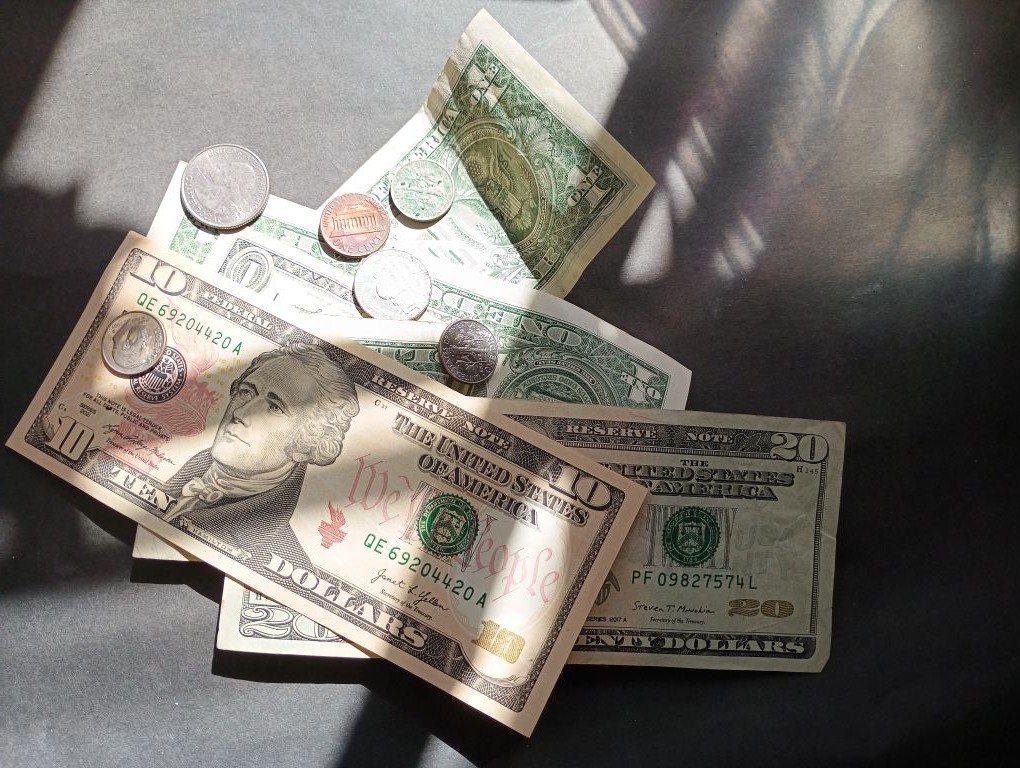
    When I moved to California, you could by a cheap carton of greasy fried rice from a Chinese greasy spoon for about $1.00 – $1.50. Now the Chinese greasy spoons are extinct or gentrified, and a bowlful of fried rice cost $10 to $20 per.

    Meanwhile, reading and listening, occasionally even watching people (or AIs) pontificate about the current situation as if this is something that suddenly appeared through this latest Middle-Eastern war seems a bit surreal. The problem with US dollar started long time ago, probably longer than I have been alive, but I will here just ramble a bit based on my own fallible memories. Any factual errors are mine and I blame them on my small and feeble brains.

    I’ll start with Bush Jr. Having arrived after the voting ended and then following the discussions about hanging and pregnant chads, anthrax letters and finally 9/11 which set the tenor until the banking crisis. For USD, 9/11 is significant because using that as a pretext for Iraq war allowed United States to mess up global oil markets, causing price per barrel, and thus the demand for dollars to buy the more expensive oil, to shoot up. This allowed the Greenspan Moderation, which inflated the credit bubble – everyone got a housing loan and the subprime loans were then baked into collateralized debt obligations or CDOs. Michael Lewis wrote a book about The Big Short which was later adapted into a hilarious movie. Although the movie may have been less funny for the hundreds of thousands of people who lost their homes when the adjustable credit rates started moving up.

    The implosion of the credit bubble during 2007 and 2008 was something awesome/awful to behold. I remember picture of Ben Bernanke, the Treasury Secretary on his knees in front of Nancy Pelosi, the Speaker of the House, begging for congress to pass a bailout package. One of the many that bailed out banks, the newly homeless regular folks, notso mucho. Occupy Wall Street was born and Obama got elected.

    After which the Quantitative Easings continued to stabilize the banking system, people were left to survive. I don’t remember exactly what happened to dollar during Euro Crisis 2011, which I think was triggered when Soros publicly doubted Greece’s ability to pay back all the loans they had taken. The doubts spread like a wildfire in arsonist prone chaparral, infecting other shaky economies, especially Portugal, Spain, Italy and eventually Ireland, which were lumped together as PIIGS. The northern EU that had pumped their own economic numbers up by lending to southern EU so that they can buy northern products like tanks and submarines, then sanctimoniuosly castigated the peripheral member states for their economic profligacy despite having their own economic mirages depending on the same.

    The Euro Crisis coincided with Arab Spring which had been triggered by exploding food prices, brought to you by bad weather (droughts, floods and sundry), US agricultural and green energy policies (‘green’ corn-based bioethanol had consumed the US feed corn, so the US ranchers bought cheap corn from abroad, which then raised the food corn prices in Third World), deregulation of wheat futures market (previously open only for farmers and grain processors, anyone could speculate on bad weather, and speculate they did), and Gaddafi’s decision to start selling oil in currencies other than USD. The last one was fatal for Gaddafi and Libya – for me this was the most obvious demonstration how social media could be used for destabilizing fragile countries. Though the Abar Spring itself is credited for having started in Tunisia when some fish cart got confiscated by officials (the famous last straw), Tunisia avoided the worst consequences. Morocco and Algeria had troubles, too but those were ‘handled’, whereas Libya got bombed. The campaign was seemingly started at EU/French initiative and US participating simply because we had to (though in retrospective, I wonder…). It degenerated into multiparty civil war, shenanigans in Benghazi being a side note – I think that was about US running guns to ISIS, but I might be wrong, and it took a major oil producer out of market. Egypt which fell and then stabilized under Muslim Brotherhood and then under military dictatorship (I don’t think Arab Spring brought much democracy anywhere) does not produce oil, but Suez Canal is kind of important, Lebanon, Iraq and especially Syria fared poorly (I wonder if US troops are still in Syria to protect their oil now that ISIS toppled Assad?).

    We also had instituted sanctions against Venezuela during Chavez presidency (also tried to get rid of him by other means), affecting global oil markets, there has been happenings in Nigeria (partly due to destruction of Libya which unleashed islamists all over Northern Africa), all of which have pumped oil price up, helping the demand for US treasuries. That is, trillions of dollars more government debt for bailing out the billionaire class (not just too big to fail banks but many other megacorporations), waging wars and insane government social engineering programs meant to extract control and wealth from the working and middle classes to various bureaucracies and governmental NGOs. A classic example, Obamacare. Marketed as a government healthcare system, it actually manifested as a government mandate to buy a private sector health insurance. Problem: people who could not afford health insurance before Obamacare were still too poor, even though some pressure had been taken off by complex and arcane health insurance subsidy system based on the buyer’s reported annual income.

    In any case, Obama continued the debt bazooka, fueled by oil wars, but since it only benefited the 1%ers, voters went berserk and elected Trump. I had expected 2016 election to be between the anointed Clinton and the anointed Bush, but then the Republican primaries went sideways, with Jeb proving himself unelectable without properly organized party machinery, Trump winning the primaries. If it had been on voters, the Democratic primary winner would have been Bernie, but superdelegates rescued Hillary, who then expected a smooth coronation. Except that the US voters did not co-operate.

    Trump’s first term increased the spending but did not add any oil wars. By 2019 the economy was about to have a coronary arrest – I was expecting banking collapse some time during autumn or early 2020 at the latest, but then came COVID-19 and two weeks to flatten the curve. Giving a great excuse for the economic collapse that IMHO would probably have happened even without the virus, though maybe not as comprehensively.

    Biden was ushered into presidency and once the lockdown mess began to clear, it was obvious that the US treasury was being looted by every (administration aligned interest group) as if the country was under a fire sale. The disastrous withdrawal from Afghanistan was the US equivalent of Byzantine’s Battle of Manzikert. Not the withdrawal itself which should have been done years ago, but the manner it was executed, complete with reenactement of Last Helicopter Out of Saigon. Emboldened by this clear sign of an empire in decline, Russia moved to Ukraine 2022, after waiting for Beijing Olympics so as not to insult their new best friend and fellow BRICS member.

    Technically USA could have ignored Ukraine, but too many corrupt interests converged there, and then there was the fight over superpower prestige. Plus it was a too good opportunity to destroy the EU economically by isolating it from cheap Russian energy resources and markets. Nordstream II exploded. There was self-imposed ban on buying Russian oil (though buying the more expensive Indian distillates made from Russian oil was OK). All this meant more pressure on energy supplies, meaning higher US dollar demand. Meaning the debt could balloon from well over 20 trillion dollars at the end of Trump’s first term to well over 30 trillion dollars after Biden’s only term.

    When Trump took over, he promised a Department of Government Efficiency to weed out fraudulent spending. I wonder what happened to that. He had also promised no new wars, then took out Venezuelan president Maduro (and US oil companies are back in Venezuela, trying to extract the oil there, but years of sanctions have left the infrastructure shaky), threatened to take over Greenland (mineral resources and Northwest Passage), and finally went to Iran.

    Problem with Iran war (among the too many to list): too much oil production has been taken off the market and global economy is failing. The price per barrel has been suppressed by multinational SPR releases, but the tanks are nearing empty. Also the agriculture has been devastated by rising fuel and fertilizer prices, and the summer has been brutal in North America, Europe and Asia.

    The Ukraine and Iran wars had also been a double whammy on the treasury demand. People have spoken of glut in dollars, worried about inflation, but it was the increasing use of economic sanctions as a weapon to all directions have shaken the buyers’ faith on their safety as investment. Also, USA has bled Japan dry with yen carry trade (cheap yen loans to buy a bit higher interest US treasuries and bonds and pay the Japan loans with US paper and pocket the difference has supported the US debt machine), and the recent bail outs IMHO are just a drop in a leaking bucket, an omen of end to arrive.

    Now, on that background we have reached 40 trillion dollars, and borrowing costs have risen to levels that Treasury apparently is uncomfortable with. IMHO, Bessent’s buyback promise is a sign of weakness, and may be remembered by future economic historians as a gross blunder, but blaming the current administration for failing to kick the can one more election cycle further is a bit intellectually dishonest. Bessent’s hands are tied by the realities, namely USA has over the decades squandered its superpower status by living well beyond its means (partially to maintain superpower status, partially to appease voters), and there is very little that can be done to soften or even postpone the dollar collapse, especially with the current incoherent administration. For example, I don’t like how Treasury and Fed are uncoordinated. Nor do I like the AI mania or how our trade policies sabotage our agriculture.

    I expect the official Federal debt to continue at least a couple of trillion dollars higher, possibly up to 50 trillion dollars, but backed by full faith of US government is no longer what it was. Meanwhile, while money gets printed, nobody is printing bread (even vat grown meat is a specialty item and requires way more resources for much unhealthier product to be currently more than a curiosity for healthy technocrat class, though meat glued scraps are the new sausages for plebeians), so I expect food inflation with sporadic shortages and rampant skimpflation in wealthy countries and outright famines in poor countries.

    (A side note back to the Arab Spring; there was a model that predicted the level of food prices when a country undergoes an upheaval and on 2011 all the Arab Spring countries had crossed that level. In Europe, the only country to have food price distress was Latvia, but instead of revolution, the Latvians simply migrated, thanks to EU free mobility. Later, UK, dismayed at all the Eastern Europeans flooding the island, voted for Brexit, but that was then another story.)

  • 40 Trillion

    That’s what the debt clock is now, 2026 August 20th claiming. According to the Department of Treasury Debt to the Penny, the 40 trillion threshold was crossed on August 18th. I was expecting the limit to be broken in the autumn, but then, also the honking geese have flying south over northern California since July, which to me seems a bit early. I’m not a goose expert, maybe they are supposed to start migrating in summer, or maybe they are reacting to some environmental change. The pastures have withered under the drought and geese eat grass so maybe they are trying to find food. Or maybe the winter is coming early. The the geese are going south already in the summer, and so are US finances.

    Treasury and Fed are at odds over economic policy. Fed is not changing rates but the Treasury started buying back (a type of QE) 30 year notes when the rates rose over 5.3%. Promise to double the treasury buybacks helped to push the price of dollar down but inflation is predicted. Meanwhile, 10 year note was at 4.68% when Treasury promised to increase buybacks to 4 billion, causing the yield to dip into 4.63% before rising in 24 hours to 4.71%.

    If the interest rates on US treasuries rise too much, we cannot sell enough paper to pay the interest on existing paper and USA will become insolvent. I’m sure the US government will invent new, outrageous ways to cook the books for some while still, but USA is not Japan, and even Japan is faltering as eventually what is unsustainable will not be sustained.

    Flower(s), I don’t know what species, 2026 August 18th

  • Finland in Financial Finale?

    I wandered into a video about why Finland sucks. Some I agree, some I don’t, but I put a longish comment there and decided to republish it with some modifications and additions.

    The downward turn of Finland became a point of no return at EU membership.

    The money circulating in economy now goes to Brussels and multinational corporations operating under international rules, while Finnish economy is being strangled by EU directives designed to favor the looting of peripheral provinces like Finland. Everything else is downstream symptoms of this colonialism.

    Including chopping state services like electric grid, elder care, and soon common water resources, for sale to international bidders (which I suspect to happen because the administrative and tax structures are heavily stacked against those domestic enterprises that do not use tax sandwiches and cheap foreign labor.)

    Using regulatory capture via EU is a modified version of standard globalist modus operandi, sending economic hitmen to subvert national governments to facilitate their countries looting. Here it is a supranational structure operating under severe democracy deficit that functions as a middleman and a fig leaf of legitimacy to borderless looting. After quick googling, I got the impression EU itself seems to consider the political legitimacy a perception issue, i.e., the system may get (cosmetic?) changes and the EU subjects might be probagandized more, if the issue becomes more relevant to the powers that be.

    Among other economic issues, the video mentioned refugees, which in case of Finland was a GDP Ponzi scheme coordinated at EU level. In general, the whole multiculturalism is just a marketing term used by elites pushing for their ‘remedies’ to economies that are already underperforming because of the epic looting that has been going for a long time.

    The real original reason for the refugee business was at first ‘tax payers are not breeding, let’s import more labor’ (and charge the public purse cost plus for integration services by well-connected providers, which, surprisingly, have zero incentives to run out of people to provide integration services for). If nobody paid for the great social benefits to them (AKA the immigration industrial complex) the immigrants would go somewhere else. As would the integration service providers siphoning this money.

    In California, we have a massive homeless industrial complex, with more and more tax money collected to subsidize more and more homeless services serving more and more homeless. Now people have began asking evaluation of results, even audits to find where 20 billion dollars (20 * 10^9 $$$) paid over 5 years went.

    Then, when the newcomers did not get employed (the economy was still sick due to looting, and using the ‘integration services’ rather than job opportunities as a bait attracts different cohorts of immigrants), the rationale began to shift towards consumer headcount method of economy – more consumers mean more economic activity.

    Except to pay for the new army of unemployed, the successive Finnish governments needed to borrow more money, cut other services and pay taxes. Which did not increase economic productivity but increased money in circulation while shifting it from pocket to pocket. Which means inflation and rising unemployment. But at least the economic numbers were manipulated to the EU standards using approved methodologies.

    I don’t know what the next phase of immigration will be, but I would be surprised if it worked better than the previous two phases. Finland, I think, is still in the first phase but beginning to have doubts about it (I might be wrong because I don’t follow Finnish media that much any more.)

    Slightly expanding on the subject, I think NATO’s current whining for war is just the grand finale in the leveraged buyout of nation states like Finland. The EU cash cows have been milked out of all the profits a peacetime economy can provide, let’s sell them to meatpackers. The military industrial complex, the war bond markets (large parts of Ukraine have been put as collateral for the loans required to continue the war against Russia), the reconstruction contracts, the overall firesale of the desperate (or dead) people’s resources for cheap to multinational investors. Finland is, of course, eager to go against traditional enemy, thinking that NATO will help them or that they will help NATO, or something.

    TLDR: Finland is just a case example what happens to once stable and prosperous countries once EU gets to rule them. I suspect that once looting Finland with just current methodology is no longer cost effective, it will be one of the assets to be liquidated in the war against Russia.

    Economic low pressure over remaining small businesses, a metaphor.

    Checking photos of Finland to best illustrate the situation, I think this is better than one of the runners up, a dead tree full of concs.

    Here is a sky darkened by rain clouds and a thin line of trees, cosmetically around a road rest spot, but no trees behind them. To the right was a rain drenched bog with sparse, stunted pines.

    It could be that the line of trees surrounds a farm (those are also usually under heavy regulatory and financial burdens), but thin lines of trees can be seen standing between roads and clear cut openings all over Finland. Such a line could be easily considered a metaphor for cosmetic ‘Happiest Country Statistics’ masking over the remnants of Finland’s economy, while behind spread ploughed through clear cut openings, that would be the real state of Finlands economy. And the dark clouds of global economic collapse and war are looming.

  • Fuel Rumors.

    I’ll treat this as a rumor but where there is smoke, there could be fire. Some spot(s) in Texas are said to be running out of diesel and gasoline – this could be just a temporary and local supply chain hiccup, but in my lived experience, all sorts of hiccups are becoming the norm. Another rumor from the same report claims that New Jersey is running out of diesel and gasoline for big companies, as well as of motor oil. The motor oil issue spooked me already some months ago to buy a couple of pints extra in case I need it, when I learned that Toyota relaxed its oil specifications because there was not enough fancy oil available.

    The purported low price per barrel of crude may be due to demand destruction, or so it has been speculated. As economies crater (especially Chinese), the world oil consumption presumably goes down, and there is suddenly enough barrels after all. Problem: can official numbers of anything, including fuel supply and consumption, be trusted? And even if the numbers are real, are models correct?

    Meanwhile, I saw a video about people no longer affording fun like bowling, boating or going to movies. I think that entertainment downturn is also caused by demoralization. Nobody has time or energy for formerly fun hobbies, even if they had money. And people do still watch TV, play computer games and stream movies. They just are not consuming the new ones. I can sympathize. Call me old-fashioned, but I, too, used to watch more movies before COVID. I think that event fractured the society badly. Having said that, the last movie I saw in theater was Project Hail Mary, which I liked.

    The gasoline prices are currently lower but that may be temporary as the action in Strait of Hormuz and elsewhere intensifies.

  • Food.

    Dead meat. And lots of it. In California, in July. Though I suspect most of the biomass stored there was not meat, more like a mix of meat, fish, ice cream, frozen fruit and vegetables, and lots and lots of TV dinners, imagine the smell of 65 million pounds of rotting food stuff. And logistics of dealing with the mess. The panel in the video behind the link tried to. In this case, I suspect flies and other scavengers like mice and ants will become a plague, but still preferable to the putrescing health hazard. Having seen the organizational abilities of California in general and LA region in particular (Palisades fires, for example), having the mess to fly away after the maggot phase might be the fastest and most efficient way of dealing with it.

    Heat dome is destroying our crops and cattle. Corn is currently silking, too much heat destroys the ears before they have formed. Soybean flowers are suffering, too. Cattle pastures are parched, meaning strain on supplemental feed supplies. Not to mention animals themselves at risk of heat strokes. And the farms are already under water stress, fighting for supplies.

    In general, our wheat production is the lowest in 50 years. The US wheat acreage is lowest in over a century and when weather and fertilizer effects are added, the amount of wheat to be produced is in danger.

    President has declared a national emergency over the availability of fertilizers. One reason for low wheat acreage is the unaffordability of fertilizer and if the farms do not get their fertilizer in the autumn, next year will be worse. This autumns fertilizer needs to start moving to wholesalers already to make it in time for the farmers. Next year’s crops depend on whether we can source enough now.

    The past few years have reminded me of Revelation, chapter 6, verses 5 – 6, where Famine is given orders in terms of food inflation.

  • Scattered News and Rumors

    I have been busy designing but still keeping an eye (or ear, in case of YouTube videos, which I treat as partial podcasts) on commentary online. Here are some niggling vignettes:

    Food

    Pakistan and India have had a literally killer heatwave, which has also devastated chili producers in Sindh.

    Meanwhile, fuel crisis in Russia (not due to the Iran war, the other war, remember?) has caused the central government to prioritize deliveries in western parts (most of the Russians live west of Urals), which means agriculture in Irkutsk region did not get fuel. I don’t know how much Irkutsk region contributes to global food supplies, but I doubt we can afford to lose any more capacity, anywhere and Russia is one of the main exporters.

    And now a big warehouse for frozen goods, Big Bear 7, meant for consolidating all Los Angeles frozen food storage under one roof, has caught fire. Bad news for Angelenos, but since all centralized systems are vulnerable to catastrophal collapse when a critical node fails, one must wonder about the wisdom of concentrating all food in one spot… In general, the Western food systems are overly consolidated with four seed companies having a stranglehold over 80% of corn seeds and nearly 80% of soy bean seeds, and USA occasionally having a chicken shortage due to failing fertilization rates in one of the few chicken breeding corporations.

    Molten Salt Cooling

    Normally, when I think of this term, it invokes nuclear power generation. However, there is a domestic molten salt cooling method, which may be of interest in saving electricity costs on air conditioner. Note: I have not tested this myself, but it looks relatively cheap to experiment with, so it might be of interest.

    Apparently, Glauber salt melts at 32.38 degrees Celsius, storing heat in the process, and by mixing the salt with polymers and nucleating agents (chemical, not nuclear physical) to prevent sedimentation, one can build a flat container (to maximize the surface to volume) heat sink to suck the afternoon heat from a living space. Whether it is as cheap and easy as these, clearly AI assisted/generated videos promise is a different issue. One genuine caveat is that what goes in must come out, i.e., for the cooler to work the next day, the previous day’s heat must dissipate over colder night, so this method will not work in steady heat but will require hot days – cold nights environment. YMMV.

    Weather

    Has been warmer this year. The spring in California has advanced earlier than I recall from previous year. Flowers are blooming (and withering) earlier and I have snapped a fraction of my photos as a memento to haphazardly ‘document’ their blooming times. Scientists were earlier this year worried that week’s earlier season of Joshua tree bloom would be out of sync with yucca moth breeding, but I haven’t heard any news after the initial worry. I suppose the moths figured it out, probably by using the same environmental cues as the Joshua trees.

    Now, they are predicting a super El Nino at 40% probability, meaning heating, droughts, floods, and of course, bad harvests.

    Jacaranda, May 31st, 2026, Berkeley, CA

    On a lighter note, I realized I had not added a video recently – here are some yellow-orange flowers, June 06th, 2026

  • Are You Being Surveilled Enough Yet?

    Sunday March 15th morning, in my feed was an infomercial-like Zerohedge post. A company in California is making impressive humanoid robots that can learn tasks using neural nets. The learned tasks can be extrapolated to unfamiliar objects or environments. The more varied the environment is, the more adaptable the learning becomes. The company has now a working on a prototype that should be alpha tested in homes this year, beta testing in next year or two and functioning product before 2030.

    The kicker #1? All robots are connected to each other (the lag time was not specified), so what one learns all other robots learn.

    The kicker #2? Company owns the robots, the customer will rent them from the company which can then upgrade your rental unit based on training from other units.

    The kicker #3? They are envisioning billions of robots, half for domestic half for production and service industries, eliminating the need for most of the human work force.

    So, they are expecting you to rent an astonishing data collection machine to map your house and activities (down to your personal health data so that the robot can cook you a perfect meal) while you have become surplus to the elites that only have shown interest in you mainly in the amount profit they can extract from you and your existence (taxes, votes, kickbacks on public programs meant to “serve’ you, GDP growth from unfortunately necessary infrastructure investments to increase the pie they slice for their profit.)

    And this is not calculating the amount of energy and minerals to build, train and run 10 billion humanoid robots. We are already competing with data centers for energy and mineral resources. I expect the elites to prioritize robots over people because robots are more profitable (until we run out of energy and resources, at which point feral biology, bacteria, plants and heterotrophes surviving on minimal material in circulation will have an advantage.)

    On a positive note, to me it looks like the amount of climate doomerism has dropped to a fraction of its former deluge in the past few months – apparently it was only us peasants who were supposed to tighten our belts for the better weather, robots and AI will be excused. Or maybe the AI that selects my feed has noticed my skepticism over the current official paradigm (the paradigms will shift – when I was a little one, we were expecting the next glaciation any year soon, and more recently, the word ‘warming’ has already been exchanged to ‘change’.)

    Another corollary of universal unemployment is the dangers to human psyche. Nobody needs drudgery, but everyone needs a reason to get out of the bed and continue with life. NEETs and hikikomori can only exist in affluent societies that can and will support such life styles. Analogous to NEETs, there now exists a new branch of economy, attention economy (used to be entertainment, I suppose) with professional online influencers, content promoters and whatnots. I consider these to be manifestations of the same societal pathology as NEETs: lack of meaningful opportunity and resources in a society where everyone is being crushed by the system and even a pair of eye balls, an extra click, is meaningful, not just for economical survival but in many cases for validation. Look at me! I exist! This is not to bash the content creators, they are still trying and creating despite often limited resources, but I fear that for those people whose self-worth is tied to material possessions or external validation, and are born into the regulatory poverty in a hyperconnected world, this post-resource world is brutal.

    What is regulatory poverty?

    The real issues arise when people become too institutionalized in the invisible cage constructed by the rent-a-surveillance grid, enforced by social credit scores and crushing bureaucracy (that together will severely punish the least deviation from the matrix), that they stop trying to even survive. Case example: learning is a tool for prepping for future adversities. Learning leads to critical thinking and questioning the system that places the needs of the people over the needs of the system. The system, the surveillance matrix, being constructed evidently hates people learning, because some of the Gen Alpha it is raising no longer want to even learn to read because AI does it for them. Exactly what AI reads to them is presumably decided by the algorithm. There are young people (probably there were older people, too) who do not follow plot-based media. They do not understand complex questions nor do they do critical thinking. These youngsters will probably own nothing and be happy renting their non-plot-based media, listening instead of reading what is selected by AI, in their pods located in some anonymously identical 15-minute city owned by a selection of corporations and mismanaged by a local government that the corporations paid for.

    How do you prep for this kind of scenario? There are thousands of prepper channels discussing the pros and cons of bug-out places, urban survival and gear, growing your own garden (I’d love to) and canning your veggies. I think we should also plan for when the society does not collapse but excludes humans, even becoming hostile to human life as we know it. Aldous Huxley’s Brave New World springs to mind, but when I was young, I read a science fiction story about human species had had regressed to infantile cognition while being tended by robots, who knew that when the species forgets how to reproduce, it is finally game over for human line. I wish I remembered what the title was. The description of those future humans was shocking, but now it seems we are rapidly approaching that singularity byy cultural, rather than by biological evolution.

    Learn, keep libraries, think, produce content, and most importantly, develop a spiritual core that will survive potential affluenza (I don’t think the new post-scarcity wealth will be much distributed among the masses, maybe just the equivalent of Roman corn dole or current EBT cards and housing vouchers) and despair caused by systemic dehumanization through decreasing relevance to the system.

    Meanwhile, maintain good cheer despite knowing the state of the world, that is one of the biggest acts of resistance you can do. Giving in to despair and ‘let it rot’ is what the post-industrial system wants from dissidents and other people the elites do not want.

    Take care of your soul, that is the most important thing to do.

  • Locust Economy

    I got as a suggestion from a YouTube, a video about moving to chase jobs. A part of the video made me rethink about the whole migration approach to avoid economic failure. Not that I am blaming individual people who choose to rip themselves from their home areas and finding greener pastures, being a migrant myself, that would be hypocritical.

    However, people here in West have been relentlessly propagandized to move after better economic opportunities instead of improving their home environment. Specifically, the discussion which states would be the best options made me think about the migration between US states as a scam. People are encouraged to leave states with poor job prospects to chase the increasingly ephemeral employment across the continent. Similar phenomenon is seen within European Union that deliberately adopted the same approach as ‘free movement of labor’.

    The free movement of labor proved disastrous in EU. In Eastern Europe, people mass migrated to Western Europe to do unpleasant jobs cheaper and with fewer options to object inhumane treatment than the local working classes. This emptied the poorer parts of EU cramming their peoples into wealthier parts of the EU. At some point, the second biggest Latvian urban population after Riga was London. Polish plumber became a meme. Meanwhile, the working classes of the Western EU began to lose their work to cheaper foreign competitors with fewer de facto rights. Those who remained employed saw their wages stagnate and working conditions worsen.

    Eventually, the working and downwardly mobile middle classes of UK, which had been the end of the line for aspiring eastern EU citizens, voted for Brexit to reduce the pressure to their living standards. Aside from job markets, the immigrants increased housing pressure and needed public services. In short, the pie of gross national production may have gotten larger, but did it get large enough to accommodate all the new slices? And who actually benefited for the increase in GNP? Somebodies must have known or guessed the results but gone ahead with it anyway.

    This was just the economic side of it. I wonder if much attention has been paid to the psycosocial and cultural costs to the immigrants themselves, when they leave their social support networks and familiar traditions and customs. The increasing atomization and hyperindividualization of the subjects, or objects of governance, of course benefits elites who do not really worry about lone ranters in the internet (those can be shadowbanned) but are sweating over mass movements not paid by and organized by themselves. Even though their biggest actual threat is mass passivism (NEETism, or as the Chinese say, lying flat), but that was not what I had been thinking this time.

    The biggest problem after the exploitation of the migrants is that free movement allows exportation of the various regions socioeconomical problems, thus shielding their governments from the consequences of their policies. In United States, California, New York and Illinois are regularly trotted as examples of exporting refugees of liberal policies but as a Californian, I am rather tired of red staters sneering smugly at our homeless problem after having exported their drug addicts and mentally ill using what is here known as bus therapy: i.e., buying them a one way bus ticket hoping that the Californians will take care of their social issues.

    Meanwhile, in California, UK, European Union, and other mismanaged territories, bad regulatory environment combined with excessive taxation and misallocation of government resources (encouraging further taxation) kills the economy, including employment. People with means (money, education, passport) and initiative will vote with their feet. And as the recent decade has shown, apparently the only thing you actually need for emigration is initiative, though money and passport will be huge advantages.

    In the current narrative, as far as I understand it, emigration is supposed to punish the local administrations, they are losing tax base. Except that thanks to Federal or EU government and their funds transfers between the regions, the internal emigrants will still subsidize their original administrations with their taxes. While burdening the infrastructure from roads to social services somewhere else. Win-win for the local mismanagers. There are whole developing countries whose economies depend on remittances from their expatriate populations, which on surface seems more benign than the interstate welfare / subsidy parasitism, but which on one hand means at least a temporary loss of labor force that is building another country, while on the other hand creating distortions on the labor market of country they have emigrated into. And the psychosocial costs, again, were borne by the migrant labor and their families.

    What happens if all regions export their economic problems and no region can handle the masses seeking better life any more? Or if one region exports the labor to be exploited in another region?

    Well, the EU economy is collapsing, and though some blame the migrant crisis, I think the mass migration is a symptom of a deeper rot within the system that relies on imported people to exploit. Except that the current batch of immigrants did not arrive to be exploited but to figure out the greatest personal benefits. The massive immigration industrial complex that relies on government subsidies flowing to the ‘NGOs’ is definitely a drain on government budgets, but if it were not the immigrants, some other cause with swarms of ‘NGOs’ would take their place. EU has now two competing narratives, War in Ukraine and the Climate Change, which also demand lots of money, but the real reason why the elites are after all these years slowly beginning to turn off the money spigot on the immigration is that the economy (the big corporate, not just the little bourgeoisie or working classes) is dying. After the job market had already began to contract (in case you had not looked at the job search situation during the past couple of years), there was a brief attempt to use the immigrants to cook the government books by adding consumers to GDP, but this consumption was mainly driven by government handouts, and governments, as mentioned above, had also other places which needed the printed money.

    The bigger issue that is destroying the economy is the all suffocating tangle of red tape and directives sprouting from Brussels, that has nearly destroyed all initiative within EU. As a child, I used to giggle at the Moscow lead Soviet Union and Warsaw Pact. Now large fraction of NATO is lead by equally insane Brussels. Among these directives are the dictates of the more cultishly fanatical supporters of various Veblen ideologies.

    Veblen ideologies are impractical and costly to adhere, and mostly for virtue signaling among the peers, just like Veblen goods are mainly bought to show that the buyer can afford them and is sophisticated enough to know which expensive goods to buy. Anyway, the Veblen ideologies of the EU elites demanded destruction of nuclear power stations and building wing mills and solar panels instead, thus gutting their industrial base and small consumers’ electricity budgets.

    Then there are the endless identity politics, which can only exist if divisions between peoples are carefully cultivated, and if necessary, invented. Problem being that increasing mistrust between people requires increasing regulatory layers to prevent them from doing unto the society before the society does it unto them. Thus, low trust societies are less efficient and require more top down enforcement (to replace the missing natural cohesion) but I suspect that is precisely the reason why many of the elites seem to promote identity politics – fracturing the masses into mutually hostile tribes prevents populist uprisings.

    However, aside from being bad for the economy by the added bureaucratic drag, the conflict between ethnic or ideological tribes can be used for driving the opponents of the regime away. Every conservative chased away is a reward for the progressive administrative state of California. Even if reducing the dissidents diminishes the likelihood for corrective action instead of economic collapse due to runaway Veblen ideology cults.

    But why do Brussels and Washington DC allow epic failures like Germany or California? Without resorting to conspiracy theories about shapeshifting lizard people, I hypothesize that firstly, both California and Germany are too big to fail, and secondly, when they do fail this presents the central governance an opportunity to gain bigger grip on regions (thus, ironically, further entrenching the collapse of the whole rather than just some of its parts.)

    Both California and Germany used to be the industrial backbones of their respective organizations, and enormously wealthy and powerful, so it will be easier to pretend nothing is amiss than to actually try to do something about them. Because of their sizes and their remnant wealth, and their heritage of numerous bureaucratic positions within the System, California and Germany still wield great power in Washington DC and Brussels, respectively, thus preventing anything done to them without their permission.

    Meanwhile, as both regions do their best to dictate the policies of the larger collective, or in case of California, at least ignoring / defying the edicts from the capital, the factions aiming for more centralized control are waiting for a useful crisis to exploit for further power consolidation.

    And what does this have to do with the locust economies? As the systemic polycrisis deepens, individual people and families will frantically try to find a place to survive. Survival is no longer just a problem of the Third World. Thanks to reductions in food and energy production (not to mention the oligopolistic squeeze on healthcare resources, especially in United States), the struggle for survival is returning to the First World.

    California being pretty much the last shore of the West, I do not know what shape or form the mass migration within the First World will take, but I believe it will not be many years from now when the powers that be finally begin to slam the borders shut, not to keep immigrants out but to keep emigrants in, just like East Germany used to do and North Korea (and to a lesser degree People’s Republic of China) still do.

    Prepare for the Fall. The season is nearly gone, but the civilization will take a bit longer to finish.

  • Restless Times – 2

    As mentioned in the previous Restless Times posting, France just changed their prime minister.

    But so did Nepal. Their parliament burned, and the prime minister fled on helicopter. People were teed off by the government decision to shut down all social media because the companies refused to censor content that Nepalese government did not like (no, I don’t have any details) and then the pro-social media demonstrators were met with a hail of bullets, and then it turned out that the number of teed off citizens exceeded the government firepower and willingness to use it. Some people are suspicious about the social media companies’ unwillingness to censor in Nepal, after all, the social media have been over the years been weaponized for color revolutions and some interests may have wanted the Nepalese government out. However, the people of Nepal have probably been thoroughly disgusted by their leaders and corruption so I think the uprising was organically powered, with social media companies merely allowing the people to egg each other on.

    Also Samoa is changing their primer minister, though that event is more orderly.

    In Qatar, Israeli airstrike is claimed to have taken out Hamas leadership. There are dissenting reports. The news have within the last decade become a fun-house mirror maze, where people hear what they are supposed to think and then are left to figure out if anything happened let alone in the manner the news present the events.

    Gold prices are shooting up. I am waiting to get some money to buy gold and silver. The physical metals, not the futures. Currently, as I type, I read that each silver ounce in the COMEX vaults has been overbooked by 36 times, i.e., there are 36 paper contract ounces to each physical ounce, which means that in case of a panic, the first / strongest to assert their claim will get the nuggets. Whether the rest will get even the cash value of their paper metals will depend on whether the vault on which you have claims has money to cover the debts. In other words, the same logic as in Resolution Weekend.

    Europeans are busy with military exercises. There were at least six simultaneous ones within Finnish territory, including joint force exercises and urban warfare exercises, and Finland also participated in the CBNR exercise in Sweden. Poland had massive exercises, and aside from Quadriga exercise, Germany has moved a panzer brigade to Baltics. The French and UK orders regarding hospital readiness in case of mass casualty event I may have already mentioned earlier. I had so hoped that the United States 2024 election results would have brought peace, but depressingly it looks like this will not happen.

    Especially now, as Poland shot down Russian drones in Poland’s air space, and consequently, Poland is invoking NATO Article 4.

    Also Belarus says they shot down stray drones (either Ukrainian or Russian) and warned Poland about the arriving drones. However, there are too many reports for me to follow but it sure looks bad.

    In Vilnius, there were LNG rail car explosions. In the report I read, they were attributed to OHSA violations, but the cause is still being investigated.

    Other unrest:

    Indonesian finance minister has been removed, after demonstrations in multiple provinces.

    Government troops to deal with violent crime in Brussels, Belgium, and possibly in Chicago, IL, USA (national guard).

    Secretary of War Hegseth gave a speech to military in Puerto Rico telling the soldiers that this was not training but to end poisoning of the American people.

    Economy will not improve, either. Layoffs are increasing, but the hirings (at least in the USA) keep getting revised down. On Tuesday, I saw in LinkedIn feed a discussion about even recruiters finding new careers (sorry no link or screenshot.) I have been actively looking for a job since last year, and based on my job listing feeds the job market has been getting crazier by month.

    Needless to say, I am doubtful about the idea of getting a job. At least a job matching my skills and work experience. Why I get advertisements for ‘CDL-A drivers needed’ is anyone’s guess, I don’t have a commercial trucking license, but based on recent news, maybe that is not a hard barrier in California.