← Back

Thank you for your response. ✨

PlanktonPunkt Designs puzzles available in CreateJigsawPuzzles

link to order print on demand PlanktonPunkt Designs jigsaw puzzles (printed in China)

PlanktonPunkt Designs POD products in Printify

link to order PlanktonPunkt Designs print on demand wares from the source

PlanktonPunkt Designs POD products in Etsy

A link to order from a selection of PlanktonPunkt Designs print on demand wares from Etsy

Tag: Finance

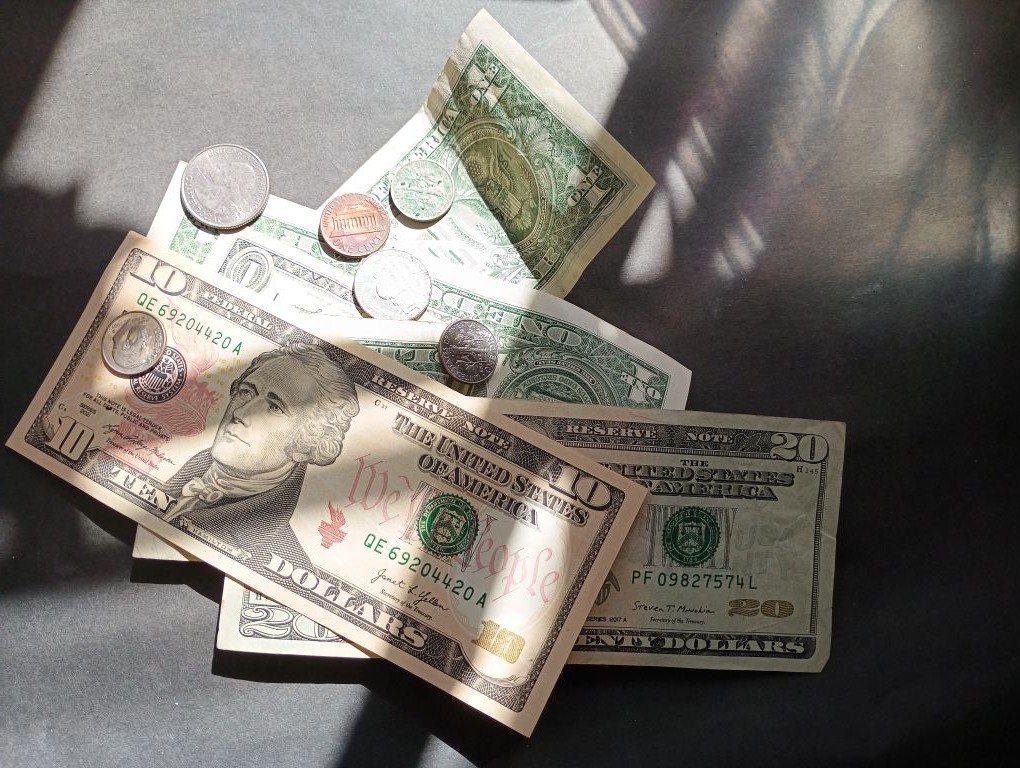
  • My Memories on Collapsing Dollar

    When I moved to California, you could by a cheap carton of greasy fried rice from a Chinese greasy spoon for about $1.00 – $1.50. Now the Chinese greasy spoons are extinct or gentrified, and a bowlful of fried rice cost $10 to $20 per.

    Meanwhile, reading and listening, occasionally even watching people (or AIs) pontificate about the current situation as if this is something that suddenly appeared through this latest Middle-Eastern war seems a bit surreal. The problem with US dollar started long time ago, probably longer than I have been alive, but I will here just ramble a bit based on my own fallible memories. Any factual errors are mine and I blame them on my small and feeble brains.

    I’ll start with Bush Jr. Having arrived after the voting ended and then following the discussions about hanging and pregnant chads, anthrax letters and finally 9/11 which set the tenor until the banking crisis. For USD, 9/11 is significant because using that as a pretext for Iraq war allowed United States to mess up global oil markets, causing price per barrel, and thus the demand for dollars to buy the more expensive oil, to shoot up. This allowed the Greenspan Moderation, which inflated the credit bubble – everyone got a housing loan and the subprime loans were then baked into collateralized debt obligations or CDOs. Michael Lewis wrote a book about The Big Short which was later adapted into a hilarious movie. Although the movie may have been less funny for the hundreds of thousands of people who lost their homes when the adjustable credit rates started moving up.

    The implosion of the credit bubble during 2007 and 2008 was something awesome/awful to behold. I remember picture of Ben Bernanke, the Treasury Secretary on his knees in front of Nancy Pelosi, the Speaker of the House, begging for congress to pass a bailout package. One of the many that bailed out banks, the newly homeless regular folks, notso mucho. Occupy Wall Street was born and Obama got elected.

    After which the Quantitative Easings continued to stabilize the banking system, people were left to survive. I don’t remember exactly what happened to dollar during Euro Crisis 2011, which I think was triggered when Soros publicly doubted Greece’s ability to pay back all the loans they had taken. The doubts spread like a wildfire in arsonist prone chaparral, infecting other shaky economies, especially Portugal, Spain, Italy and eventually Ireland, which were lumped together as PIIGS. The northern EU that had pumped their own economic numbers up by lending to southern EU so that they can buy northern products like tanks and submarines, then sanctimoniuosly castigated the peripheral member states for their economic profligacy despite having their own economic mirages depending on the same.

    The Euro Crisis coincided with Arab Spring which had been triggered by exploding food prices, brought to you by bad weather (droughts, floods and sundry), US agricultural and green energy policies (‘green’ corn-based bioethanol had consumed the US feed corn, so the US ranchers bought cheap corn from abroad, which then raised the food corn prices in Third World), deregulation of wheat futures market (previously open only for farmers and grain processors, anyone could speculate on bad weather, and speculate they did), and Gaddafi’s decision to start selling oil in currencies other than USD. The last one was fatal for Gaddafi and Libya – for me this was the most obvious demonstration how social media could be used for destabilizing fragile countries. Though the Abar Spring itself is credited for having started in Tunisia when some fish cart got confiscated by officials (the famous last straw), Tunisia avoided the worst consequences. Morocco and Algeria had troubles, too but those were ‘handled’, whereas Libya got bombed. The campaign was seemingly started at EU/French initiative and US participating simply because we had to (though in retrospective, I wonder…). It degenerated into multiparty civil war, shenanigans in Benghazi being a side note – I think that was about US running guns to ISIS, but I might be wrong, and it took a major oil producer out of market. Egypt which fell and then stabilized under Muslim Brotherhood and then under military dictatorship (I don’t think Arab Spring brought much democracy anywhere) does not produce oil, but Suez Canal is kind of important, Lebanon, Iraq and especially Syria fared poorly (I wonder if US troops are still in Syria to protect their oil now that ISIS toppled Assad?).

    We also had instituted sanctions against Venezuela during Chavez presidency (also tried to get rid of him by other means), affecting global oil markets, there has been happenings in Nigeria (partly due to destruction of Libya which unleashed islamists all over Northern Africa), all of which have pumped oil price up, helping the demand for US treasuries. That is, trillions of dollars more government debt for bailing out the billionaire class (not just too big to fail banks but many other megacorporations), waging wars and insane government social engineering programs meant to extract control and wealth from the working and middle classes to various bureaucracies and governmental NGOs. A classic example, Obamacare. Marketed as a government healthcare system, it actually manifested as a government mandate to buy a private sector health insurance. Problem: people who could not afford health insurance before Obamacare were still too poor, even though some pressure had been taken off by complex and arcane health insurance subsidy system based on the buyer’s reported annual income.

    In any case, Obama continued the debt bazooka, fueled by oil wars, but since it only benefited the 1%ers, voters went berserk and elected Trump. I had expected 2016 election to be between the anointed Clinton and the anointed Bush, but then the Republican primaries went sideways, with Jeb proving himself unelectable without properly organized party machinery, Trump winning the primaries. If it had been on voters, the Democratic primary winner would have been Bernie, but superdelegates rescued Hillary, who then expected a smooth coronation. Except that the US voters did not co-operate.

    Trump’s first term increased the spending but did not add any oil wars. By 2019 the economy was about to have a coronary arrest – I was expecting banking collapse some time during autumn or early 2020 at the latest, but then came COVID-19 and two weeks to flatten the curve. Giving a great excuse for the economic collapse that IMHO would probably have happened even without the virus, though maybe not as comprehensively.

    Biden was ushered into presidency and once the lockdown mess began to clear, it was obvious that the US treasury was being looted by every (administration aligned interest group) as if the country was under a fire sale. The disastrous withdrawal from Afghanistan was the US equivalent of Byzantine’s Battle of Manzikert. Not the withdrawal itself which should have been done years ago, but the manner it was executed, complete with reenactement of Last Helicopter Out of Saigon. Emboldened by this clear sign of an empire in decline, Russia moved to Ukraine 2022, after waiting for Beijing Olympics so as not to insult their new best friend and fellow BRICS member.

    Technically USA could have ignored Ukraine, but too many corrupt interests converged there, and then there was the fight over superpower prestige. Plus it was a too good opportunity to destroy the EU economically by isolating it from cheap Russian energy resources and markets. Nordstream II exploded. There was self-imposed ban on buying Russian oil (though buying the more expensive Indian distillates made from Russian oil was OK). All this meant more pressure on energy supplies, meaning higher US dollar demand. Meaning the debt could balloon from well over 20 trillion dollars at the end of Trump’s first term to well over 30 trillion dollars after Biden’s only term.

    When Trump took over, he promised a Department of Government Efficiency to weed out fraudulent spending. I wonder what happened to that. He had also promised no new wars, then took out Venezuelan president Maduro (and US oil companies are back in Venezuela, trying to extract the oil there, but years of sanctions have left the infrastructure shaky), threatened to take over Greenland (mineral resources and Northwest Passage), and finally went to Iran.

    Problem with Iran war (among the too many to list): too much oil production has been taken off the market and global economy is failing. The price per barrel has been suppressed by multinational SPR releases, but the tanks are nearing empty. Also the agriculture has been devastated by rising fuel and fertilizer prices, and the summer has been brutal in North America, Europe and Asia.

    The Ukraine and Iran wars had also been a double whammy on the treasury demand. People have spoken of glut in dollars, worried about inflation, but it was the increasing use of economic sanctions as a weapon to all directions have shaken the buyers’ faith on their safety as investment. Also, USA has bled Japan dry with yen carry trade (cheap yen loans to buy a bit higher interest US treasuries and bonds and pay the Japan loans with US paper and pocket the difference has supported the US debt machine), and the recent bail outs IMHO are just a drop in a leaking bucket, an omen of end to arrive.

    Now, on that background we have reached 40 trillion dollars, and borrowing costs have risen to levels that Treasury apparently is uncomfortable with. IMHO, Bessent’s buyback promise is a sign of weakness, and may be remembered by future economic historians as a gross blunder, but blaming the current administration for failing to kick the can one more election cycle further is a bit intellectually dishonest. Bessent’s hands are tied by the realities, namely USA has over the decades squandered its superpower status by living well beyond its means (partially to maintain superpower status, partially to appease voters), and there is very little that can be done to soften or even postpone the dollar collapse, especially with the current incoherent administration. For example, I don’t like how Treasury and Fed are uncoordinated. Nor do I like the AI mania or how our trade policies sabotage our agriculture.

    I expect the official Federal debt to continue at least a couple of trillion dollars higher, possibly up to 50 trillion dollars, but backed by full faith of US government is no longer what it was. Meanwhile, while money gets printed, nobody is printing bread (even vat grown meat is a specialty item and requires way more resources for much unhealthier product to be currently more than a curiosity for healthy technocrat class, though meat glued scraps are the new sausages for plebeians), so I expect food inflation with sporadic shortages and rampant skimpflation in wealthy countries and outright famines in poor countries.

    (A side note back to the Arab Spring; there was a model that predicted the level of food prices when a country undergoes an upheaval and on 2011 all the Arab Spring countries had crossed that level. In Europe, the only country to have food price distress was Latvia, but instead of revolution, the Latvians simply migrated, thanks to EU free mobility. Later, UK, dismayed at all the Eastern Europeans flooding the island, voted for Brexit, but that was then another story.)

  • Current Events

    I was thinking about posting something light but two weeks ago I was not in the mood. I woke Saturday night briefly to the news that USA / Israel had struck Iran and from then on it was missiles all over the Middle-East. I still do not know which all countries are participating, either willingly or dragged into it. I just think this is bad. And it is expanding.

    The timing fits, though. Not going into this blood moon – planetary parade interpretation (solar maxima, maybe), the economic situation is very shaky and the release of the documents pertaining a large chunk of our (that is Western in general) elites, political, economical, cultural and even scientific ones, has pretty much removed what is left of their credibility, already in tatter due to decades of civic and economic mismanagement to the detriment of the masses. In short, the system is collapsing and usually the last thing the elites do in such situation is to start a patriotic / holy / justified war to drum up some support for the system, distract the masses (the shortages are due to The War, not the economic collapse, which is also due to The War), and to loot what is left of the treasury via military-industrial complex.

    Dollar was already failing through inflation (too many dollars had been printed, not to match the amount of bread to buy with these dollars), which was evident as gold and silver prices shooting up last year, peaking in January before some big players put breaks on it by changing the rules on metal trading. It only helped for a short time, the prices were climbing up again by Friday before the attack on Iran. Whether this uptick was caused by the natural demand on metals (especially the East – West arbitrage and trade war between USA and China), the COMEX halt on technical issue (again) spooking investors, or by big institutions moving metals as cued in on incoming geopolitical instability is irrelevant. The metal prices would not be rocketing up if dollars were as valuable currency as before the massive money printing. Of course, the metals then went down again. Whether this was due to forced liquidation as the private credit system is collapsing (a couple more notable examples of credit failures being Blue Owl and Blackrock) or strengthening of dollar (???) or some other arcane reason is irrelevant. I think many asset classes will now behave in seemingly irrational manner as hordes of panicky investors, or rather, their trading algorithms trigger waves of stop loss sell orders in a cascading series of events. An economic blowback, if I may use such term.

    Which brings to the second reason for the war in Middle East, namely oil prices. The chronic US debt requires buyers for US T-bills, but the main reason for anyone to buy T-bills is to buy dollar denominated oil. Gaddafi and Hussein tried to sell in other currencies. Iran, as an embargoed BRICS member, naturally sells in other currencies. United States has used dollar weapon and sanctions too often, reducing the natural demand for dollars, so petrodollar connection needed fortification. Not to mention the Strait of Hormuz being off limits during the exchange of missiles will drive the barrel prices up meaning a boost for T-bill demand. I believe that Iraq War II funded the Greenspan Moderation. I also think that increasing the price per barrel has a good chance of further hurt US economy, while helping Russian economy (remember the war in Ukraine?) But if the Western economies are already circling in a debt spiral down towards the sewer system, why not T-paper the mess with more treasuries? Besides, China will be in trouble, too, having lost Venezuela, and now Iran, and while EU regards Russia as their main opponent, USA is eyeballing The People’s Republic of China.

    Meanwhile, some billionaire predicted the AI will increase economic output so that nobody needs to be poor. I doubt this prediction.

    For the record, economy has been growing more or less steadily for the 20th century, what with occasional dip during recession or depression. The share of growth, however, stalled for the lower economic layers in early -70’s, meaning that the working class living standards have not increased with the economic productivity. We were promised shorter work weeks through technological advancement, what we got is a baroque bureaucracy plus private sector B*llsh!t Jobs (estimated to be about 40% of private sector work force), with chronic overwork for people struggling to survive on a diminishing share of a productivity pie, and mass unemployment for people who fell off the labor force or never bothered to join. Overworked people in the West are seething at NEETs, whereas the leaders in PRC is trying to discourage “Let It Rot” or Lying Flat mentality.

    Considering this historical precedent, I do not expect the AI to increase the living standards of the masses in any meaningful manner, just change the mode of exploitation.

    Provide entertainment and distractions, already happening. Control the population by algorithmic feed of ‘information’ (official newstainment and infoganda) and ‘opportunities’ (advertisements of sales and government grants, possibly even jobs, tailored for your planned role as a consumer and a cog in the system), sure. Has anyone else here had experienced the joys of ATS and modern job search? But actual empowerment of the people by allowing resource creation and utilization where the profits do not directly flow into the coffers of the 0.01% that own the AI models but benefit the individual people without creating dependencies? Unlikely.

    Having written the above, I am nevertheless curious about utilizing AI as part of my design processes, and may subscribe to some such service this spring. Hypocritical? Maybe.

    By Sunday, March 8th, the war against Iran had obviously become the sh!tshow that will define this century. In the Internet there are currently rumors that some official had admitted that the war may continue through September. Maybe, but I would not be so bold as to predict which year. Meanwhile, I think that the oil shock will be the last nail in the coffin of the Western economic hegemony (G7, OECD, World Bank, World Economic Forum, IMF, Basel, European Union, petrodollar, to mention some of the institutions which I expect to collapse or become irrelevant vestiges of bygone world, bit like British Imperial this and that after World War II). Maybe worse is the loss of large fraction of nitrogen fertilizer produced from cheap hydrocarbons with cheap energy in Middle-East. Even if the production is restored soon, the missing fertilizer production during the spring planting in Northern hemisphere is not good.

    I fueled my little car and bought some canned fish and protein bars to restore what I had recently eaten. Based on above, I expect temporary food shortages due to economic chaos, and permanent food price hikes due to increasing input and transportation costs, but such developments are already the new normal this decade, so there is little that can be done except to prep more, tighten the belt and hope that incomes increase to match the rising expenses.

  • Resolution Weekend

    I just saw a video on YouTube by a gentleman who seems to be into Bitcoin. Aside from the Bitcoin part, there were interesting little news.

    Bank of England has published a bail-in guide. The term of note is ‘resolution weekend’. That’s when the peoples’ bank accounts will be converted into bank stocks at some fraction of value.

    I had already become aware that millionaires and billionaires are fleeing the UK by their thousands, an exodus greater than that afflicting PCR, despite PRC having vastly larger population. I was surprised at the claim that the departing assets are equal to 4% of UK GDP. Dividing the 91.8B$ cumulative wealth of the departees by 3640B$ estimated GB GDP gives only about 2.5% in mu calculator. It will be interesting to see if the UK government will go full DDR and slam the exit doors shut at this hemorrhage. They already have the hate crime reporting lines and speech crimes police (in case someone could post something UK government does not approve) so why not go for the full experience, complete with empty shops?

    Meanwhile, EU has made a deal of the decade (this century is too young to claim that something even weirder would not be coming through the pipes) agreeing to: 15% export and 0% import tariffs with US, 750 billion euros worth of US fossil fuels while banning all the Russian fossil fuel imports (which had continued despite the war, including quite a lot of natural gas transiting in pipelines through Ukraine), and 600 billion euros of private direct investment to US.

    Exactly what this private investment is and how EU Commission can agree to seems unclear. According to the document description page on EU side, the agreement is not legally binding. I suspect that the tariff and energy deals were a bribe to US to let EU still continue their war – I further suspect large amounts of US military gear to be included in that 0% import tariff. Also, I suspect that EU will rather soon have a resolution weekend for bank accounts as they are already talking about mobilizing funds laying in peoples’ bank accounts to fund plans that are excessive for the public purse. Pension funds are joining the arms bonanza. Bonus points if these ‘privately funded’ imports/investments will count towards the 5% of GDP funding target for non-US NATO members.

    Joker in the game: EU CBDCs, denied by European Central Bank to be programmable with expiration dates (not to mention blocking or sin fees for non-approved uses, which would similarly depend on programmability.) (There are also privacy questions.) I wonder what the actual utility of EU CBDCs for the small people would be, and how CBDCs (programmable or non) would affect application of a Resolution Weekend?

  • Rising Rice Crisis

    Japan has a rice shortage. Of staple rice.

    While there has been sporadic rice shortages around the world recent years, Japan is a first world country and a traditional rice producer. The problem is word traditional. According to First Post, the average age of Japanese rice farmer is 71 years, and government agricultural policies in general and rice policies in particular have hit the farmers whose numbers, citing Bloomberg, have shrunk by 25% between 2015 and 2020s.

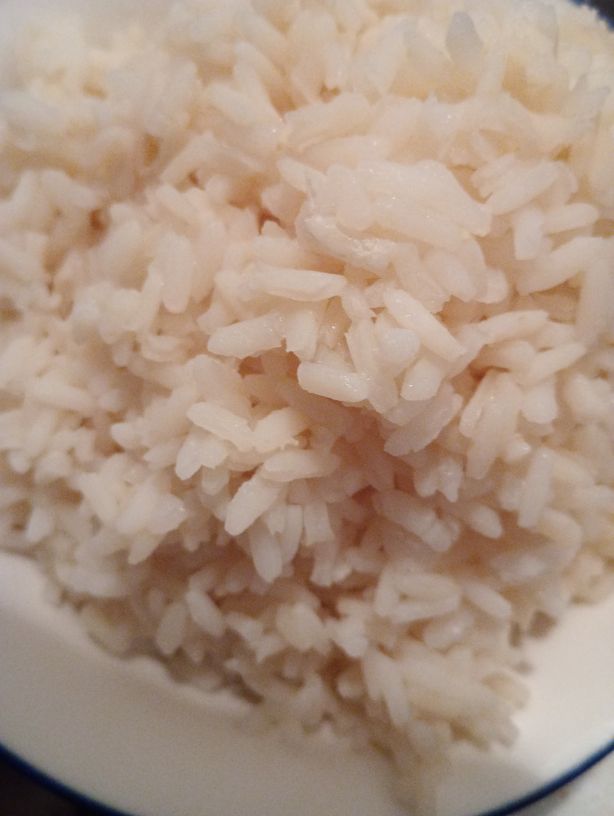
    Probably not Japanese boiled rice

    The Japanese government rice policies are strictly nationalistic, ostensibly designed to protect Japanese rice farmers and self-sufficiency by preventing rice buying from abroad. Except the consumer prices also had to be regulated, squeezing rice farmer incomes and acreage despite Japanese soft monopoly on domestic rice.

    The some explanations to Japanese rice shortages is that Japanese 2023 rice harvest was bad (already reporting rice rationing in some shops on 2024), there was an earthquake and people are panic buying (also as a hedge for rice inflation, which probably increases the rice shortfall causing more rice inflation), people are eating more rice because the war in Ukraine has increased wheat prices, and that there are hordes of tourists eating rice. And the Japanese government started selling the stored rice from reserves last year. A bit like US sells oil every now and then from strategic reserves to smooth consumer sentiment. Except that Rice News Today blames the shortage on government policy to reduce rice production, which has thinned the buffer between production and consumption to such extent that even slightest consumption increase would cause shortages.

     Now Japan is running low on rice and some shops have implemented rationing. People are upset about the steep rise in rice prices. There has been some talk about buying rice from abroad, but this is against resistance from farming lobby and conservatives, though apparently there is now a trade deal to sell Calrose rice to Japan.

    The Japanese are having an election soon, July 20th. The price of rice and the rice shortages (estimated 1.8 months of annual supermarket sales worth of staple rice – either the consumers will consume something else or Japan will soon import lots of rice) may annoy the electorate enough to lead to political upset. According to Zerohedge, SocGen (a French bank) has predicted that there is about 50% chance of election results leading to governmental crisis in Japan, which may lead to problems in yen bond market. More importantly, the price of rice is part of Japan’s inflation metrics, and if rice prices explode, the rising inflation may trigger BOJ rate hikes.

    The global bond markets are highly interconnected and the financial omnibubble is floating around in search of a pin prick. Thus, the rising rice crisis just could be the trigger of global financial collapse. Though I personally doubt it. The markets are so rigged that full collapse by contagion is unlikely. But what I have seen over the years, is that small retail investors rarely fare well in turbulence. 

  • Magic Money Computers

    Apparently, our government had at least 14 of them, 11 in Department of Treasury, Department of Health and Social Services, Department of State and Department of Defense had their own magic money computers too. A Magic Money Computer, according to Elon Musk is a machine that creates money out of nothing by just issuing payments.

    The original Magic Money Computer, Sampo, being stolen from Pohjola by Kalevala raiding party. Sampo of the legend was a magic mill that produced flour, salt and money. (art by Akseli Gallen-Kallela, image sourced from Artvee)

    There has been speculation that such Magic Money Computers would allow fraudulent or erroneous invoices (such as double billing) to be paid regardless of available government funds. However, the truth of the bottomless money pit is probably more about standard prosaic grift – based on the parade of DOGE news, the US Government seems to be full of weird offices where the Directors pay to themselves and their “workers” outrageous salaries and lavish other perks (luxury apartments, luxury offices) and then top it up by (relatively) small embezzlements like expensing their everyday (luxurious) life.

    These money sinks are supplemented by a class of government parasites, ‘NGOs’ (Non-Governmental Organizations, which actually are mostly or fully dependent on government money). ‘NGOs’ (not to be confused with true charities) siphon money from government coffers and can act as money laundromats by donating heftily to nice politicians and PACs and by hiring politicians or their family members with attractive perks and reimbursement packages.

    After hearing more and more about all the ‘NGO’ grift, I felt slightly like a chump for not having founded a ‘charity’ dedicated to “Physical and emotional well-being of an individual” (namely myself),  with the governing board and financial regulators consisting of Me, Myself and I and set up a reasonable monthly stipend of, say $7497.68 including taxes and fees, though for that, I would have needed much better political connections within the bureaucracy (not to mention far more flexible morals).

    Joking aside, Magic Money Computers are a problem because they are not synchronized, i.e., there was some variation between their bookkeeping, estimated to be about 5 – 10%, which can lead to unregulated increase in nation’s money supply. Which is presumably on top of the official increase by the approved deficit spending.

    Officially, the US government does not print money. What happens is that the government issues treasuries which the big banks (primary buyers) buy to sell forward, or to Fed, which buys treasuries from the public by injecting money into the accounts of the selling banks, i.e., creating more money. Banks, of course, use their new capital as a security for issuing new loans via fractional reserve banking, multiplying the money printing effect.

    With Magic Money Computers potentially adding to the money supply, we are essentially talking about unsupervised inflation. In theory, as long as the increase in production (of goods) increases with the money supply, the prices remain steady. If the production of goods increases relative to demand at a greater rate than money supply, resulting oversupply causes price deflation, but if the money supply increases faster than production while demand remains steady or increases, this results either in price inflation or, in case of price controls, product shortages.

    I suspect that the US economy has been running an experiment where it has artificially inflated money supply (by deficit spending) while increasing demand (by paying people to consume and by importing more people) in hopes that the production would increase due to increasing demand (look at all these new workers.) What was conveniently forgotten was the regulatory jungle stifling any private enterprise while the masses of new capital were scooped by the well-connected who used it to monopolize resources needed for private enterprises, either by buying the resources themselves, the legislation regulating how the resources can be used, or the bureaucrats who determine who can use the resources (and how), namely those who are insiders.

    I would further speculate that as an increasing fraction of government money goes to the politicians, bureaucrats and their family and proteges (and paying patrons like megacorporations and transnational NGOs), an increasing fraction of resources, public and private tends to get concentrated to the hands of politically connected oligarchy. Not only does the increased regulation and fewer resources mean fewer small businesses and anemic economy, with political class acting as oligarchy the national ‘free’ enterprise begins to converge towards a top-down command economy. Command economies are very fragile and prone to collapse for multiple reasons that would be a whole another post.

    Let me finish by saying that The United States has been for many years unofficially converging towards the Soviet Model, namely the centralized command economy, and while I have been observing faint signals since the previous decade, now the results are visible in our shops to everyone.

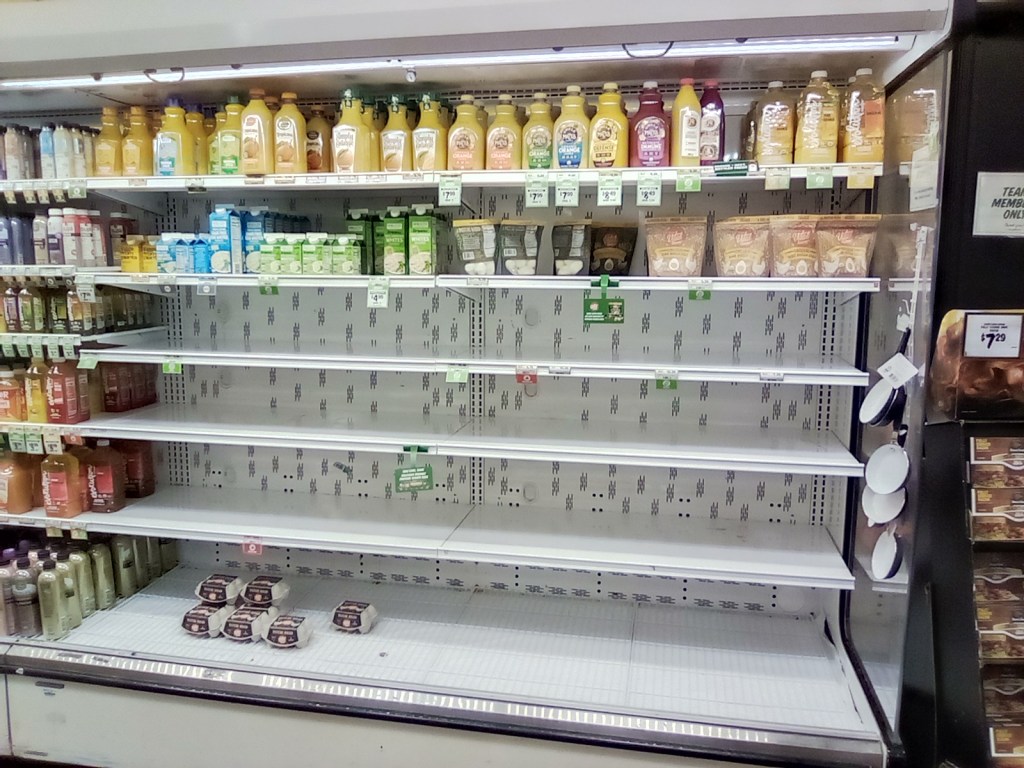
    Take for example, eggs. The number of laying hens has gone down due to cullings, whereas the number of mouths has increased due to immigration. Unlike the mythical Sampo that produced also edible goods, the US government has only increased the amount of money in circulation, leading to price inflation and egg shortages. Magic Money Computers are not helping.

    An old photo from January 2025. Tonight, I saw lots of eggs in a supermarket.