

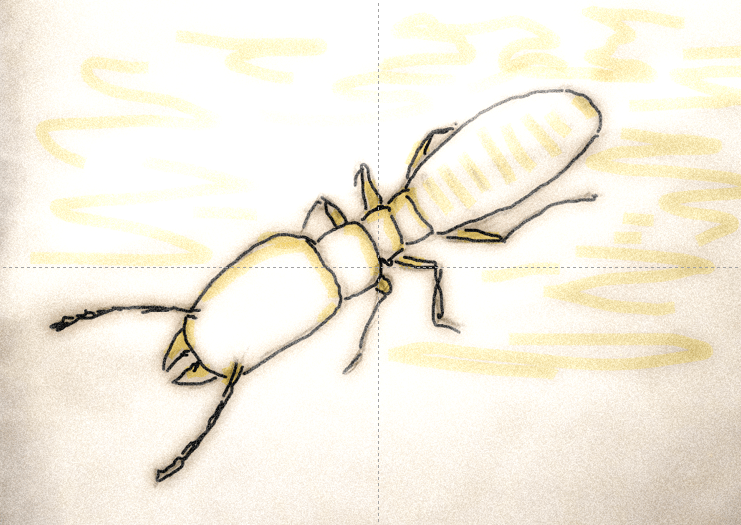
Termite farting has been studied for quite a long time.
A Nature paper by Ito (2023) estimates the global termite methane production 2020 as 14.8 +- 6.7 Tg per year from estimated 122.3 Tg termites (dry weight). Termite biomass estimates range from 40 – 200 Tg (dry weight), and their methane emission estimates vary even more, but by Ito’s estimate, termites produce about 2% of global methane.
The global annual methane production is estimated by IEA to be about 580 metric tons, and Ito’s maybe ~15 metric tons would be on the ballpark of 2.6% of that.
These farts are actually produced by termites’ gut symbionts, complex communities of microbes that help termites to digest lignocellulose and contribute to nitrogen metabolism.
Termites evolved some time during Mesozoic from gregarious cockroaches that ate rotting wood with changes in gut symbiont microbiota, diets and eusociality. Today, termites are important in carbon cycle (and other nutrient cycles).
There is some uncertainty about the fate of the termite farts (such as how large fraction of them even make it out of the termite hive or gets absorbed into surrounding terrain). For example, some termite hives can survive tens of thousands of years and may accumulate carbon in the mounds, and affect soil and ground water carbon sequestration.
I was trying to find some papers on their role in Phanerozoic carbon cycles but with poor success, though it could be said that termites (plus their gut symbionts) are currently quite significant decomposers of plant cellulose, and there apparently has been enough of them already 150 million years ago that a mammal species had evolved to eat them.
In other words, there is still a niche for people researching the effect of termite farts on global climate – past, present and future. Assuming the atmospheric carbon question remains politically and culturally relevant (for dissenting voices, see, e.g., these articles in Science of Climate Change and The Daily Sceptic).
 PlanktonPunkt
Leave a comment